
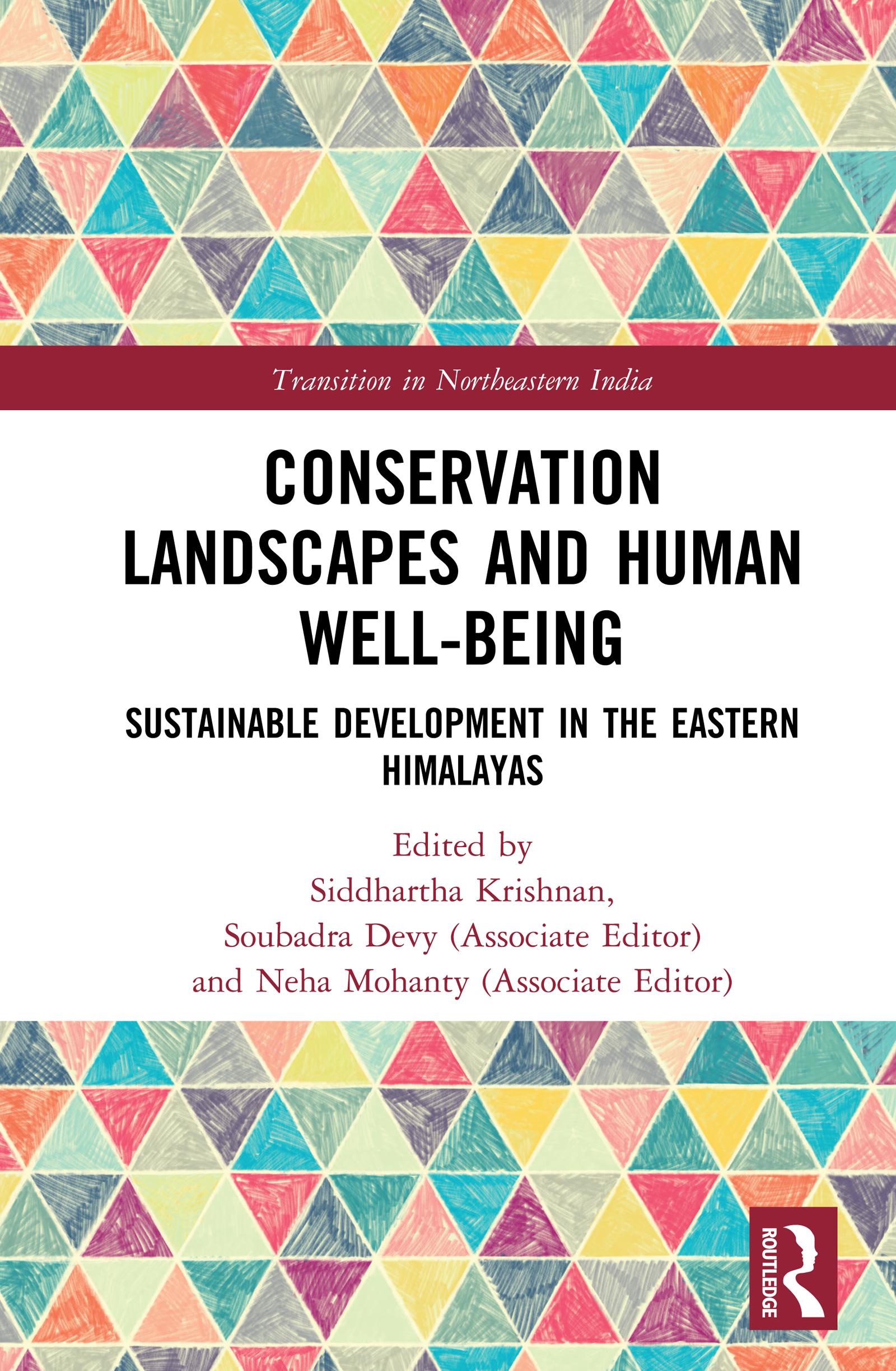
The Himalayas are said to be the youngest mountain ranges in the world. This book studies the well-being of the eastern Himalayan forest-dwellers in terms of their capabilities and functioning. Using Amartya Sen’s and Martha Nussbaum’s Capabilities Approach, it examines the educational and health opportunities and substantial freedoms afforded to farmers and pastoralists living and working in the Senchal and Singalila Protected Areas of North Bengal, India. It also discusses the challenges and potential of the Forest Rights Act as a well-being delivery mechanism. The book adopts a comparative narrative of socio-ecological information generated from interviews, ecological field methods, remote sensing and participatory rural appraisals to provide insight on human development in conservation contexts.
This volume will be of interest to students and researchers of conservation biology, development studies, socio-ecological systems studies, political ecology, human development index, ecological economics, environmental sociology, and South Asian studies. It will also be useful to policy-makers and NGOs in the conservation and livelihoods sector.
Paga facilmente con carta, Klarna, Apple Pay o Google Pay. Non sei soddisfatto? Hai sempre 14 giorni per il rimborso. Leggi di più nei nostri termini. Per qualsiasi domanda, scrivici a hello@memmo.org.
Memmo rende lo studio più facile, ovunque tu sia nel mondo. Qui trovi i tuoi libri di testo e strumenti di studio intelligenti, tutto in un unico posto: riassunti, quiz, podcast e flashcard. E poi c'è Ted, il tuo compagno di studio che risponde a ogni tua domanda. Oltre 50.000 studenti studiano già qui: è stato creato per aiutarti a imparare più velocemente e a stressarti meno.