
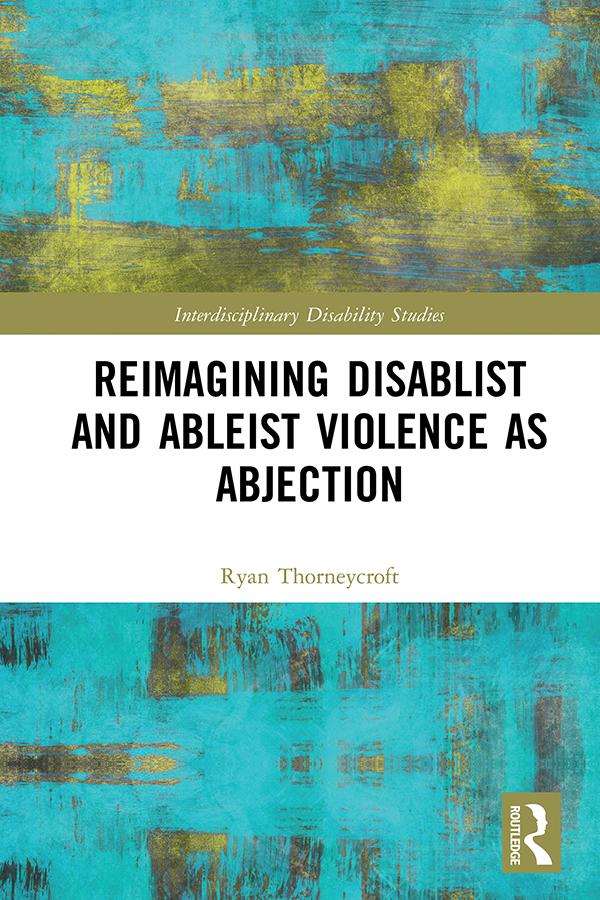
Drawing upon vivid and harrowing life history narratives of people labelled intellectually disabled, this book examines the ways in which disabled subjects are constituted, regulated, governed, and violated through an account of abjection.
Extending interdisciplinary dialogues and approaches, it abandons a construct of violence (which by law requires a stable notion of a victim and a perpetrator) and moves to a theorisation of abjection to explore the ways in which disabled subjects are (re)produced, constituted, and treated through time. Deploying a wide range of interdisciplinary approaches, this book sits at the intersections of criminology and sociology, re-thinks notions of dis/ability, violence, and subjectivity, and utilises crip and queer theory to imagine dis/ability differently.
It will be of interest to all scholars and students of disability studies, sociology and criminology, and specifically those working the areas of life history work, post-structuralism, hate crime, and post-modern criminology.
Paga facilmente con carta, Klarna, Apple Pay o Google Pay. Non sei soddisfatto? Hai sempre 14 giorni per il rimborso. Leggi di più nei nostri termini. Per qualsiasi domanda, scrivici a hello@memmo.org.
Memmo rende lo studio più facile, ovunque tu sia nel mondo. Qui trovi i tuoi libri di testo e strumenti di studio intelligenti, tutto in un unico posto: riassunti, quiz, podcast e flashcard. E poi c'è Ted, il tuo compagno di studio che risponde a ogni tua domanda. Oltre 50.000 studenti studiano già qui: è stato creato per aiutarti a imparare più velocemente e a stressarti meno.