
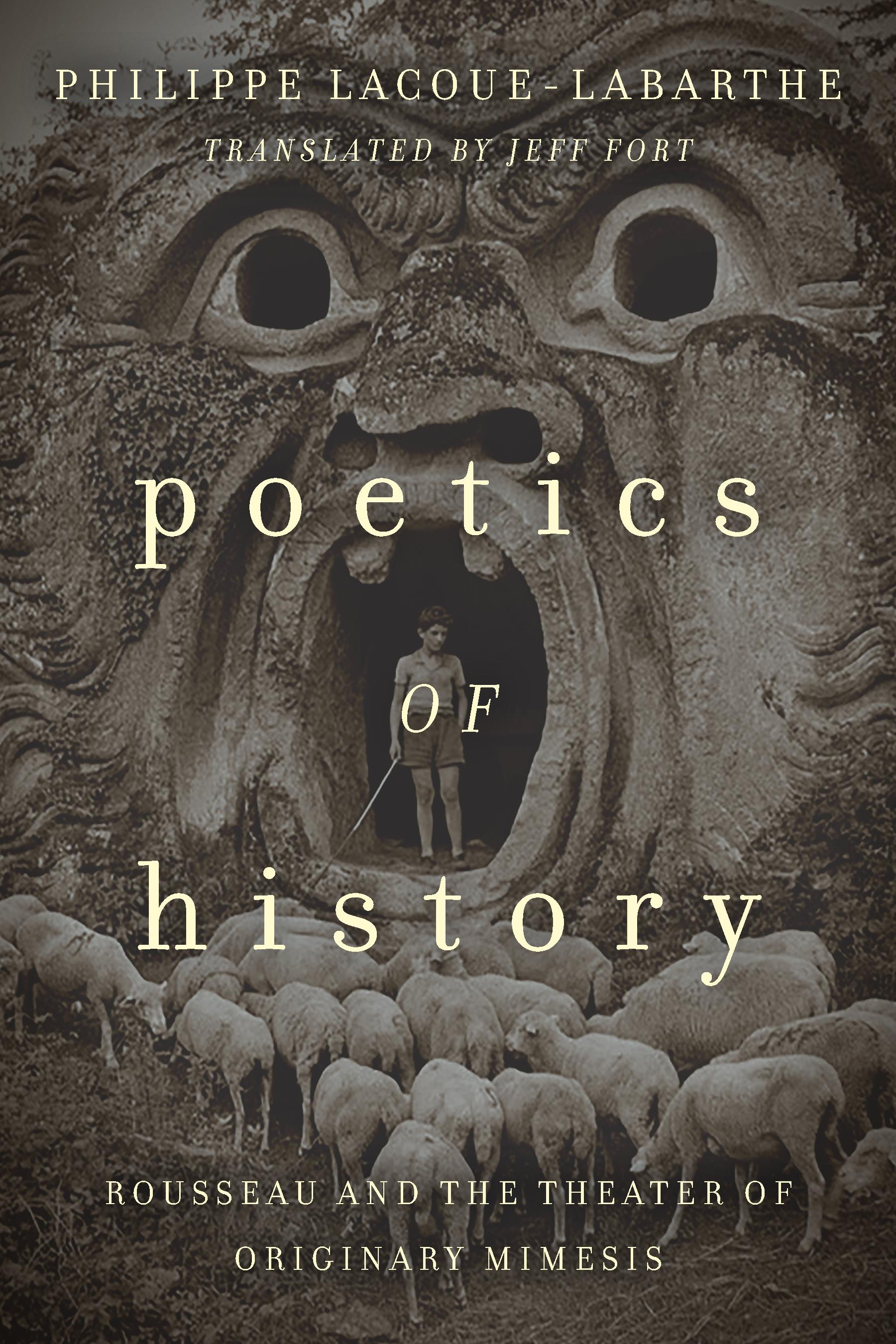
Rousseau’s opposition to the theater is well known: Far from purging the passions, it serves only to exacerbate them, and to render them hypocritical. But is it possible that Rousseau’s texts reveal a different conception of theatrical imitation, a more originary form of mimesis? Over and against Heidegger’s dismissal of Rousseau in the 1930s, and in the wake of classic readings by Jacques Derrida and Jean Starobinski, Lacoue-Labarthe asserts the deeply philosophical importance of Rousseau as a thinker who, without formalizing it as such, established a dialectical logic that would determine the future of philosophy: an originary theatricality arising from a dialectic between “nature” and its supplements.
Beginning with a reading of Rousseau’s Discourse on Inequality, Lacoue-Labarthe brings out this dialectic in properly philosophical terms, revealing nothing less than a transcendental thinking of origins. For Rousseau, the origin has the form of a “scene”—that is, of theater. On this basis, Rousseau’s texts on the theater, especially the Letter to d’Alembert, emerge as an incisive interrogation of Aristotle’s Poetics. This can be read not in the false and conventional interpretation of this text that Rousseau had inherited, but rather in relation to its fundamental concepts, mimesis and katharsis, and in Rousseau’s interpretation of Greek theater itself. If for Rousseau mimesis is originary, a transcendental structure, katharsis is in turn the basis of a dialectical movement, an Aufhebung that will translate the word itself (for, as Lacoue-Labarthe reminds us, Aufheben translates katharein). By reversing the facilities of the Platonic critique, Rousseau inaugurates what we could call the philosophical theater of the future.
Paga facilmente con carta, Klarna, Apple Pay o Google Pay. Non sei soddisfatto? Hai sempre 14 giorni per il rimborso. Leggi di più nei nostri termini. Per qualsiasi domanda, scrivici a hello@memmo.org.
Memmo rende lo studio più facile, ovunque tu sia nel mondo. Qui trovi i tuoi libri di testo e strumenti di studio intelligenti, tutto in un unico posto: riassunti, quiz, podcast e flashcard. E poi c'è Ted, il tuo compagno di studio che risponde a ogni tua domanda. Oltre 50.000 studenti studiano già qui: è stato creato per aiutarti a imparare più velocemente e a stressarti meno.