
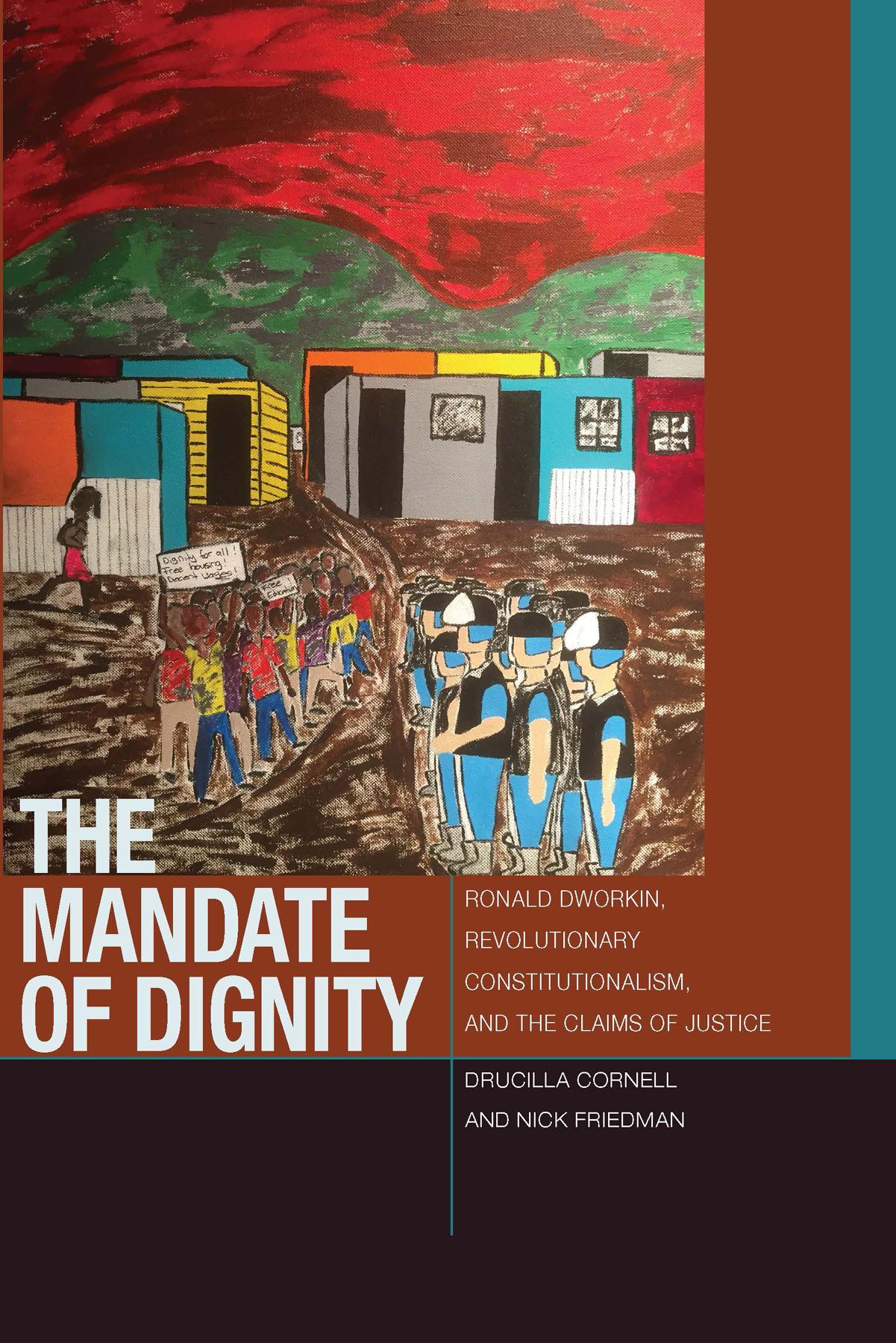
A major American legal thinker, the late Ronald Dworkin also helped shape new dispensations in the Global South. In South Africa, in particular, his work has been fiercely debated in the context of one of the world’s most progressive constitutions. Despite Dworkin’s discomfort with that document’s enshrinement of “socioeconomic rights,” his work enables an important defense of a jurisprudence premised on justice, rather than on legitimacy.
Beginning with a critical overview of Dworkin’s work culminating in his two principles of dignity, Cornell and Friedman turn to Kant and Hegel for an approach better able to ground the principles of dignity Dworkin advocates. Framed thus, Dworkin’s challenge to legal positivism enables a theory of constitutional revolution in which existing legal structures are transformatively revalued according to ethical mandates. By founding law on dignity, Dworkin begins to articulate an ethical jurisprudence responsive to the lived experience of injustice. This book, then, articulates a revolutionary constitutionalism crucial to the struggle for decolonization.
Paga facilmente con carta, Klarna, Apple Pay o Google Pay. Non sei soddisfatto? Hai sempre 14 giorni per il rimborso. Leggi di più nei nostri termini. Per qualsiasi domanda, scrivici a hello@memmo.org.
Memmo rende lo studio più facile, ovunque tu sia nel mondo. Qui trovi i tuoi libri di testo e strumenti di studio intelligenti, tutto in un unico posto: riassunti, quiz, podcast e flashcard. E poi c'è Ted, il tuo compagno di studio che risponde a ogni tua domanda. Oltre 50.000 studenti studiano già qui: è stato creato per aiutarti a imparare più velocemente e a stressarti meno.