
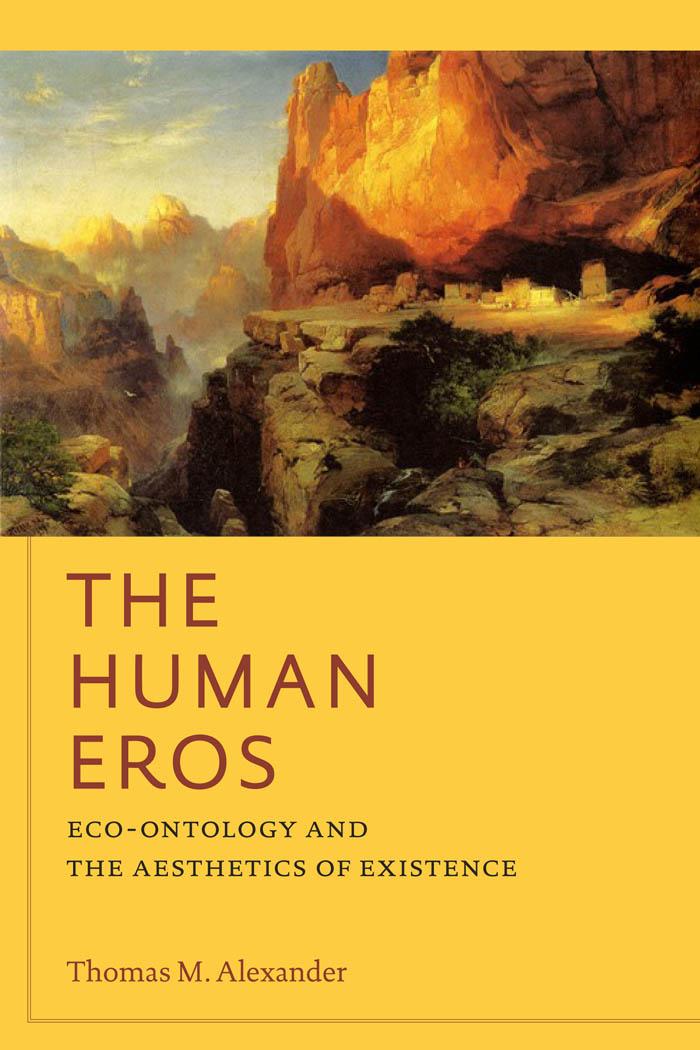
The Human Eros explores themes in classical American philosophy, primarily the thought of John Dewey, but also that of Ralph Waldo Emerson, George Santayana, and Native American traditions. Alexander’s primary claim is that human beings have an inherent need to experience meaning and value, a “Human Eros.” Our
various cultures are symbolic environments or “spiritual ecologies” within which the Human Eros seeks to thrive. This is how we inhabit the earth.
Encircling and sustaining our cultural existence is nature, yet Western philosophy has not provided adequate conceptual models for thinking ecologically. Alexander introduces the idea of “eco-ontology” to explore ways in which this might be done, beginning with the primacy of Nature over Being but also including the recognition of possibility and potentiality as inherent aspects of existence. He argues for the centrality of Dewey’s thought to an effective ecological philosophy. Both “pragmatism” and “naturalism,” he shows, need to be contextualized within an emergentist, relational, nonreductive view of nature and an aesthetic, imaginative, nonreductive view of intelligence.
Paga facilmente con carta, Klarna, Apple Pay o Google Pay. Non sei soddisfatto? Hai sempre 14 giorni per il rimborso. Leggi di più nei nostri termini. Per qualsiasi domanda, scrivici a hello@memmo.org.
Memmo rende lo studio più facile, ovunque tu sia nel mondo. Qui trovi i tuoi libri di testo e strumenti di studio intelligenti, tutto in un unico posto: riassunti, quiz, podcast e flashcard. E poi c'è Ted, il tuo compagno di studio che risponde a ogni tua domanda. Oltre 50.000 studenti studiano già qui: è stato creato per aiutarti a imparare più velocemente e a stressarti meno.