
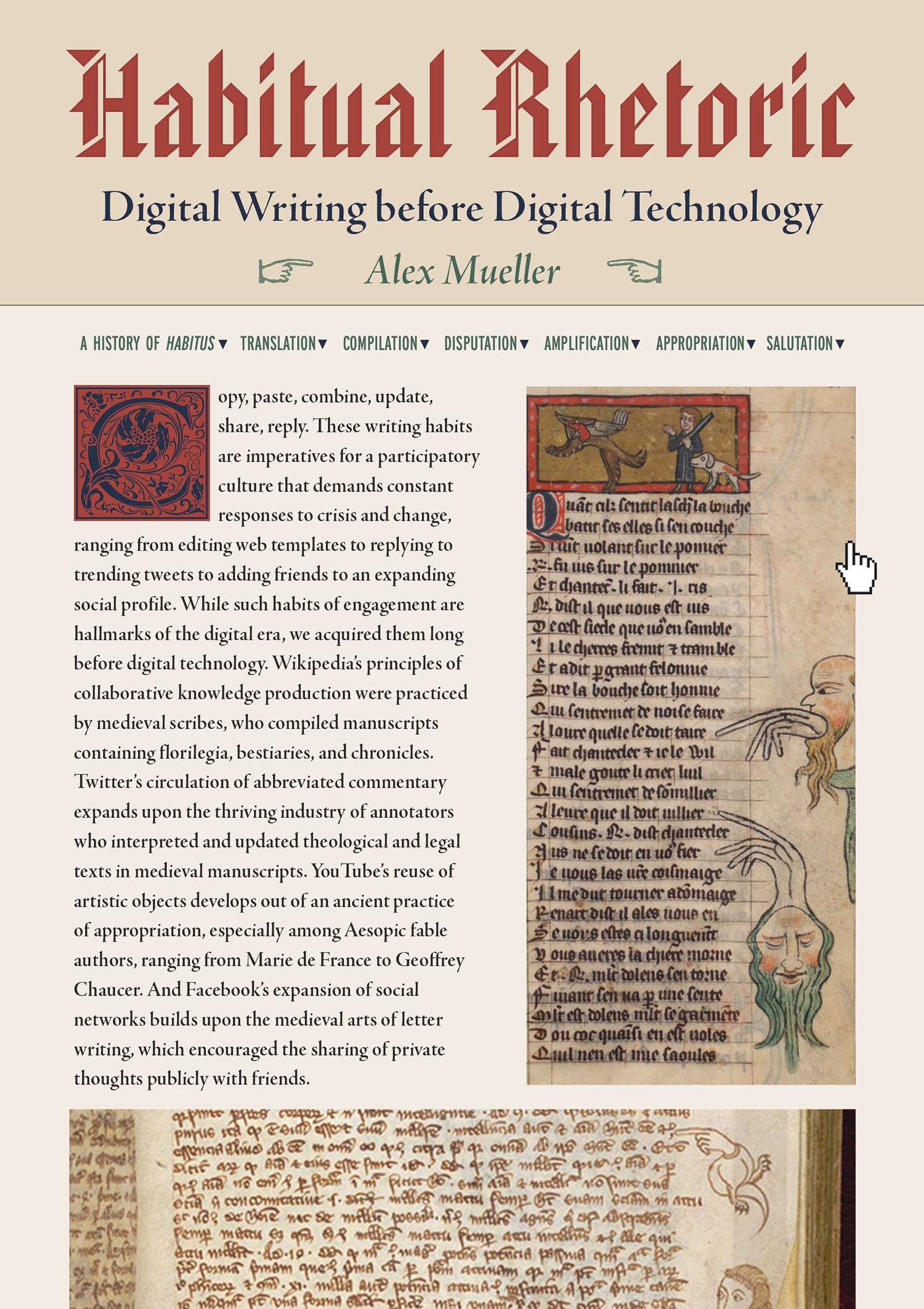
Writing has always been digital. Just as digits scribble with the quill or tap the typewriter, digits compose binary code and produce text on a screen. Over time, however, digital writing has come to be defined by numbers and chips, not fingers and parchment. We therefore assume that digital writing began with the invention of the computer and created new writing habits, such as copying, pasting, and sharing. Habitual Rhetoric: Digital Writing before Digital Technology makes the counterargument that these digital writing practices were established by the handwritten cultures of early medieval universities, which codified rhetorical habits—from translation to compilation to disputation to amplification to appropriation to salutation—through repetitive classroom practices and within annotatable manuscript environments. These embodied habits have persisted across time and space to develop durable dispositions, or habitus, which have the potential to challenge computational cultures of disinformation and surveillance that pervade the social media of today.
Paga facilmente con carta, Klarna, Apple Pay o Google Pay. Non sei soddisfatto? Hai sempre 14 giorni per il rimborso. Leggi di più nei nostri termini. Per qualsiasi domanda, scrivici a hello@memmo.org.
Memmo rende lo studio più facile, ovunque tu sia nel mondo. Qui trovi i tuoi libri di testo e strumenti di studio intelligenti, tutto in un unico posto: riassunti, quiz, podcast e flashcard. E poi c'è Ted, il tuo compagno di studio che risponde a ogni tua domanda. Oltre 50.000 studenti studiano già qui: è stato creato per aiutarti a imparare più velocemente e a stressarti meno.
Potrebbe interessarti anche
Acquista il libro0