
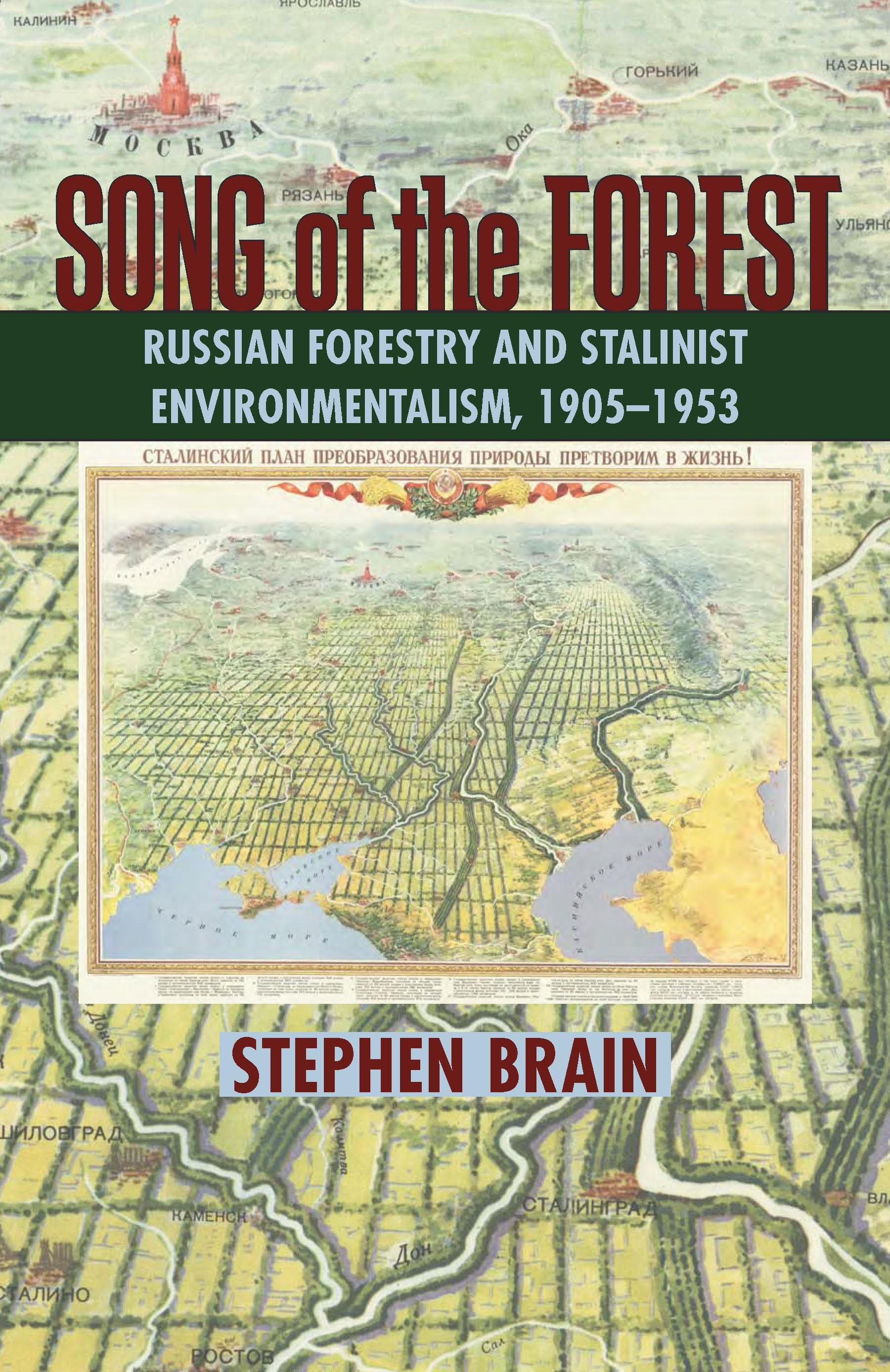
The Soviets are often viewed as insatiable industrialists who saw nature as a force to be tamed and exploited. Song of the Forest counters this assumption, uncovering significant evidence of Soviet conservation efforts in forestry, particularly under Josef Stalin. In his compelling study, Stephen Brain profiles the leading Soviet-era conservationists, agencies, and administrators, and their efforts to formulate forest policy despite powerful ideological differences. By the time of the revolution of 1905, modern Russian forestry science had developed an influential romantic strand, especially prevalent in the work of Georgii Morozov, whose theory of "stand types" asked forest managers to consider native species and local conditions when devising plans for regenerating forests. After their rise to power, the Bolsheviks turned their backs on this tradition and adopted German methods, then considered the most advanced in the world, for clear-cutting and replanting of marketable tree types in "artificial forests." Later, when Stalin's Five Year Plan required vast amounts of timber for industrialization, forest radicals proposed "flying management," an exaggerated version of German forestry where large tracts of virgin forest would be clear-cut. Opponents who still upheld Morozov's vision favored a conservative regenerating approach, and ultimately triumphed by establishing the world's largest forest preserve. Another radical turn came with the Great Stalin Plan for the Transformation of Nature, implemented in 1948. Narrow "belts" of new forest planted on the vast Russian steppe would block drying winds, provide cool temperatures, trap moisture, and increase crop production. Unfortunately, planters were ordered to follow the misguided methods of the notorious Trofim Lysenko, and the resulting yields were abysmal. But despite Lysenko, agency infighting, and an indifferent peasant workforce, Stalin's forestry bureaus eventually succeeded in winning many environmental concessions from industrial interests. In addition, the visionary teachings of Morozov found new life, ensuring that the forest's song did not fall upon deaf ears.
Categoria: Natur & Miljö
e-ISBN: 9780822977490
Paga facilmente con carta, Klarna, Apple Pay o Google Pay. Non sei soddisfatto? Hai sempre 14 giorni per il rimborso. Leggi di più nei nostri termini. Per qualsiasi domanda, scrivici a hello@memmo.org.
Memmo rende lo studio più facile, ovunque tu sia nel mondo. Qui trovi i tuoi libri di testo e strumenti di studio intelligenti, tutto in un unico posto: riassunti, quiz, podcast e flashcard. E poi c'è Ted, il tuo compagno di studio che risponde a ogni tua domanda. Oltre 50.000 studenti studiano già qui: è stato creato per aiutarti a imparare più velocemente e a stressarti meno.
Potrebbe interessarti anche
Acquista il libro0