
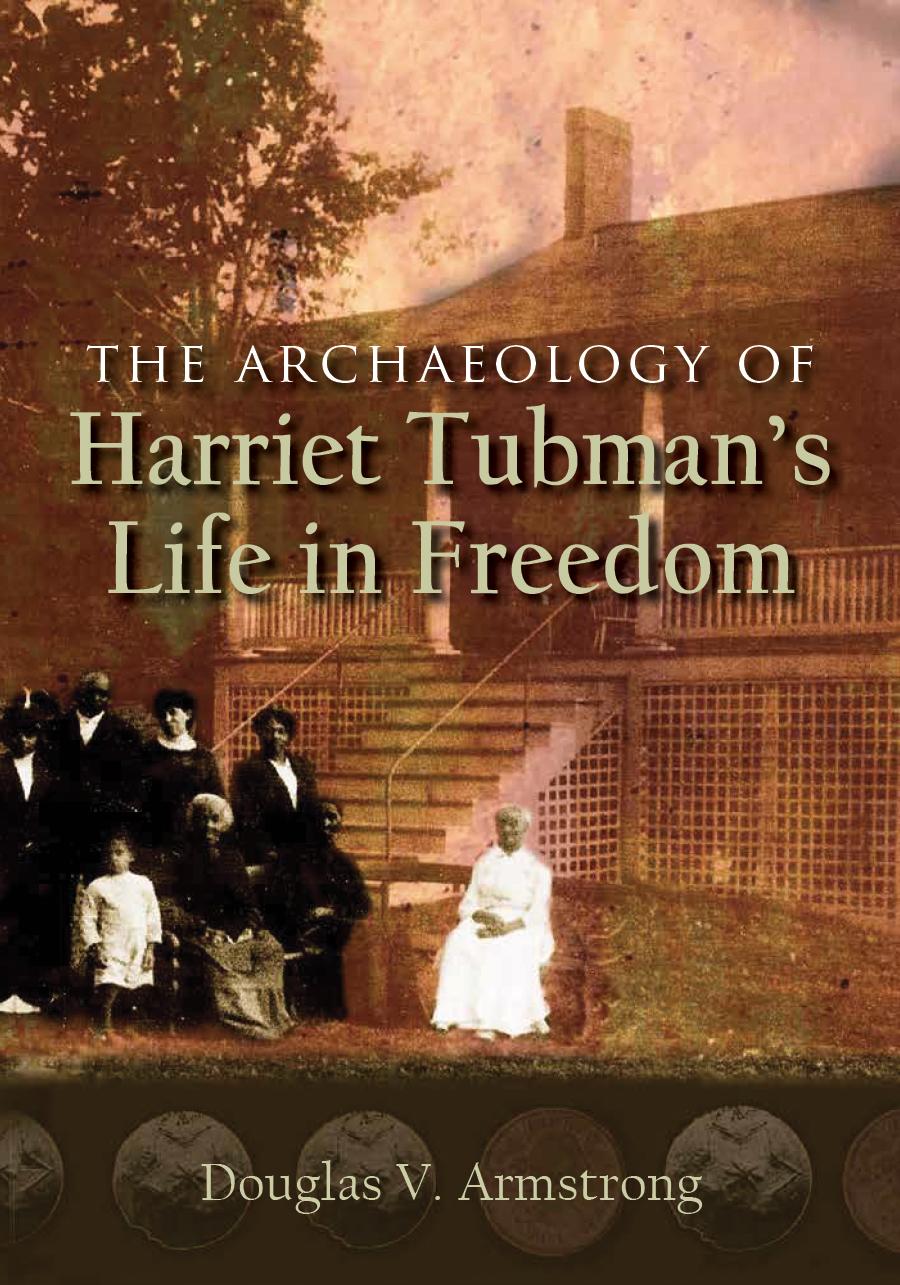
Harriet Tubman’s social activism as well as her efforts as a soldier, nurse, and spy have been retold in countless books and films and have justly elevated her to iconic status in American history. Given her fame and contributions, it is surprising how little is known of her later years and her continued efforts for social justice, women’s rights, and care for the elderly. Tubman housed and cared for her extended family, parents, brothers, sisters, nieces, and nephews, as well as many other African Americans seeking refuge. Ultimately her house just outside of Auburn, New York, would become a focal point of Tubman’s expanded efforts to provide care to those who came to her seeking shelter and support, in the form of the Harriet Tubman Home for the Aged.
In this book, Armstrong reconstructs and interprets Tubman’s public and private life in freedom through integrating his archaeological findings with historical research. The material record Tubman left behind sheds vital light on her life and the ways in which she interacted with local and national communities, giving readers a fuller understanding of her impact on the lives of African Americans. Armstrong’s research is part of a wider effort to enhance public interpretation and engagement with the Harriet Tubman Home.
Paga facilmente con carta, Klarna, Apple Pay o Google Pay. Non sei soddisfatto? Hai sempre 14 giorni per il rimborso. Leggi di più nei nostri termini. Per qualsiasi domanda, scrivici a hello@memmo.org.
Memmo rende lo studio più facile, ovunque tu sia nel mondo. Qui trovi i tuoi libri di testo e strumenti di studio intelligenti, tutto in un unico posto: riassunti, quiz, podcast e flashcard. E poi c'è Ted, il tuo compagno di studio che risponde a ogni tua domanda. Oltre 50.000 studenti studiano già qui: è stato creato per aiutarti a imparare più velocemente e a stressarti meno.