
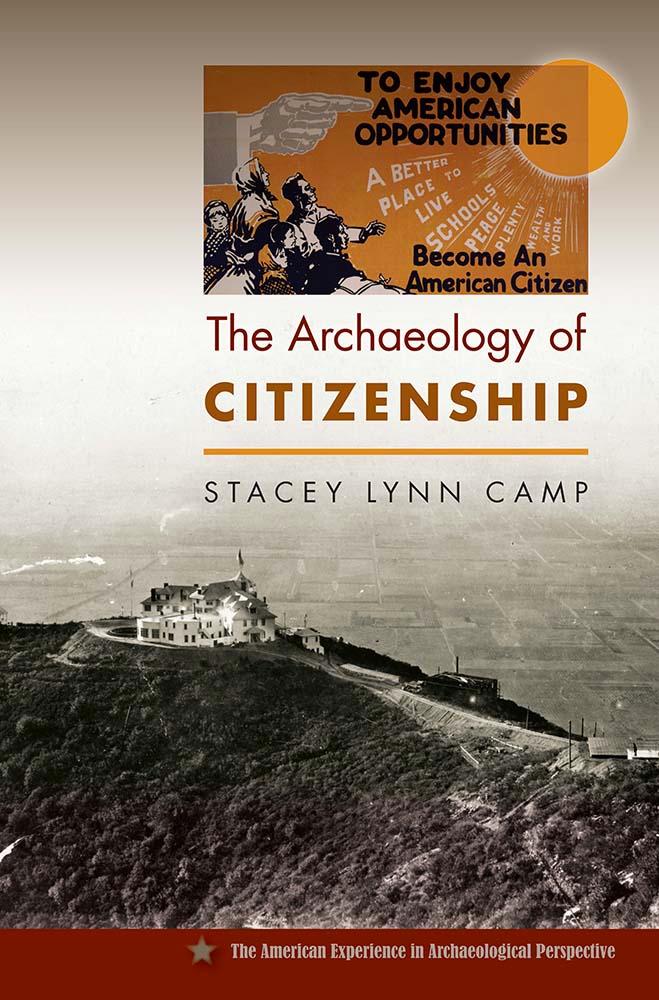
Since the founding of the United States, the rights to citizenship have been carefully crafted and policed by the Europeans who originally settled and founded the country. Immigrants have been extended and denied citizenship in various legal and cultural ways.
While the subject of citizenship has often been examined from a sociological, historical, or legal perspective, historical archaeologists have yet to fully explore the material aspects of these social boundaries. The Archaeology of Citizenship uses the material record to explore what it means to be an American.
Using a late-nineteenth-century California resort as a case study, Stacey Camp discusses how the parameters of citizenship and national belonging have been defined and redefined since Europeans arrived on the continent. In a unique and powerful contribution to the field of historical archaeology, Camp uses the remnants of material culture to reveal how those in power sought to mold the composition of the United States and how those on the margins of American society carved out their own definitions of citizenship.
Paga facilmente con carta, Klarna, Apple Pay o Google Pay. Non sei soddisfatto? Hai sempre 14 giorni per il rimborso. Leggi di più nei nostri termini. Per qualsiasi domanda, scrivici a hello@memmo.org.
Memmo rende lo studio più facile, ovunque tu sia nel mondo. Qui trovi i tuoi libri di testo e strumenti di studio intelligenti, tutto in un unico posto: riassunti, quiz, podcast e flashcard. E poi c'è Ted, il tuo compagno di studio che risponde a ogni tua domanda. Oltre 50.000 studenti studiano già qui: è stato creato per aiutarti a imparare più velocemente e a stressarti meno.
Potrebbe interessarti anche
Acquista il libro0