
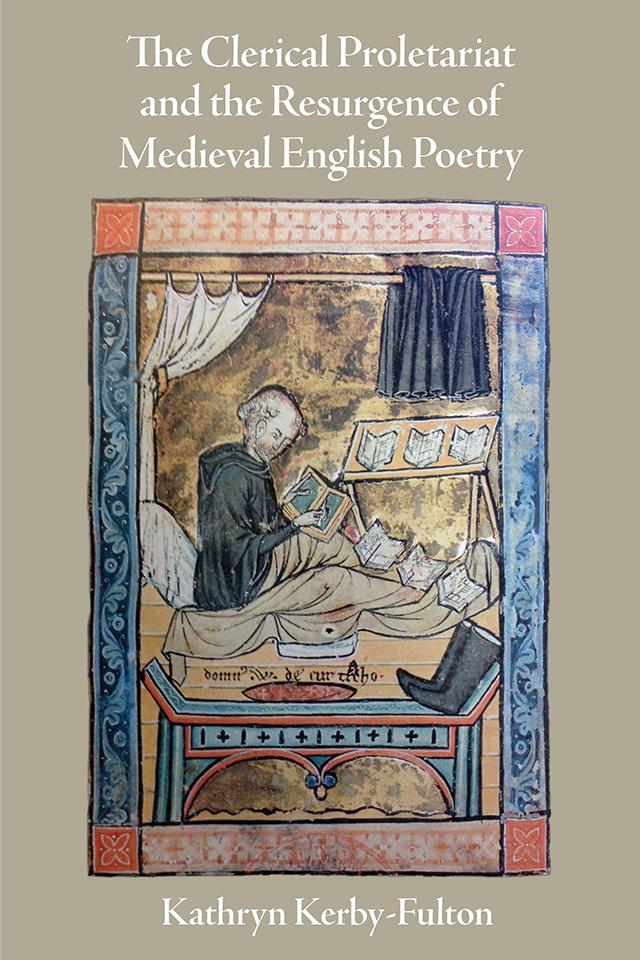
Despite the great literary achievements of Chaucer, Langland, and the Pearl Poet, Ricardian English books were still a niche market in 1400. As Kathryn Kerby-Fulton shows, however, their generation was transformational in nurturing the resurgence of English writing, in part as a result of the mass underemployment of clerks originally trained for the church but unable to find steady positions in it. Surviving instead as ecclesiastical or choral "piece workers," or in secular jobs in government or private households, this "clerical proletariat" lived and worked in liminal spaces between the ecclesiastical and lay world. And there the most enterprising found new material—and new audiences—for poetry in English.
Since English book production in London prior to 1380 was rare, Kerby-Fulton's study begins in the prior century with great regional poets, revealing their early experimentation with a new poetics of vocational crisis. Preoccupied with underemployment, patronage, careerist ambition, alienation, and changing literary fashion, these thirteenth-century writers were choosing the more avant garde option of writing in English while feeling backwards to earlier tradition in works such as Laȝamon's Brut and The Owl and the Nightingale. These early experimenters invoked semi-remembered literary forms in a still evolving written vernacular, breaking ground for Ricardian writers, who turned to these conventions during the massive clerical unemployment of the Great Schism era. Kerby-Fulton's is the first study of Langland's legacy of articulating an authorial employment crisis, and its echoes in Hoccleve and Audelay. It also uses new tools for uncovering proletarian writers in unattributed Middle English works, including the famous Harley 2253 lyrics, the "York Realist's" Second Trial from the York Cycle, St. Erkenwald, and Wynnere and Wastour. Taking in proletarian themes, including class, meritocracy, the abuse of children ("Choristers' Lament"), the gig economy, precarity, and the breaking of intellectual elites (Book of Margery Kempe), The Clerical Proletariat and the Resurgence of Medieval English Poetry speaks to both past and present employment urgencies.
Paga facilmente con carta, Klarna, Apple Pay o Google Pay. Non sei soddisfatto? Hai sempre 14 giorni per il rimborso. Leggi di più nei nostri termini. Per qualsiasi domanda, scrivici a hello@memmo.org.
Memmo rende lo studio più facile, ovunque tu sia nel mondo. Qui trovi i tuoi libri di testo e strumenti di studio intelligenti, tutto in un unico posto: riassunti, quiz, podcast e flashcard. E poi c'è Ted, il tuo compagno di studio che risponde a ogni tua domanda. Oltre 50.000 studenti studiano già qui: è stato creato per aiutarti a imparare più velocemente e a stressarti meno.