
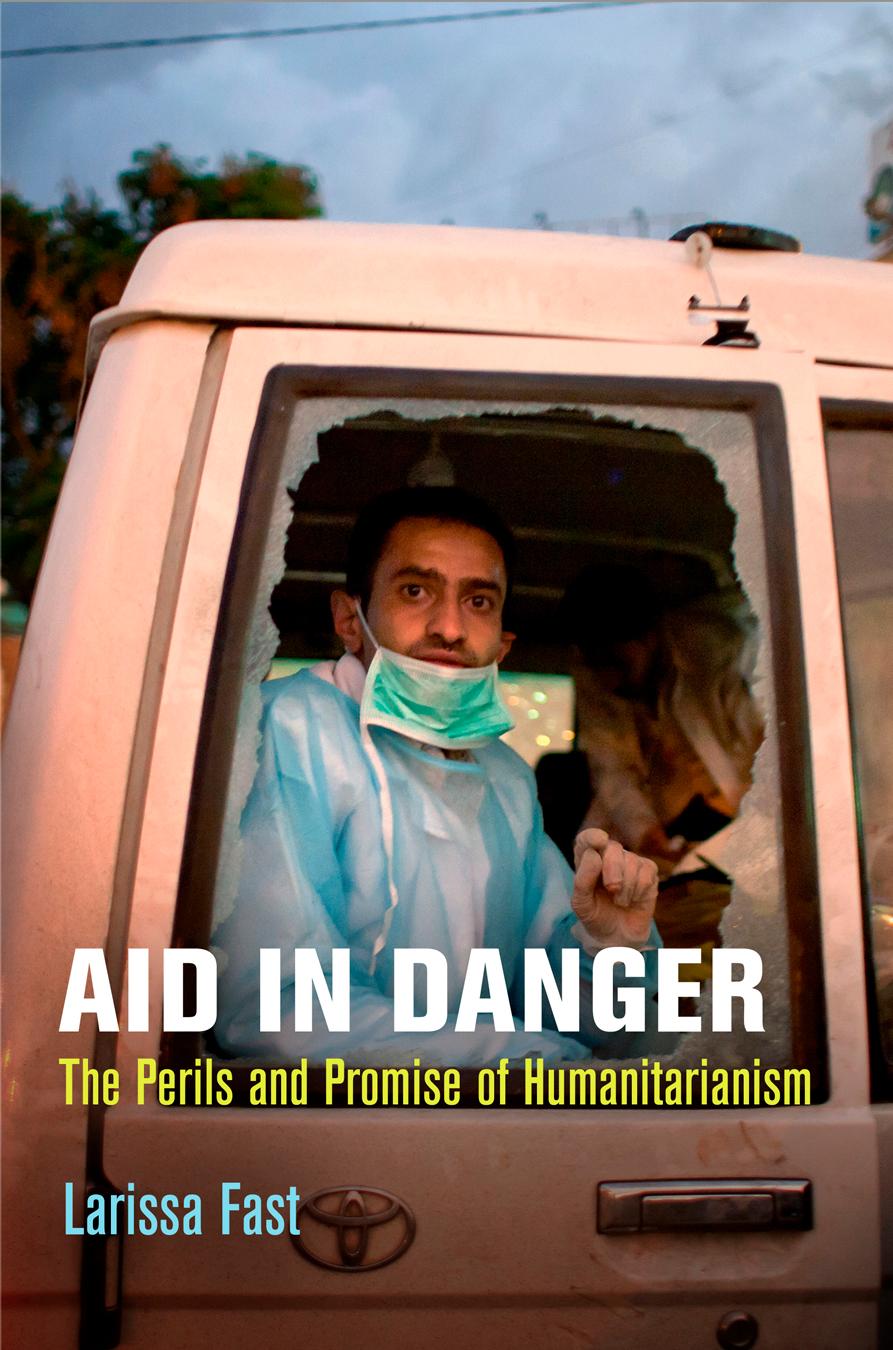
Humanitarian aid workers increasingly remain present in contexts of violence and are injured, kidnapped, and killed as a result. Since 9/11 and in response to these dangers, aid organizations have fortified themselves to shield their staff and programs from outside threats. In Aid in Danger, Larissa Fast critically examines the causes of violence against aid workers and the consequences of the approaches aid agencies use to protect themselves from attack.
Based on more than a decade of research, Aid in Danger explores the assumptions underpinning existing explanations of and responses to violence against aid workers. According to Fast, most explanations of attacks locate the causes externally and maintain an image of aid workers as an exceptional category of civilians. The resulting approaches to security rely on separation and fortification and alienate aid workers from those in need, representing both a symptom and a cause of crisis in the humanitarian system. Missing from most analyses are the internal vulnerabilities, exemplified in the everyday decisions and ordinary human frailties and organizational mistakes that sometimes contribute to the conditions leading to violence. This oversight contributes to the normalization of danger in aid work and undermines the humanitarian ethos. As an alternative, Fast proposes a relational framework that captures both external threats and internal vulnerabilities. By uncovering overlooked causes of violence, Aid in Danger offers a unique perspective on the challenges of providing aid in perilous settings and on the prospects of reforming the system in service of core humanitarian values.
Paga facilmente con carta, Klarna, Apple Pay o Google Pay. Non sei soddisfatto? Hai sempre 14 giorni per il rimborso. Leggi di più nei nostri termini. Per qualsiasi domanda, scrivici a hello@memmo.org.
Memmo rende lo studio più facile, ovunque tu sia nel mondo. Qui trovi i tuoi libri di testo e strumenti di studio intelligenti, tutto in un unico posto: riassunti, quiz, podcast e flashcard. E poi c'è Ted, il tuo compagno di studio che risponde a ogni tua domanda. Oltre 50.000 studenti studiano già qui: è stato creato per aiutarti a imparare più velocemente e a stressarti meno.