
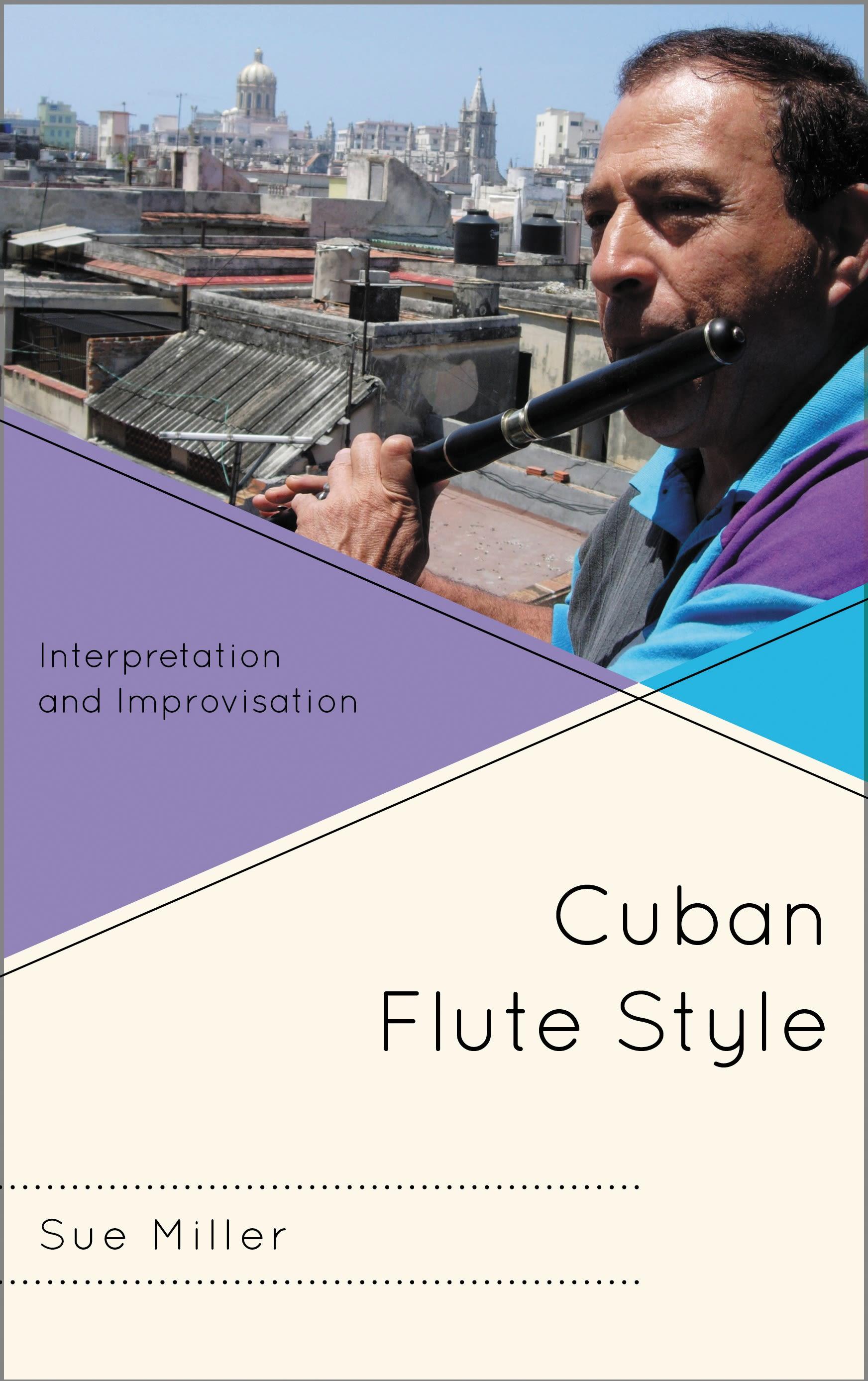
Richard Egües and José Fajardo are universally regarded as the leading exponents of charanga flute playing, an improvisatory style that crystallized in 1950s Cuba with the rise of the mambo and the chachachá. Despite the commercial success of their recordings with Orquesta Aragón and Fajardo y sus Estrellas and their influence not only on Cuban flute players but also on other Latin dance musicians, no in-depth analytical study of their flute solos exists.
In Cuban Flute Style: Interpretation and Improvisation, Sue Miller—music historian, charanga flute player, and former student of Richard Egües—examines the early-twentieth-century decorative style of flute playing in the Cuban danzón and its links with the later soloistic style of the 1950s as exemplified by Fajardo and Egües. Transcriptions and analyses of recorded performances demonstrate the characteristic elements of the style as well as the styles of individual players. A combination of musicological analysis and ethnomusicological fieldwork reveals the polyrhythmic and melodic aspects of the Cuban flute style, with commentary from flutists Richard Egües, Joaquín Oliveros, Polo Tamayo, Eddy Zervigón, and other renowned players.
Miller also covers techniques for flutists seeking to learn the style—including altissimo fingerings for the Boehm flute and fingerings for the five-key charanga flute—as well as guidance on articulation, phrasing, repertoire, practicing improvisation, and working with recordings. Cuban Flute Style will appeal to those working in the fields of Cuban music, improvisation, music analysis, ethnomusicology, performance and performance practice, popular music, and cultural theory.
In Cuban Flute Style: Interpretation and Improvisation, Sue Miller—music historian, charanga flute player, and former student of Richard Egües—examines the early-twentieth-century decorative style of flute playing in the Cuban danzón and its links with the later soloistic style of the 1950s as exemplified by Fajardo and Egües. Transcriptions and analyses of recorded performances demonstrate the characteristic elements of the style as well as the styles of individual players. A combination of musicological analysis and ethnomusicological fieldwork reveals the polyrhythmic and melodic aspects of the Cuban flute style, with commentary from flutists Richard Egües, Joaquín Oliveros, Polo Tamayo, Eddy Zervigón, and other renowned players.
Miller also covers techniques for flutists seeking to learn the style—including altissimo fingerings for the Boehm flute and fingerings for the five-key charanga flute—as well as guidance on articulation, phrasing, repertoire, practicing improvisation, and working with recordings. Cuban Flute Style will appeal to those working in the fields of Cuban music, improvisation, music analysis, ethnomusicology, performance and performance practice, popular music, and cultural theory.
Paga facilmente con carta, Klarna, Apple Pay o Google Pay. Non sei soddisfatto? Hai sempre 14 giorni per il rimborso. Leggi di più nei nostri termini. Per qualsiasi domanda, scrivici a hello@memmo.org.
Memmo rende lo studio più facile, ovunque tu sia nel mondo. Qui trovi i tuoi libri di testo e strumenti di studio intelligenti, tutto in un unico posto: riassunti, quiz, podcast e flashcard. E poi c'è Ted, il tuo compagno di studio che risponde a ogni tua domanda. Oltre 50.000 studenti studiano già qui: è stato creato per aiutarti a imparare più velocemente e a stressarti meno.