
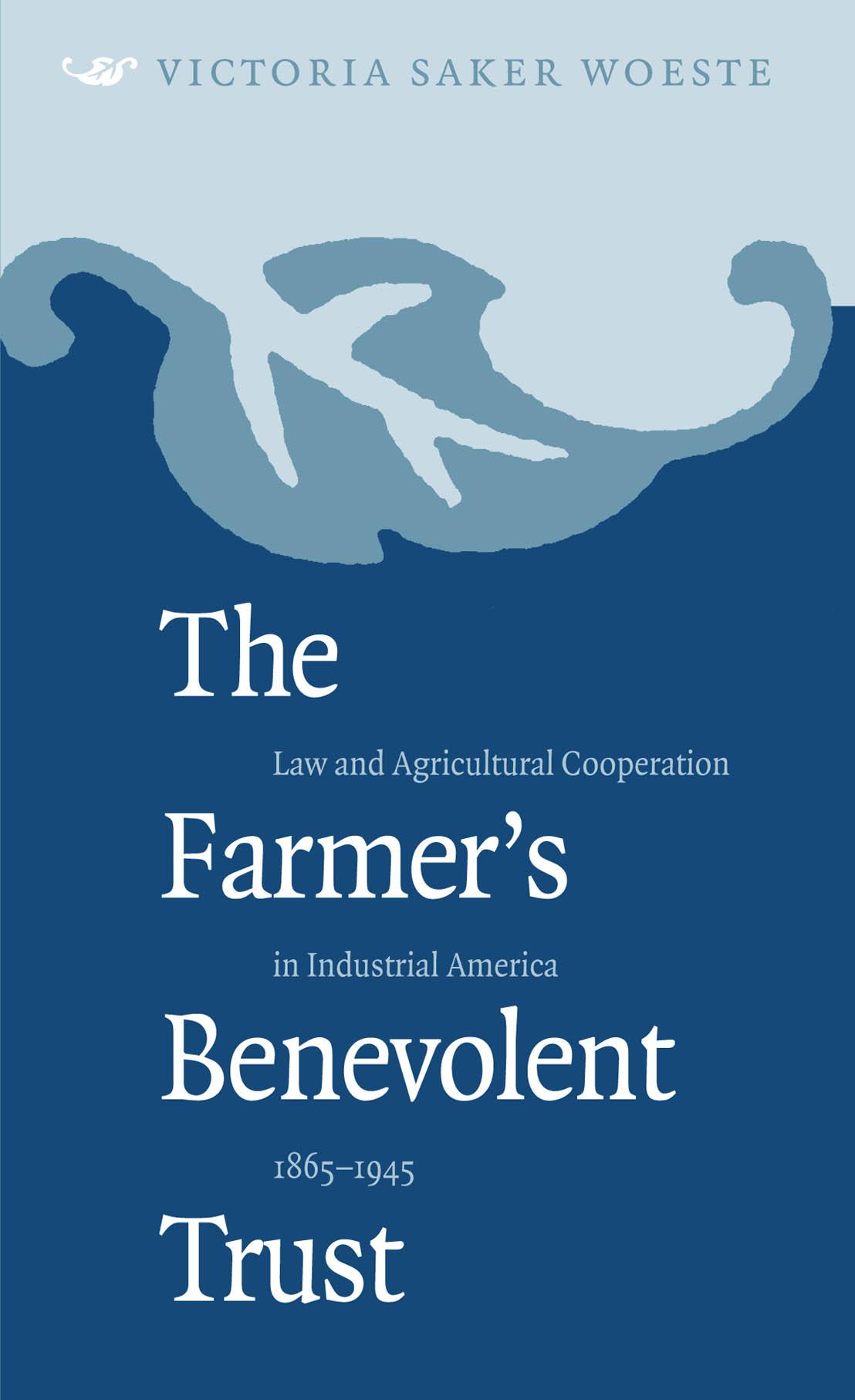
Americans have always regarded farming as a special calling, one
imbued with the Jeffersonian values of individualism and self-
sufficiency. As Victoria Saker Woeste demonstrates, farming’s
cultural image continued to shape Americans' expectations of
rural society long after industrialization radically transformed
the business of agriculture. Even as farmers enthusiastically
embraced cooperative marketing to create unprecedented industry-
wide monopolies and control prices, they claimed they were simply
preserving their traditional place in society. In fact, the new
legal form of cooperation far outpaced judicial and legislative
developments at both the state and federal levels, resulting in a
legal and political struggle to redefine the place of agriculture
in the industrial market.
Woeste shows that farmers were adept at both borrowing such
legal forms as the corporate trust for their own purposes and
obtaining legislative recognition of the new cooperative style.
In the process, however, the first rule of capitalism — every
person for him- or herself — trumped the traditional principle of
cooperation. After 1922, state and federal law wholly endorsed
cooperation’s new form. Indeed, says Woeste, because of its
corporate roots, this model of cooperation fit so neatly with the
regulatory paradigms of the first half of the twentieth century
that it became an essential policy of the modern administrative
state.
imbued with the Jeffersonian values of individualism and self-
sufficiency. As Victoria Saker Woeste demonstrates, farming’s
cultural image continued to shape Americans' expectations of
rural society long after industrialization radically transformed
the business of agriculture. Even as farmers enthusiastically
embraced cooperative marketing to create unprecedented industry-
wide monopolies and control prices, they claimed they were simply
preserving their traditional place in society. In fact, the new
legal form of cooperation far outpaced judicial and legislative
developments at both the state and federal levels, resulting in a
legal and political struggle to redefine the place of agriculture
in the industrial market.
Woeste shows that farmers were adept at both borrowing such
legal forms as the corporate trust for their own purposes and
obtaining legislative recognition of the new cooperative style.
In the process, however, the first rule of capitalism — every
person for him- or herself — trumped the traditional principle of
cooperation. After 1922, state and federal law wholly endorsed
cooperation’s new form. Indeed, says Woeste, because of its
corporate roots, this model of cooperation fit so neatly with the
regulatory paradigms of the first half of the twentieth century
that it became an essential policy of the modern administrative
state.
Paga facilmente con carta, Klarna, Apple Pay o Google Pay. Non sei soddisfatto? Hai sempre 14 giorni per il rimborso. Leggi di più nei nostri termini. Per qualsiasi domanda, scrivici a hello@memmo.org.
Memmo rende lo studio più facile, ovunque tu sia nel mondo. Qui trovi i tuoi libri di testo e strumenti di studio intelligenti, tutto in un unico posto: riassunti, quiz, podcast e flashcard. E poi c'è Ted, il tuo compagno di studio che risponde a ogni tua domanda. Oltre 50.000 studenti studiano già qui: è stato creato per aiutarti a imparare più velocemente e a stressarti meno.
Potrebbe interessarti anche
Acquista il libro0