
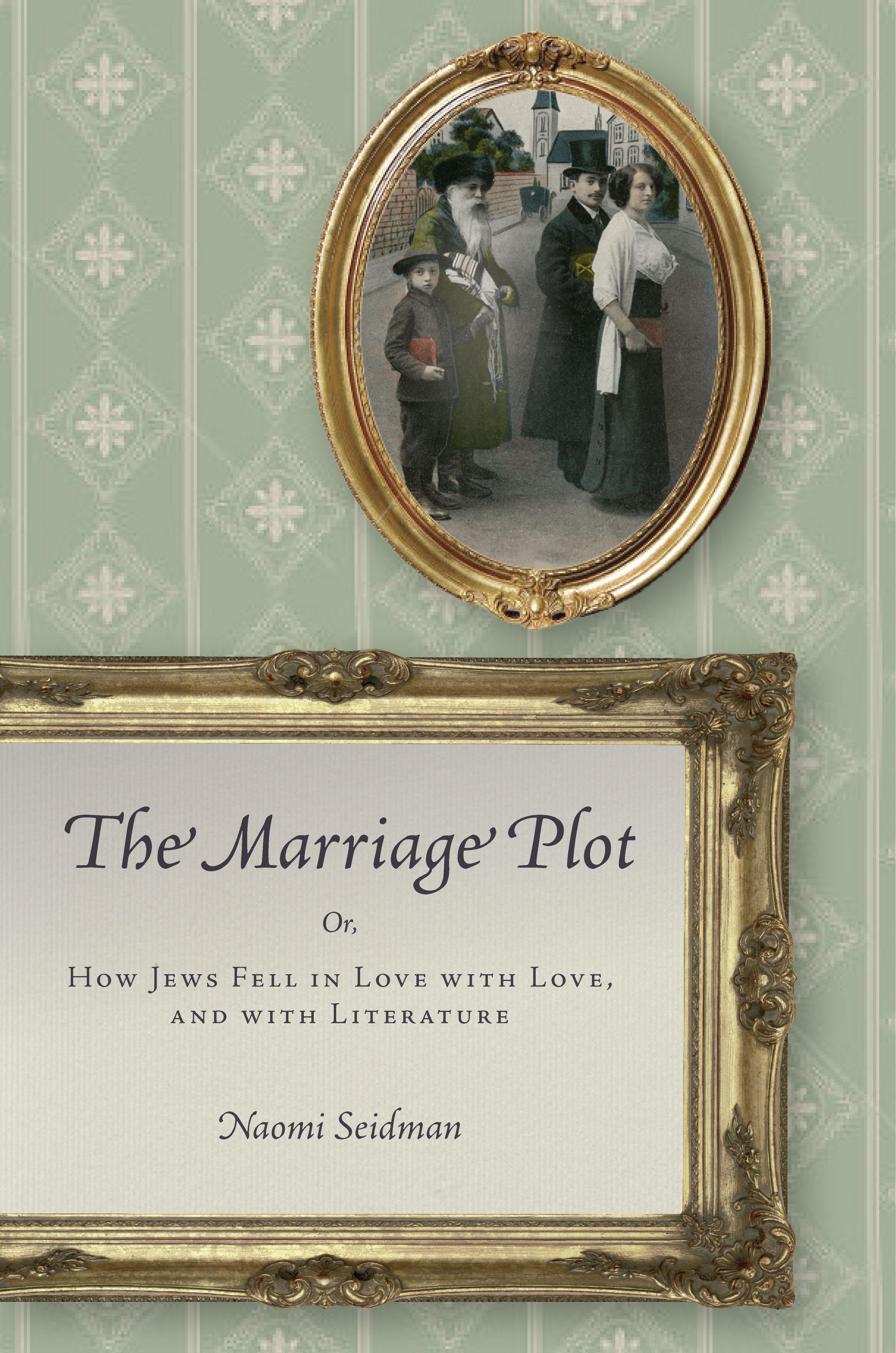
For nineteenth-century Eastern European Jews, modernization entailed the abandonment of arranged marriage in favor of the "love match." Romantic novels taught Jewish readers the rules of romance and the choreography of courtship. But because these new conceptions of romance were rooted in the Christian and chivalric traditions, the Jewish embrace of "the love religion" was always partial.
In The Marriage Plot, Naomi Seidman considers the evolution of Jewish love and marriage though the literature that provided Jews with a sentimental education, highlighting a persistent ambivalence in the Jewish adoption of European romantic ideologies. Nineteenth-century Hebrew and Yiddish literature tempered romantic love with the claims of family and community, and treated the rules of gender complementarity as comedic fodder. Twentieth-century Jewish writers turned back to tradition, finding pleasures in matchmaking, intergenerational ties, and sexual segregation. In the modern Jewish voices of Sigmund Freud, Erica Jong, Philip Roth, and Tony Kushner, the Jewish heretical challenge to the European romantic sublime has become the central sexual ideology of our time.
Paga facilmente con carta, Klarna, Apple Pay o Google Pay. Non sei soddisfatto? Hai sempre 14 giorni per il rimborso. Leggi di più nei nostri termini. Per qualsiasi domanda, scrivici a hello@memmo.org.
Memmo rende lo studio più facile, ovunque tu sia nel mondo. Qui trovi i tuoi libri di testo e strumenti di studio intelligenti, tutto in un unico posto: riassunti, quiz, podcast e flashcard. E poi c'è Ted, il tuo compagno di studio che risponde a ogni tua domanda. Oltre 50.000 studenti studiano già qui: è stato creato per aiutarti a imparare più velocemente e a stressarti meno.