
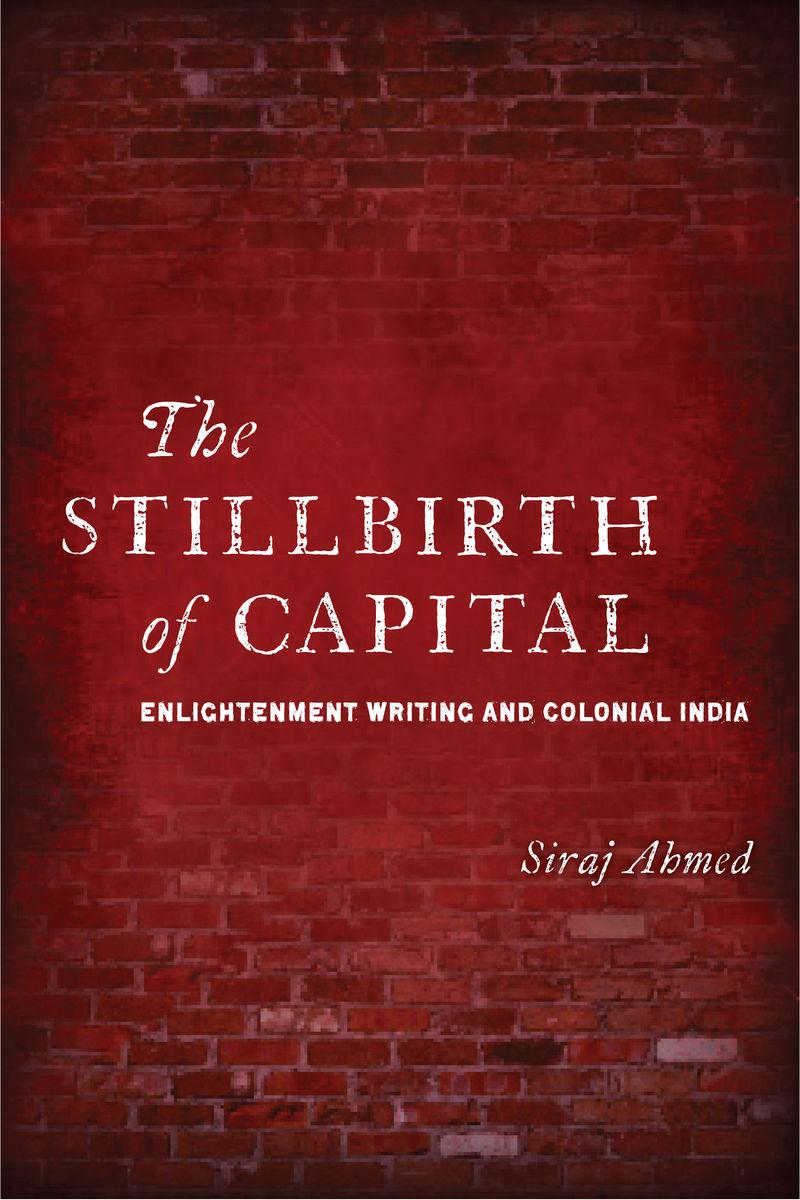
This book targets one of the humanities' most widely held premises: namely, that the European Enlightenment laid the groundwork for modern imperialism. It argues instead that the Enlightenment's vision of empire calls our own historical and theoretical paradigms into question. While eighteenth-century British India has not received nearly the same attention as nineteenth- and twentieth-century empires, it is the place where colonial rule and Enlightenment reason first became entwined. The Stillbirth of Capital makes its case by examining every work about British India written by a major author from 1670 to 1815, a period that coincides not only with the Enlightenment but also with the institution of a global economy.
In contrast to both Marxist and liberal scholars, figures such as Dryden, Defoe, Voltaire, Sterne, Smith, Bentham, Burke, Sheridan, and Scott locate modernity's roots not in the birth of capital but rather in the collusion of sovereign power and monopoly commerce, which used Indian Ocean wealth to finance the unfathomable costs of modern war. Ahmed reveals the pertinence of eighteenth-century writing to our own moment of danger, when the military alliance of hegemonic states and private corporations has become even more far-reaching than it was in centuries past.
Paga facilmente con carta, Klarna, Apple Pay o Google Pay. Non sei soddisfatto? Hai sempre 14 giorni per il rimborso. Leggi di più nei nostri termini. Per qualsiasi domanda, scrivici a hello@memmo.org.
Memmo rende lo studio più facile, ovunque tu sia nel mondo. Qui trovi i tuoi libri di testo e strumenti di studio intelligenti, tutto in un unico posto: riassunti, quiz, podcast e flashcard. E poi c'è Ted, il tuo compagno di studio che risponde a ogni tua domanda. Oltre 50.000 studenti studiano già qui: è stato creato per aiutarti a imparare più velocemente e a stressarti meno.