
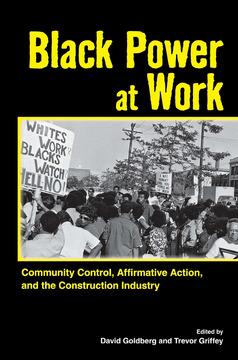
Black Power at Work chronicles the history of direct action campaigns to open up the construction industry to black workers in the 1960s and 1970s. The book's case studies of local movements in Brooklyn, Newark, the Bay Area, Detroit, Chicago, and Seattle show how struggles against racism in the construction industry shaped the emergence of Black Power politics outside the U.S. South. In the process, "community control" of the construction industry—especially government War on Poverty and post-rebellion urban reconstruction projects— became central to community organizing for black economic self-determination and political autonomy.
The history of Black Power's community organizing tradition shines a light on more recent debates about job training and placement for unemployed, underemployed, and underrepresented workers. Politicians responded to Black Power protests at federal construction projects by creating modern affirmative action and minority set-aside programs in the late 1960s and early 1970s, but these programs relied on "voluntary" compliance by contractors and unions, government enforcement was inadequate, and they were not connected to jobs programs. Forty years later, the struggle to have construction jobs serve as a pathway out of poverty for inner city residents remains an unfinished part of the struggle for racial justice and labor union reform in the United States.
Paga facilmente con carta, Klarna, Apple Pay o Google Pay. Non sei soddisfatto? Hai sempre 14 giorni per il rimborso. Leggi di più nei nostri termini. Per qualsiasi domanda, scrivici a hello@memmo.org.
Memmo rende lo studio più facile, ovunque tu sia nel mondo. Qui trovi i tuoi libri di testo e strumenti di studio intelligenti, tutto in un unico posto: riassunti, quiz, podcast e flashcard. E poi c'è Ted, il tuo compagno di studio che risponde a ogni tua domanda. Oltre 50.000 studenti studiano già qui: è stato creato per aiutarti a imparare più velocemente e a stressarti meno.