
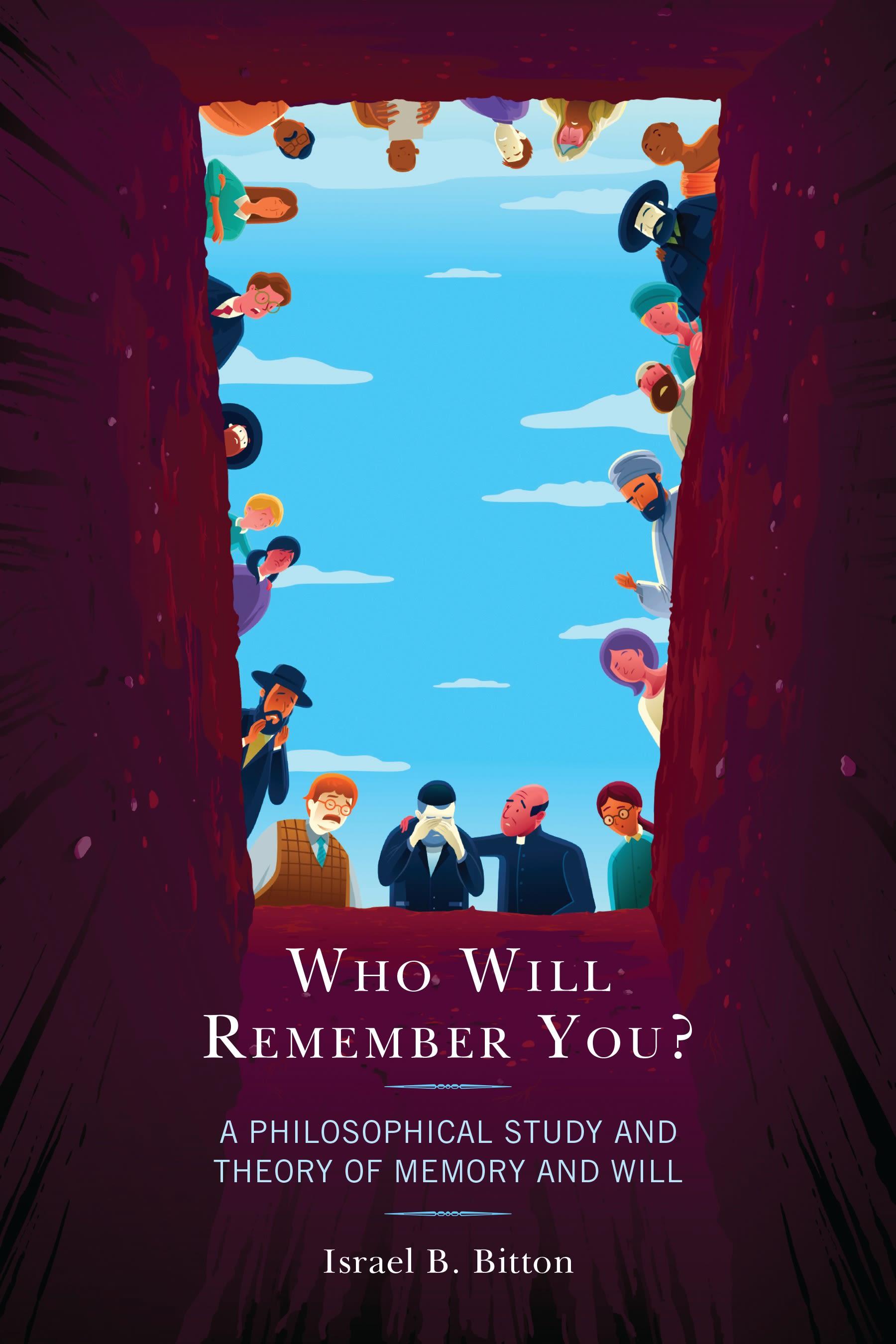
Memory. A word so often said, often thought of, and continuously studied. Yet, we know relatively so little other than how vast and magnificent it is. In Who Will Remember You? A Philosophical History and Theory of Memory and Will, Israel B. Bitton, offers an interdisciplinary perspective that unifies philosophy of memory with history, neuroscience, culture and ethics, yielding novel insights into the elusive phenomena of memory, namely its universality. Bitton posits that the current and typical “misunderstanding of memory” stems from over-specialization in scientific research, a compartmentalization that does not support reaching holistic conclusions which are necessary for fully appreciating the totality of memory phenomena. No longer should memory be thought of as residing only in the brain, for the body is known to have memory too, but neither should it be thought of as exclusively human since it inheres in all matter as a physical and biological fact. Indeed, Bitton extends the philosophical and practical meanings of memory furthest in great detail, employing the latest research in neuroscience to support his case.
In this work, Bitton traces the kernels of these ideas from the ancient Egyptians and Israelites all the way through to the modern period in philosophy, science and popular culture, demonstrating that his philosophical formulation has always been and remains accepted de facto by society as can easily be detected in various social trends. Upon offering his holistic account that considers the magnitude of memory phenomena across several disciplines, Bitton presents a novel theory that postulates the primary human drive as categorized by a will to significance, which, because of the universality of memory becomes a will to memorability. By placing the individual at the center of their own memory-reality, they can be empowered to safeguard, enhance, and extend the universal force of memory within and around them.
From that vantage point, this book provides its audience with ideas meant to provoke and incite the readers’ own reflections on memory’s meaning and import as well as what it takes to be an ethical “memory agent” in an era of hyper-fake news.
In this work, Bitton traces the kernels of these ideas from the ancient Egyptians and Israelites all the way through to the modern period in philosophy, science and popular culture, demonstrating that his philosophical formulation has always been and remains accepted de facto by society as can easily be detected in various social trends. Upon offering his holistic account that considers the magnitude of memory phenomena across several disciplines, Bitton presents a novel theory that postulates the primary human drive as categorized by a will to significance, which, because of the universality of memory becomes a will to memorability. By placing the individual at the center of their own memory-reality, they can be empowered to safeguard, enhance, and extend the universal force of memory within and around them.
From that vantage point, this book provides its audience with ideas meant to provoke and incite the readers’ own reflections on memory’s meaning and import as well as what it takes to be an ethical “memory agent” in an era of hyper-fake news.
Paga facilmente con carta, Klarna, Apple Pay o Google Pay. Non sei soddisfatto? Hai sempre 14 giorni per il rimborso. Leggi di più nei nostri termini. Per qualsiasi domanda, scrivici a hello@memmo.org.
Memmo rende lo studio più facile, ovunque tu sia nel mondo. Qui trovi i tuoi libri di testo e strumenti di studio intelligenti, tutto in un unico posto: riassunti, quiz, podcast e flashcard. E poi c'è Ted, il tuo compagno di studio che risponde a ogni tua domanda. Oltre 50.000 studenti studiano già qui: è stato creato per aiutarti a imparare più velocemente e a stressarti meno.