
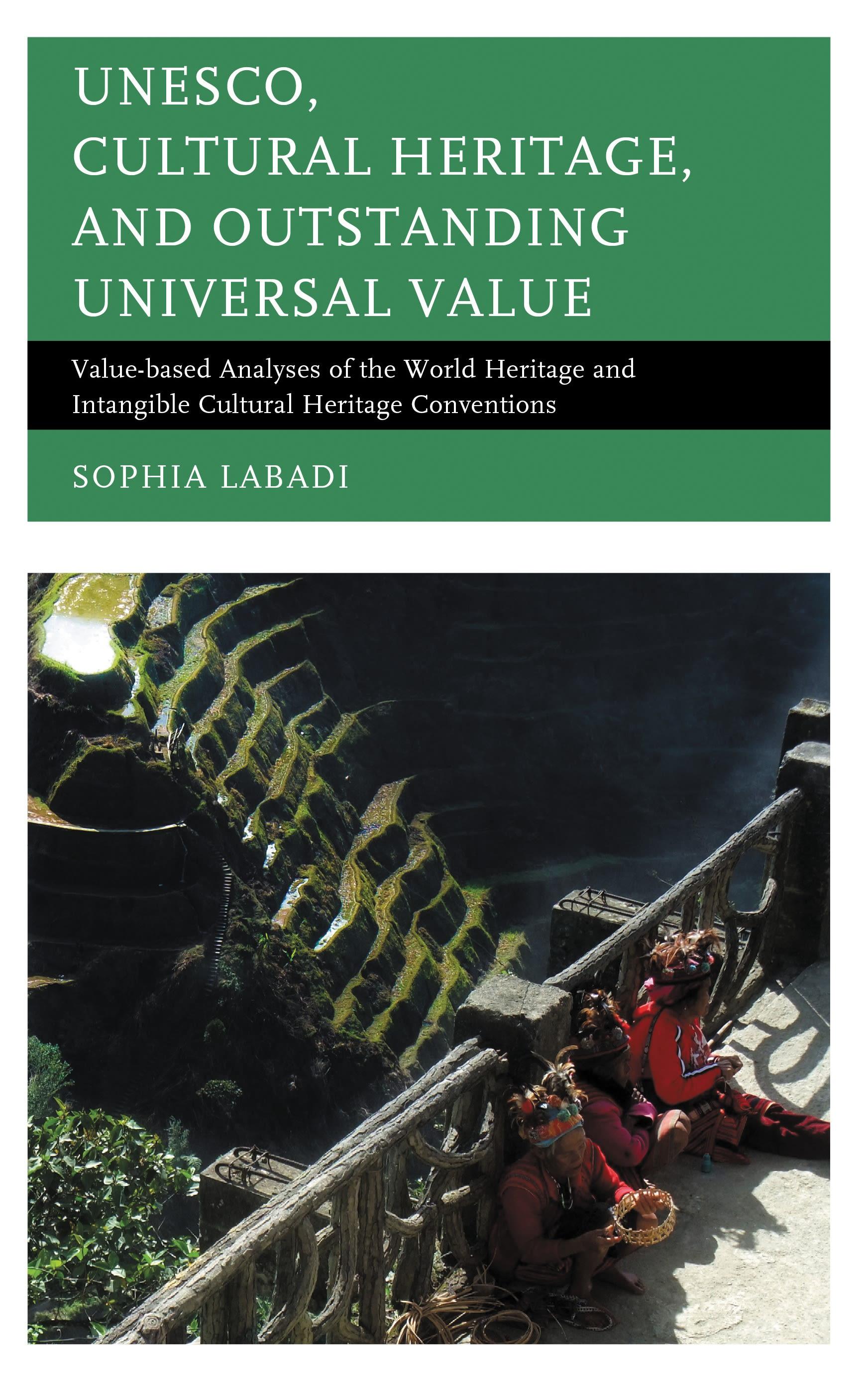
This book explores the international legal framework developed by UNESCO to identify and protect world heritage and its implementation at the national level. Drawing on close policy analysis of UNESCO’s major documents, extensive professional experience at UNESCO, as well as in-depth analyses of case studies from Asia, Europe, and Latin America, Sophia Labadi offers a nuanced discussion of the constitutive role of national understandings of a universalist framework. The discussion departs from considerations of the World Heritage Convention as Eurocentric and offers a more complex analysis of how official narratives relating to non-European and non-traditional heritage mark a subversion of a dominant and canonical European representation of heritage. It engages simultaneously with a diversity of discourses across the humanities and social sciences and with related theories pertaining not only to tangible and intangible heritage, conservation, and archaeology but also political science, social theory, tourism and development studies, economics, cultural, and gender studies. In doing so, it provides a critical review of many key concepts, including tourism, development, sustainability, intangible heritage, and authenticity.
Paga facilmente con carta, Klarna, Apple Pay o Google Pay. Non sei soddisfatto? Hai sempre 14 giorni per il rimborso. Leggi di più nei nostri termini. Per qualsiasi domanda, scrivici a hello@memmo.org.
Memmo rende lo studio più facile, ovunque tu sia nel mondo. Qui trovi i tuoi libri di testo e strumenti di studio intelligenti, tutto in un unico posto: riassunti, quiz, podcast e flashcard. E poi c'è Ted, il tuo compagno di studio che risponde a ogni tua domanda. Oltre 50.000 studenti studiano già qui: è stato creato per aiutarti a imparare più velocemente e a stressarti meno.