
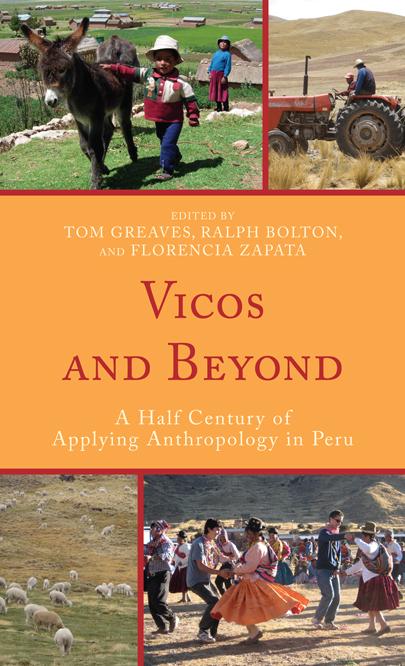
Vicos and Beyond
Autore: Karsten Paerregaard, Paul L. Doughty, Billie Jean Isbell, Jason Pribilsky, Clifford Barnett, Jorge Flores Ochoa, William Mangin, Enrique Mayer, William P. Mitchell, Eric B. Ross, Tom Greaves, Ralph Bolton, Florencia Zapata
Editore: Bloomsbury Publishing
Edizione: 1
Data di pubblicazione: 2010
ISBN: 9780759119741
In 1952, Professor Allan Holmberg arranged for Cornell University to lease the Hacienda Vicos, an agricultural estate in the central Peruvian highlands on which some 1800 Quechua-speaking highland peasants resided. Between 1952 and 1957 Holmberg, with colleagues and students, initiated a set of social, economic, and agrarian changes, and nurtured mechanisms for community-based management of the estate by the resident peasants. By the end of a second lease in 1962, sufficient political pressure had been brought to bear on a reluctant national government to force the sale of Vicos to its people. Holmberg's twin goals for the Vicos Project were to bring about community possession of their land base and to study the process as it unfolded, advancing anthropological understanding of cultural change. To describe the process of doing both, he invented the term "participant intervention."
Despite the large corpus of existing Vicos publications, this book contains much information that here reaches print for the first time. The chapter authors do not entirely agree on various key points regarding the nature of the Vicos Project, the intentions of project personnel and community actors, and what interpretive framework is most valid; in part, these disagreements reflect the relevance and importance of the Vicos Project to contemporary applied anthropologists and the contrasting ways in which any historical event can be explained. Some chapters contrast Vicos with other projects in the southern Andean highlands; others examine new developments at Vicos itself. The conclusion suggests how those changes should be understood, within Andean anthropology and within anthropology more generally.
Despite the large corpus of existing Vicos publications, this book contains much information that here reaches print for the first time. The chapter authors do not entirely agree on various key points regarding the nature of the Vicos Project, the intentions of project personnel and community actors, and what interpretive framework is most valid; in part, these disagreements reflect the relevance and importance of the Vicos Project to contemporary applied anthropologists and the contrasting ways in which any historical event can be explained. Some chapters contrast Vicos with other projects in the southern Andean highlands; others examine new developments at Vicos itself. The conclusion suggests how those changes should be understood, within Andean anthropology and within anthropology more generally.
Paga facilmente con carta, Klarna, Apple Pay o Google Pay. Non sei soddisfatto? Hai sempre 14 giorni per il rimborso. Leggi di più nei nostri termini. Per qualsiasi domanda, scrivici a hello@memmo.org.
Memmo rende lo studio più facile, ovunque tu sia nel mondo. Qui trovi i tuoi libri di testo e strumenti di studio intelligenti, tutto in un unico posto: riassunti, quiz, podcast e flashcard. E poi c'è Ted, il tuo compagno di studio che risponde a ogni tua domanda. Oltre 50.000 studenti studiano già qui: è stato creato per aiutarti a imparare più velocemente e a stressarti meno.