
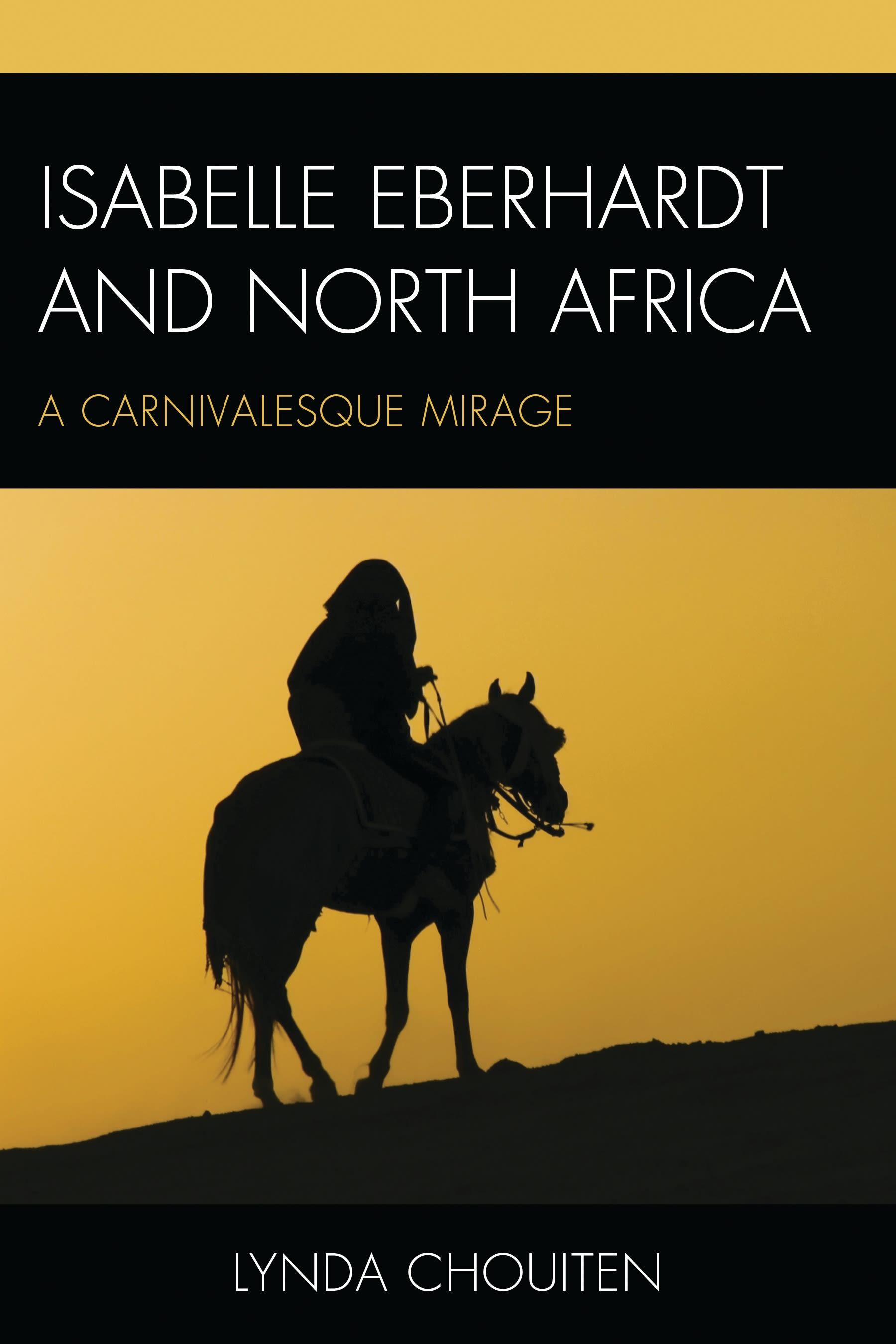
As a woman who traversed the North African Orient in male costume, who spoke Arabic as well as French, and who professed Islam while transgressing many of its instructions, Isabelle Eberhardt seems to fit within Mikhail Bakhtin’s definition of the carnivalesque as the impulse to blend that which is usually kept separate by artificial boundaries and hierarchies. Nevertheless, this study demonstrates that her evolution in the Maghreb is carnivalesque only in appearance.
Despite her transvestism, the writer left unquestioned the traditional definitions of masculinity and femininity; it is her subscription to the patriarchal equation of maleness with power and womanhood with weakness which makes her borrow a masculine identity. In a similar way, her appropriation of several elements of Oriental culture does not prevent her from reproducing age-old Orientalist stereotypes. As portrayed in her texts, the natives are either aestheticized as picturesque figures from a bygone age or denigrated as uncivilized, dark-minded creatures. And because Orientalism, as Edward Said has famously argued, is but a textual manifestation of colonialism, Eberhardt’s Orientalist texts make her the accomplice of the colonialist project, a project which she also served by acting as a mediator between General Lyautey and native tribes. In discussing Eberhardt’s involvement in the colonial mission and her perpetuation of the patriarchal and Orientalist traditions, this study questions the image of rebel-figure that is usually assigned to her. Instead, it shows the writer’s literary and political gestures to be embedded in a marked quest for empowerment through the double (literary and political) conquest of the Orient.
Despite her transvestism, the writer left unquestioned the traditional definitions of masculinity and femininity; it is her subscription to the patriarchal equation of maleness with power and womanhood with weakness which makes her borrow a masculine identity. In a similar way, her appropriation of several elements of Oriental culture does not prevent her from reproducing age-old Orientalist stereotypes. As portrayed in her texts, the natives are either aestheticized as picturesque figures from a bygone age or denigrated as uncivilized, dark-minded creatures. And because Orientalism, as Edward Said has famously argued, is but a textual manifestation of colonialism, Eberhardt’s Orientalist texts make her the accomplice of the colonialist project, a project which she also served by acting as a mediator between General Lyautey and native tribes. In discussing Eberhardt’s involvement in the colonial mission and her perpetuation of the patriarchal and Orientalist traditions, this study questions the image of rebel-figure that is usually assigned to her. Instead, it shows the writer’s literary and political gestures to be embedded in a marked quest for empowerment through the double (literary and political) conquest of the Orient.
Paga facilmente con carta, Klarna, Apple Pay o Google Pay. Non sei soddisfatto? Hai sempre 14 giorni per il rimborso. Leggi di più nei nostri termini. Per qualsiasi domanda, scrivici a hello@memmo.org.
Memmo rende lo studio più facile, ovunque tu sia nel mondo. Qui trovi i tuoi libri di testo e strumenti di studio intelligenti, tutto in un unico posto: riassunti, quiz, podcast e flashcard. E poi c'è Ted, il tuo compagno di studio che risponde a ogni tua domanda. Oltre 50.000 studenti studiano già qui: è stato creato per aiutarti a imparare più velocemente e a stressarti meno.