
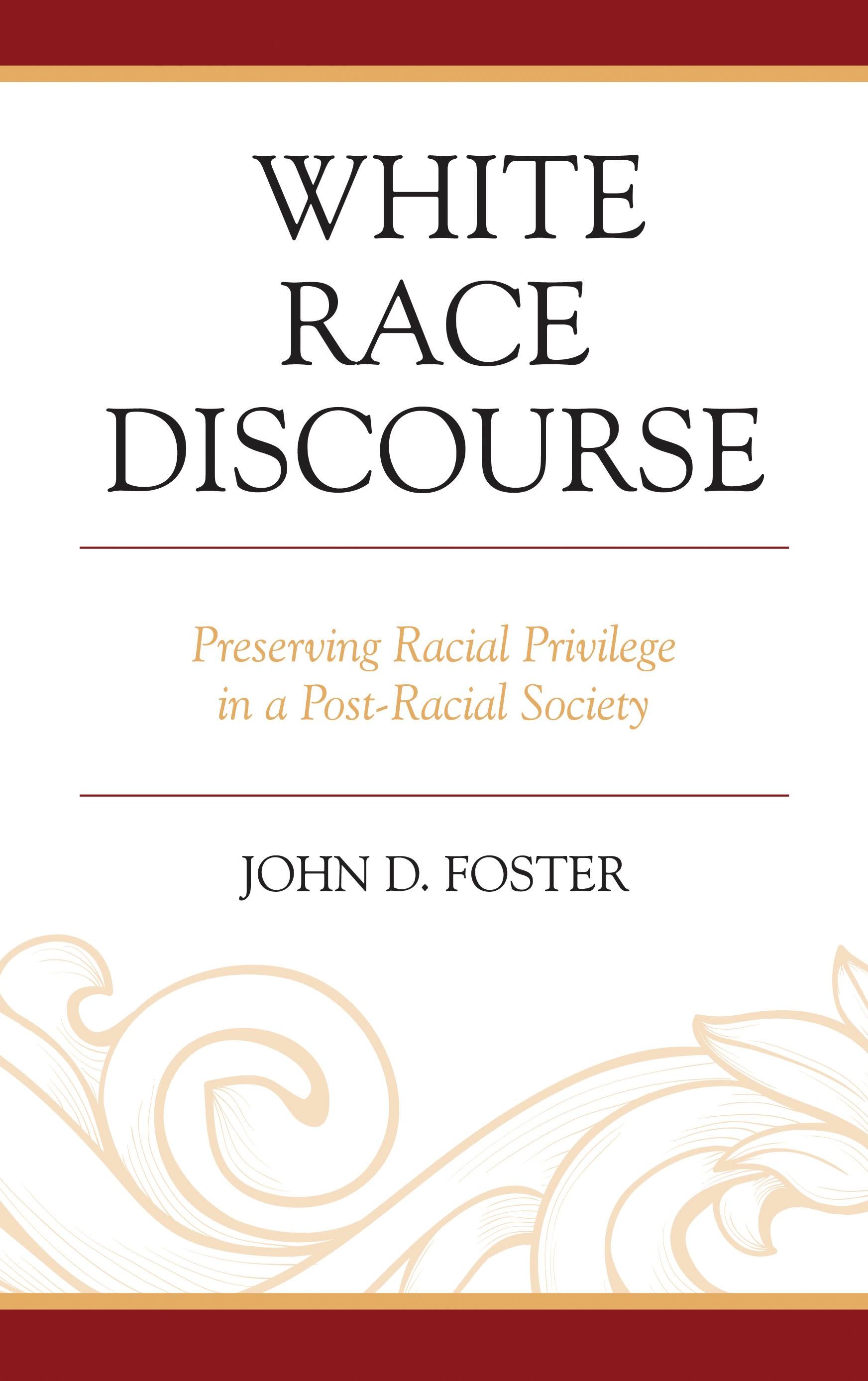
The election of Barack Obama as president led some to suggest that not only has US society made significant strides toward racial equality, but it has moved beyond race or become “post-racial.” In fact, studies have exposed numerous contradictions between the ways white Americans answer questions on surveys and how they respond to similar questions during in-depth interviews. How do we make sense of these contradictions? In White Race Discourse: Preserving Racial Privilege in a Post-Racial Society, John D. Foster examines the numerous contradictions sixty-one white college students exhibit as they discuss a variety of race matters. Foster demonstrates that the whites interviewed possess a sophisticated method of communication to come across as ambivalent, tolerant, and innocent, while simultaneously expressing their intolerance, fear, and suspicion of nonwhite Americans. Whether intended or not, this ambivalence assists in efforts to preserve social inequities while failing to address racial injustices.
While many scholars have written about the “racetalk” of whites, few have succeeded in bridging both the theoretical and methodological gaps between whiteness scholars and discourse analysts. White Race Discourse presents evidence that these white Americans are “bureaucrats of whiteness” in that they defend the racial status quo through their discourse. It will be a valuable addition to the library of students and scholars of race studies and linguistics who research US race relations and discourse analysis.
While many scholars have written about the “racetalk” of whites, few have succeeded in bridging both the theoretical and methodological gaps between whiteness scholars and discourse analysts. White Race Discourse presents evidence that these white Americans are “bureaucrats of whiteness” in that they defend the racial status quo through their discourse. It will be a valuable addition to the library of students and scholars of race studies and linguistics who research US race relations and discourse analysis.
Paga facilmente con carta, Klarna, Apple Pay o Google Pay. Non sei soddisfatto? Hai sempre 14 giorni per il rimborso. Leggi di più nei nostri termini. Per qualsiasi domanda, scrivici a hello@memmo.org.
Memmo rende lo studio più facile, ovunque tu sia nel mondo. Qui trovi i tuoi libri di testo e strumenti di studio intelligenti, tutto in un unico posto: riassunti, quiz, podcast e flashcard. E poi c'è Ted, il tuo compagno di studio che risponde a ogni tua domanda. Oltre 50.000 studenti studiano già qui: è stato creato per aiutarti a imparare più velocemente e a stressarti meno.