
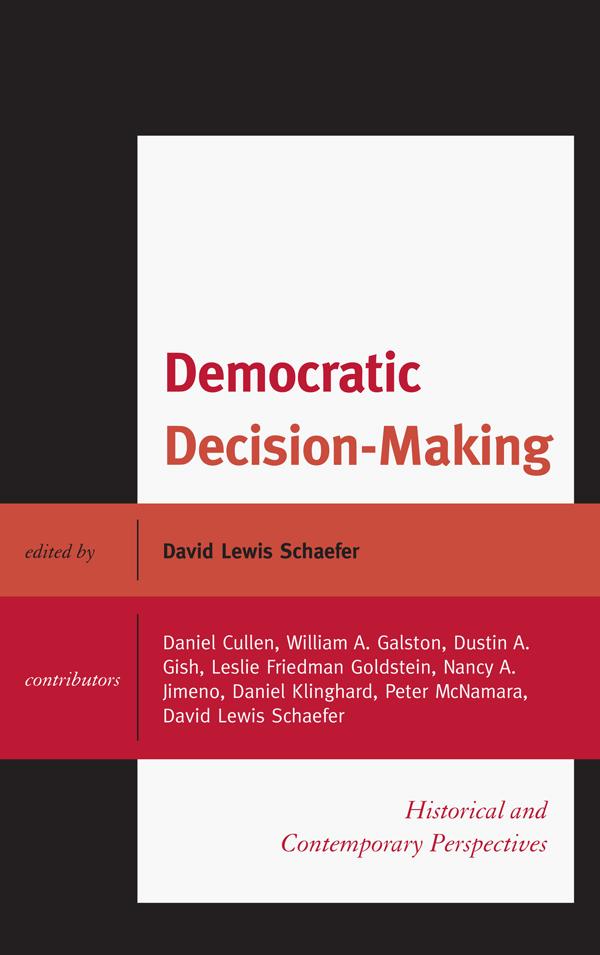
Democratic Decision-Making: Historical and Contemporary Perspectives contains eight essays by political scientists addressing various aspects of the democratic decision-making process. The book is divided into four parts: democratic statesmanship, the extent to which limitations of the democratic principle of majority rule are desirable, the contemporary doctrine of “deliberative democracy,” and informal modes of democratic decision-making.
Under these four headings, the contributors discuss a wide variety of issues, including the practice of “political opportunism” by such statesmen as Hamilton and Madison; the historical development of legal restraints on democracy in America ranging from judicial review (during the colonial period) to the filibuster; the operation of classical Athenian democracy, the defects of which may have been exaggerated by the American Founders; the significance of the reflections of Tammany Hall boss George Washington Plunkitt for the development of the American party system; the relation of deliberative-democracy theory to the thought of Rousseau; and the means by which cooperative land-use agreements have been arrived at in California, eliciting the voluntary consent of the affected parties instead of relying on judicial or bureaucratic dictates. The book is well-suited for use in courses on American political thought, democratic theory, American political development, and related subjects.
Under these four headings, the contributors discuss a wide variety of issues, including the practice of “political opportunism” by such statesmen as Hamilton and Madison; the historical development of legal restraints on democracy in America ranging from judicial review (during the colonial period) to the filibuster; the operation of classical Athenian democracy, the defects of which may have been exaggerated by the American Founders; the significance of the reflections of Tammany Hall boss George Washington Plunkitt for the development of the American party system; the relation of deliberative-democracy theory to the thought of Rousseau; and the means by which cooperative land-use agreements have been arrived at in California, eliciting the voluntary consent of the affected parties instead of relying on judicial or bureaucratic dictates. The book is well-suited for use in courses on American political thought, democratic theory, American political development, and related subjects.
Paga facilmente con carta, Klarna, Apple Pay o Google Pay. Non sei soddisfatto? Hai sempre 14 giorni per il rimborso. Leggi di più nei nostri termini. Per qualsiasi domanda, scrivici a hello@memmo.org.
Memmo rende lo studio più facile, ovunque tu sia nel mondo. Qui trovi i tuoi libri di testo e strumenti di studio intelligenti, tutto in un unico posto: riassunti, quiz, podcast e flashcard. E poi c'è Ted, il tuo compagno di studio che risponde a ogni tua domanda. Oltre 50.000 studenti studiano già qui: è stato creato per aiutarti a imparare più velocemente e a stressarti meno.