
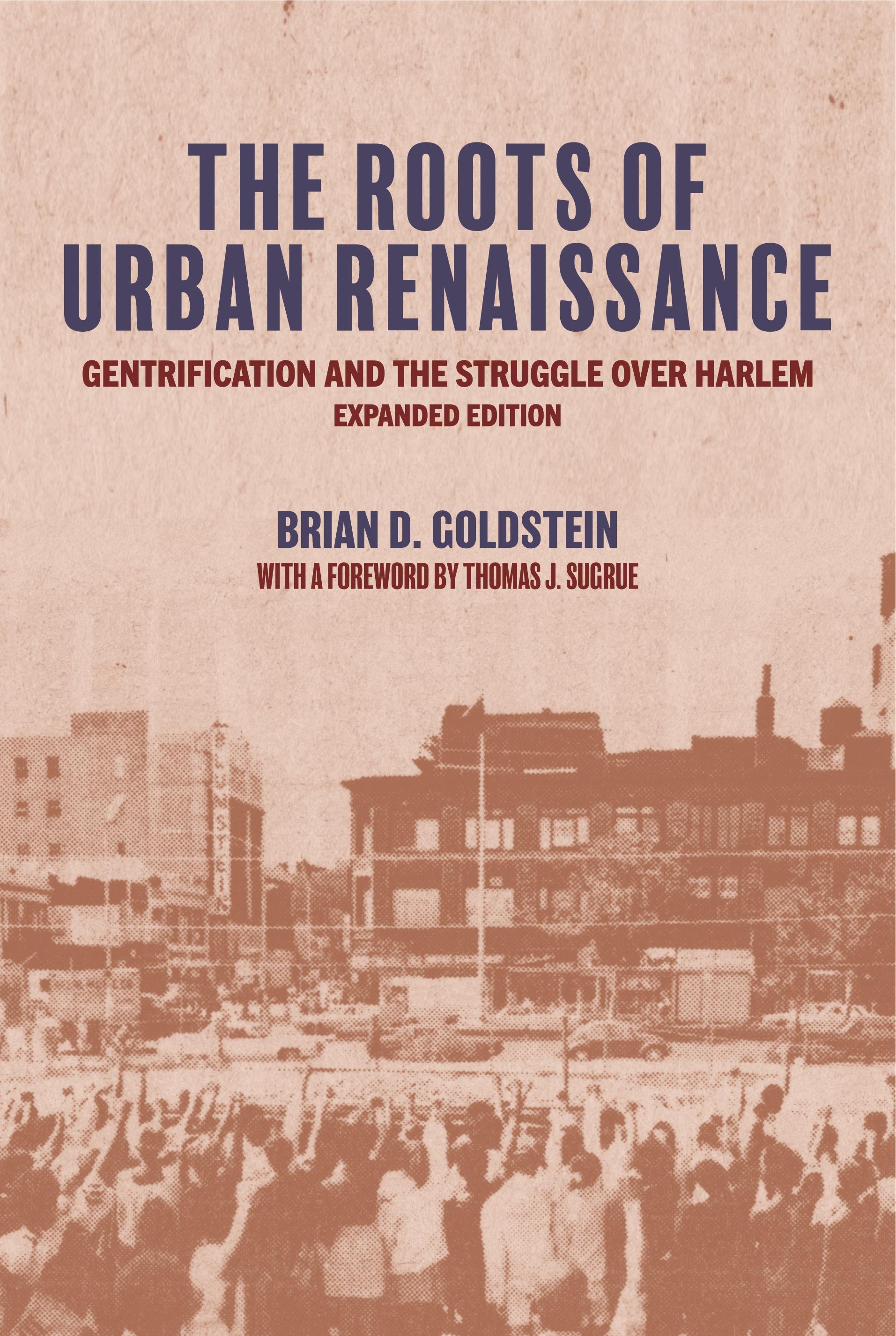
An acclaimed history of Harlem’s journey from urban crisis to urban renaissance
With its gleaming shopping centers and refurbished row houses, today’s Harlem bears little resemblance to the neighborhood of the midcentury urban crisis. Brian Goldstein traces Harlem’s Second Renaissance to a surprising source: the radical social movements of the 1960s that resisted city officials and fought to give Harlemites control of their own destiny. Young Harlem activists, inspired by the civil rights movement, envisioned a Harlem built by and for its low-income, predominantly African American population. In the succeeding decades, however, the community-based organizations they founded came to pursue a very different goal: a neighborhood with national retailers and increasingly affluent residents. The Roots of Urban Renaissance demonstrates that gentrification was not imposed on an unwitting community by unscrupulous developers or opportunistic outsiders. Rather, it grew from the neighborhood’s grassroots, producing a legacy that benefited some longtime residents and threatened others.
Paga facilmente con carta, Klarna, Apple Pay o Google Pay. Non sei soddisfatto? Hai sempre 14 giorni per il rimborso. Leggi di più nei nostri termini. Per qualsiasi domanda, scrivici a hello@memmo.org.
Memmo rende lo studio più facile, ovunque tu sia nel mondo. Qui trovi i tuoi libri di testo e strumenti di studio intelligenti, tutto in un unico posto: riassunti, quiz, podcast e flashcard. E poi c'è Ted, il tuo compagno di studio che risponde a ogni tua domanda. Oltre 50.000 studenti studiano già qui: è stato creato per aiutarti a imparare più velocemente e a stressarti meno.