
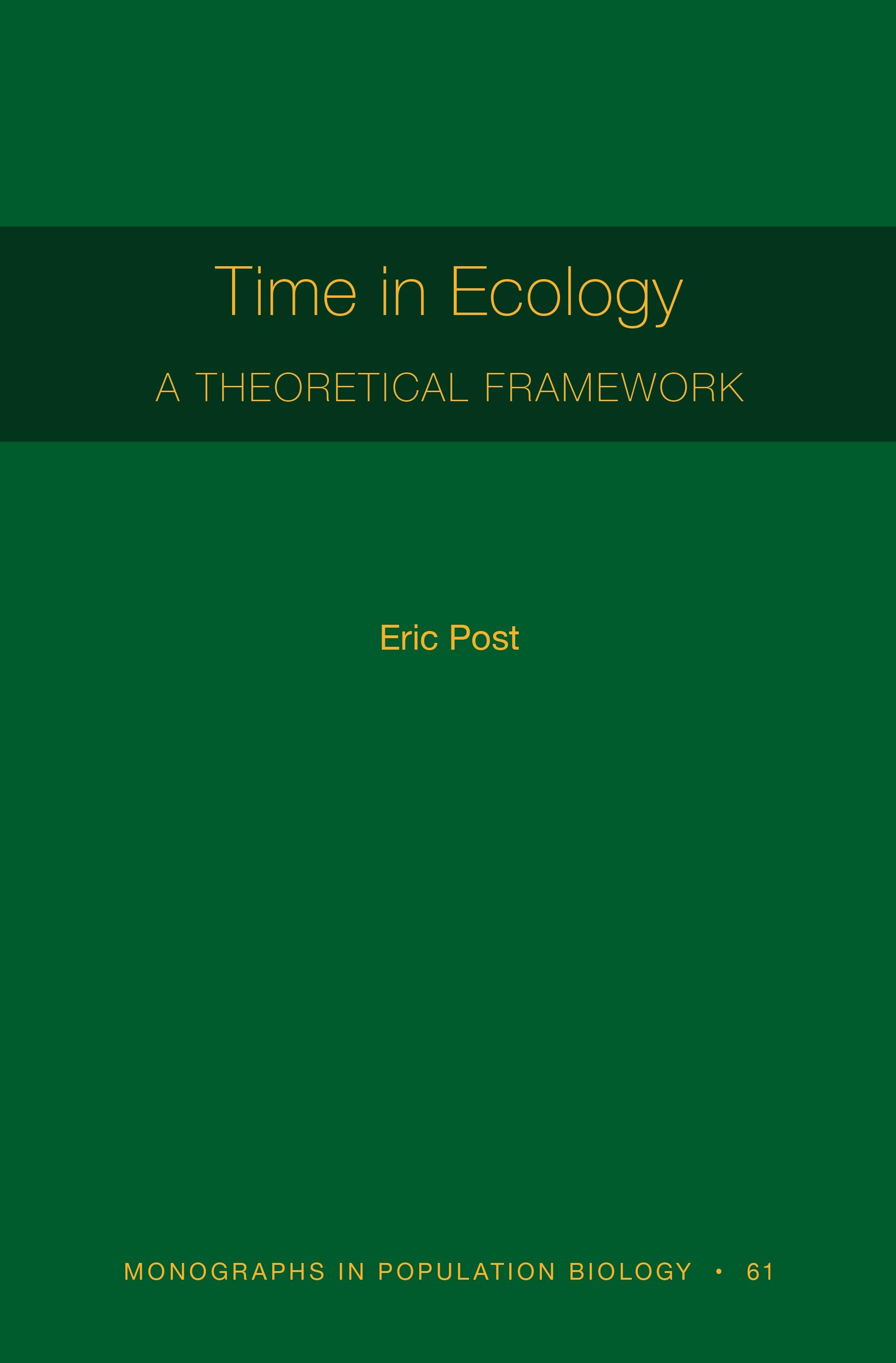
Ecologists traditionally regard time as part of the background against which ecological interactions play out. In this book, Eric Post argues that time should be treated as a resource used by organisms for growth, maintenance, and offspring production.
Post uses insights from phenology—the study of the timing of life-cycle events—to present a theoretical framework of time in ecology that casts long-standing observations in the field in an entirely new light. Combining conceptual models with field data, he demonstrates how phenological advances, delays, and stasis, documented in an array of taxa, can all be viewed as adaptive components of an organism’s strategic use of time. Post shows how the allocation of time by individual organisms to critical life history stages is not only a response to environmental cues but also an important driver of interactions at the population, species, and community levels.
To demonstrate the applications of this exciting new conceptual framework, Time in Ecology uses meta-analyses of previous studies as well as Post’s original data on the phenological dynamics of plants, caribou, and muskoxen in Greenland.
Paga facilmente con carta, Klarna, Apple Pay o Google Pay. Non sei soddisfatto? Hai sempre 14 giorni per il rimborso. Leggi di più nei nostri termini. Per qualsiasi domanda, scrivici a hello@memmo.org.
Memmo rende lo studio più facile, ovunque tu sia nel mondo. Qui trovi i tuoi libri di testo e strumenti di studio intelligenti, tutto in un unico posto: riassunti, quiz, podcast e flashcard. E poi c'è Ted, il tuo compagno di studio che risponde a ogni tua domanda. Oltre 50.000 studenti studiano già qui: è stato creato per aiutarti a imparare più velocemente e a stressarti meno.