
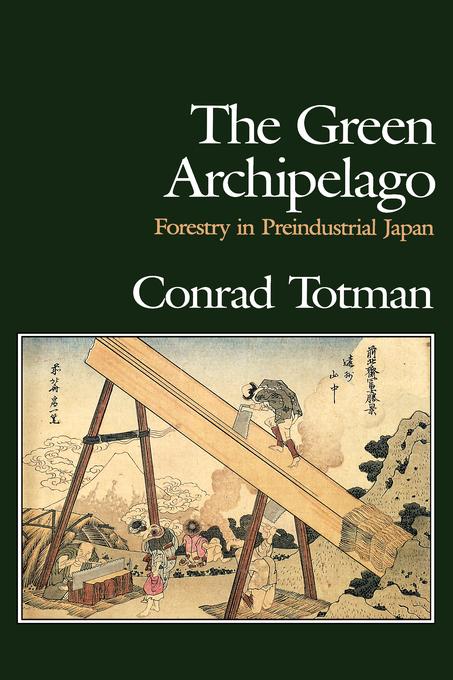
Every foreign traveler in Japan is delighted by the verdant forest-shrouded mountains that thrust skyward from one end of the island chain to the other. The Japanese themselves are conscious of the lush green of their homeland, which they sometimes refer to as "the green archipelago." Yet, based on its fragile geography and centuries of extremely dense human occupation, Japan today should be an impoverished, slum-ridden, peasant society subsisting on a barren, eroded moonscape characterized by bald mountains and debris-strewn lowlands.
In fact, as Conrad Totman argues in this pathbreaking work based on prodigious research, this lush verdue is not a monument to nature's benevolence and Japanese aesthetic sensibilities, but the hard-earned result of generations of human toil that have converted the archipelago into one great forest preserve. Indeed, the author shows that until the late 1600s Japan was well on her way to ecological disaster due to exploitative forestry. During the Tokugawa period, however, an extraordinary change took place resulting in a system of "regenerative forestry" that averted the devastation of Japan's forests. The Green Archipelago is the only major Western-language work on this subject and a landmark not only in Japanese history, but in the history of the environment.
In fact, as Conrad Totman argues in this pathbreaking work based on prodigious research, this lush verdue is not a monument to nature's benevolence and Japanese aesthetic sensibilities, but the hard-earned result of generations of human toil that have converted the archipelago into one great forest preserve. Indeed, the author shows that until the late 1600s Japan was well on her way to ecological disaster due to exploitative forestry. During the Tokugawa period, however, an extraordinary change took place resulting in a system of "regenerative forestry" that averted the devastation of Japan's forests. The Green Archipelago is the only major Western-language work on this subject and a landmark not only in Japanese history, but in the history of the environment.
Paga facilmente con carta, Klarna, Apple Pay o Google Pay. Non sei soddisfatto? Hai sempre 14 giorni per il rimborso. Leggi di più nei nostri termini. Per qualsiasi domanda, scrivici a hello@memmo.org.
Memmo rende lo studio più facile, ovunque tu sia nel mondo. Qui trovi i tuoi libri di testo e strumenti di studio intelligenti, tutto in un unico posto: riassunti, quiz, podcast e flashcard. E poi c'è Ted, il tuo compagno di studio che risponde a ogni tua domanda. Oltre 50.000 studenti studiano già qui: è stato creato per aiutarti a imparare più velocemente e a stressarti meno.
Potrebbe interessarti anche
Acquista il libro0