
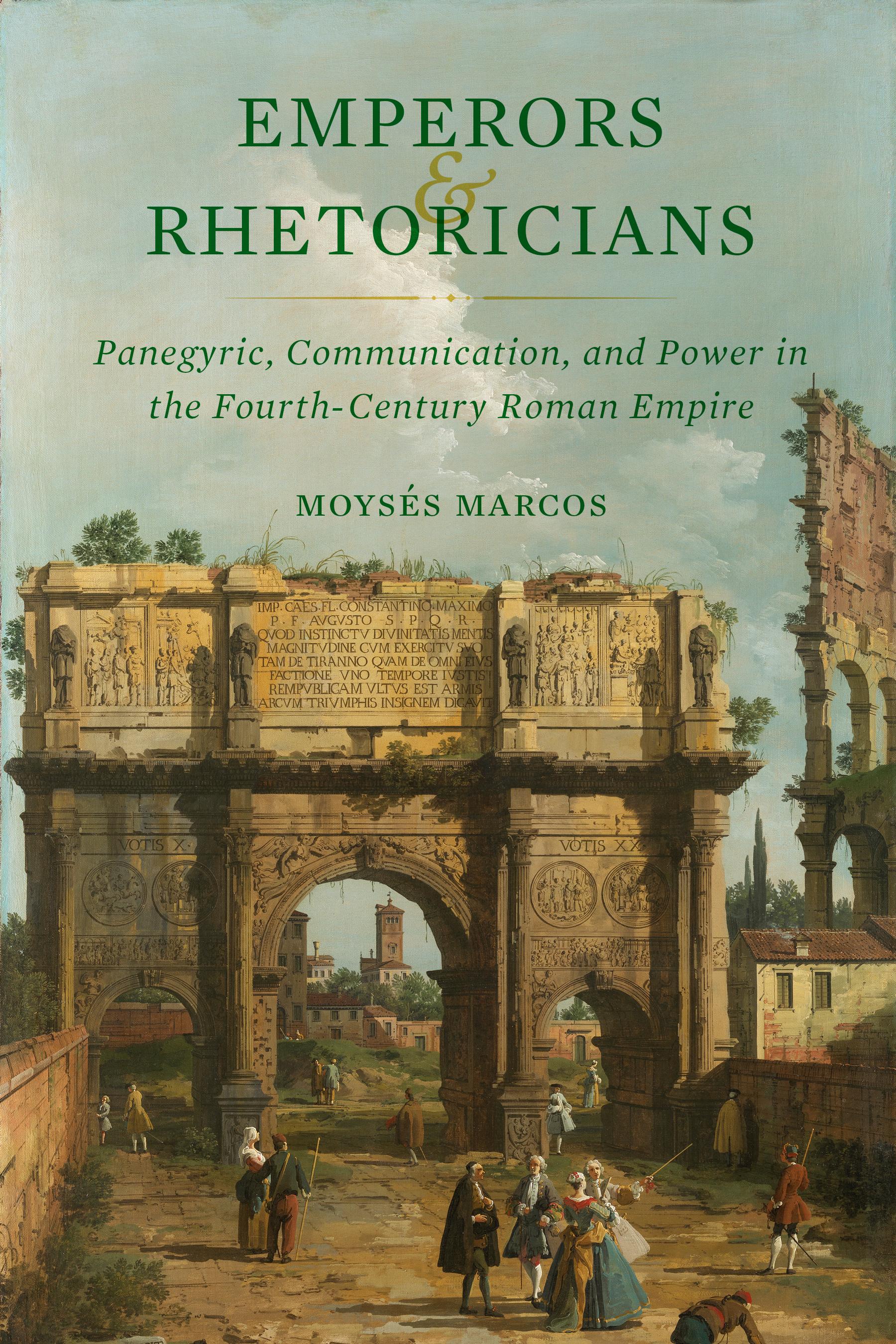
Panegyric, the art of publicly praising prominent political figures, occupied an important place in the Roman Empire throughout late antiquity. Orators were skilled political actors who manipulated the conventions of praise giving, taking great license with what they chose to present (or omit). Their ancient speeches are rare windows into the world of panegyrists, emperors, and their audiences. In Emperors and Rhetoricians, Moysés Marcos offers an original, comprehensive look at all panegyrics to and by Julian, who in 355/56 CE promoted himself as a learned caesar by producing his own panegyric on his cousin and Augustan benefactor, Constantius II. During key stages in his public career and throughout the time he held imperial power, Julian experimented with and utilized panegyric as both political communication and political opportunity. Marcos expertly mines this vast body of work to uncover a startlingly new picture of Julian the Apostate, explore anew the arc of his career in imperial office, and model new ways to interpret and understand imperial speeches of praise.
Paga facilmente con carta, Klarna, Apple Pay o Google Pay. Non sei soddisfatto? Hai sempre 14 giorni per il rimborso. Leggi di più nei nostri termini. Per qualsiasi domanda, scrivici a hello@memmo.org.
Memmo rende lo studio più facile, ovunque tu sia nel mondo. Qui trovi i tuoi libri di testo e strumenti di studio intelligenti, tutto in un unico posto: riassunti, quiz, podcast e flashcard. E poi c'è Ted, il tuo compagno di studio che risponde a ogni tua domanda. Oltre 50.000 studenti studiano già qui: è stato creato per aiutarti a imparare più velocemente e a stressarti meno.
Potrebbe interessarti anche
Acquista il libro0