
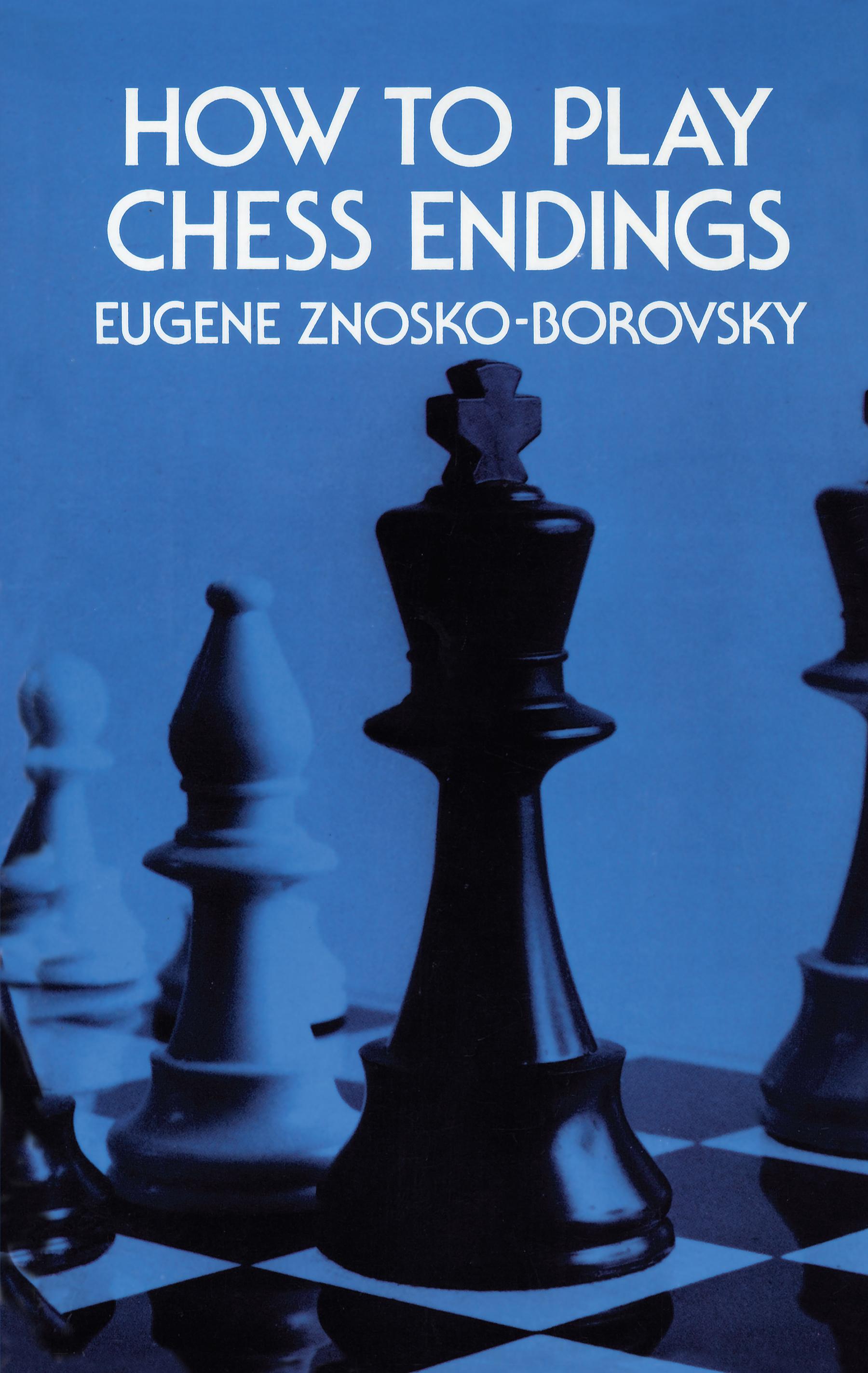
How many chess players really know what to do in the end game? More is demanded in this stage of the game than in any other, and the knowledge and imagination that saw you through the opening and middle game are just not enough to carry you through the end game also. You need a thorough knowledge of the principles of chess endings, and this book is an excellent introduction to those principles.
World-famous chess teacher Eugene Znosko-Borovsky clearly explains the importance of tempo, the rule of the triangle, the idea of related squares, the power of the pawn and king, and the versatility of the rook. Each piece is studied individually, and many common end game situations are considered. Drawing on games from such master players as Morphy, Marshall, Steinitz, Capablanca, Alekhine, Lasker, and Botvinnik, Znosko-Borovsky shows you how to think during the end game no matter what pieces you may have or what situation you may be in. Special consideration is given to the theory of positional play, the conception and execution of a plan, and the recognition of tactical opportunities.
Emphasis throughout the book is on understanding principles, rather than memorizing moves, with the result that the reader will be able to apply Znosko-Borovsky’s techniques to almost any situation that may arise. The author’s well-known clarity of exposition makes this book most useful to a beginner or intermediate player.
World-famous chess teacher Eugene Znosko-Borovsky clearly explains the importance of tempo, the rule of the triangle, the idea of related squares, the power of the pawn and king, and the versatility of the rook. Each piece is studied individually, and many common end game situations are considered. Drawing on games from such master players as Morphy, Marshall, Steinitz, Capablanca, Alekhine, Lasker, and Botvinnik, Znosko-Borovsky shows you how to think during the end game no matter what pieces you may have or what situation you may be in. Special consideration is given to the theory of positional play, the conception and execution of a plan, and the recognition of tactical opportunities.
Emphasis throughout the book is on understanding principles, rather than memorizing moves, with the result that the reader will be able to apply Znosko-Borovsky’s techniques to almost any situation that may arise. The author’s well-known clarity of exposition makes this book most useful to a beginner or intermediate player.
Paga facilmente con carta, Klarna, Apple Pay o Google Pay. Non sei soddisfatto? Hai sempre 14 giorni per il rimborso. Leggi di più nei nostri termini. Per qualsiasi domanda, scrivici a hello@memmo.org.
Memmo rende lo studio più facile, ovunque tu sia nel mondo. Qui trovi i tuoi libri di testo e strumenti di studio intelligenti, tutto in un unico posto: riassunti, quiz, podcast e flashcard. E poi c'è Ted, il tuo compagno di studio che risponde a ogni tua domanda. Oltre 50.000 studenti studiano già qui: è stato creato per aiutarti a imparare più velocemente e a stressarti meno.
Potrebbe interessarti anche
Acquista il libro0