
"We can only hope that more such striking expositions will be written." — Bulletin of the American Mathematical Society
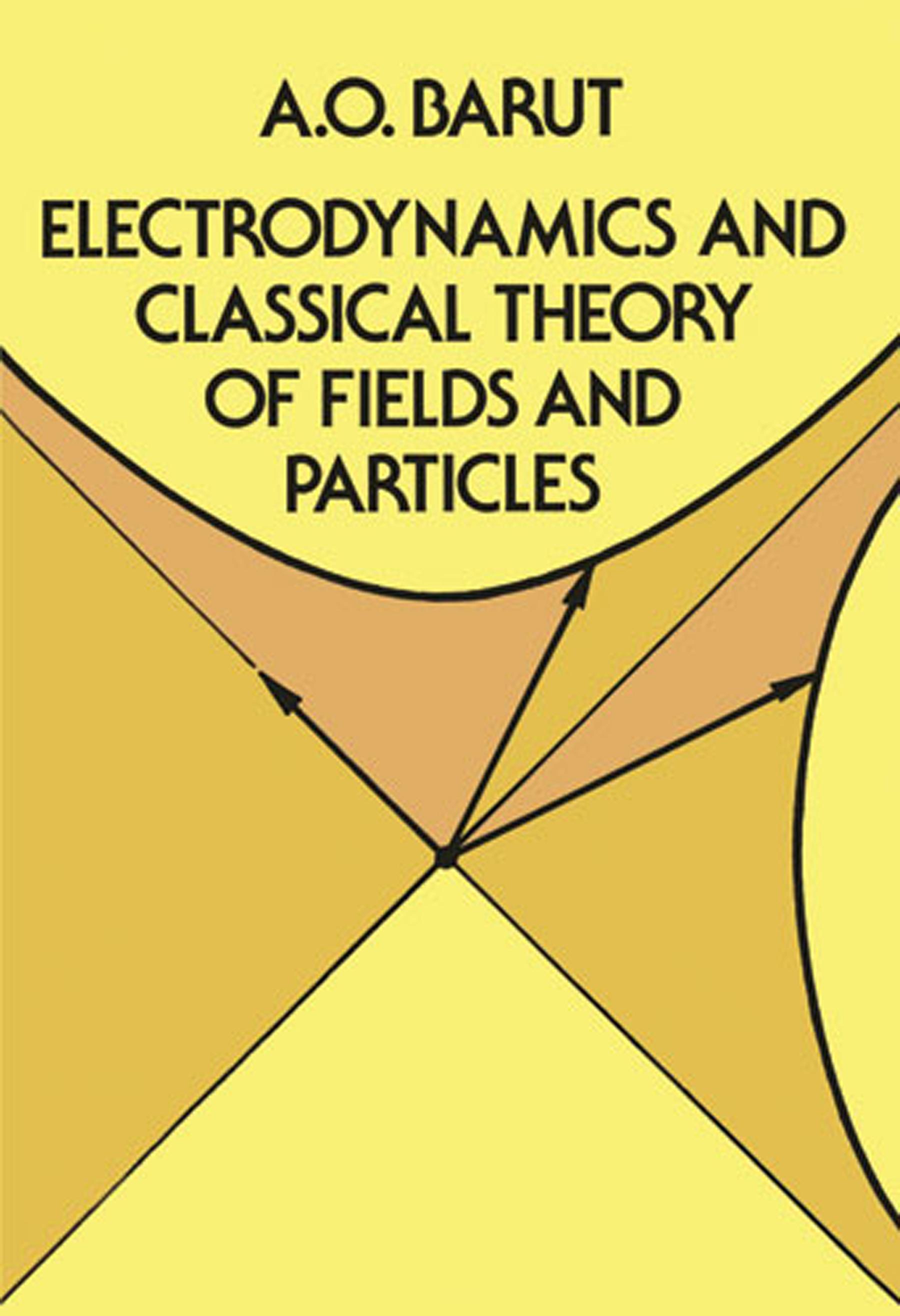
This is a systematic, covariant treatment of the classical theories of particle motion, fields, and the interaction of fields and particles. Particular attention is given to the interaction of charged particles with the electromagnetic field. The treatment throughout the book is relativistic; the author attempts, as much as possible, a coordinate free (or covariant) form of the equations both for particles and the fields. The book opens with an extensive discussion of space-time, Lorentz transformations, Lorentz-group and tensor and spinor fields. This material is essential to the understanding of many branches of theoretical physics, in particular relativistic quantum theory. Chapter II describes various relativistic forms of the fundamental problem of dynamics: describing the trajectories of particles for given external forces. The general dynamical principles to obtain the field equations and the important problems of the conservation laws are discussed in Chapter III.
This is a systematic, covariant treatment of the classical theories of particle motion, fields, and the interaction of fields and particles. Particular attention is given to the interaction of charged particles with the electromagnetic field. The treatment throughout the book is relativistic; the author attempts, as much as possible, a coordinate free (or covariant) form of the equations both for particles and the fields. The book opens with an extensive discussion of space-time, Lorentz transformations, Lorentz-group and tensor and spinor fields. This material is essential to the understanding of many branches of theoretical physics, in particular relativistic quantum theory. Chapter II describes various relativistic forms of the fundamental problem of dynamics: describing the trajectories of particles for given external forces. The general dynamical principles to obtain the field equations and the important problems of the conservation laws are discussed in Chapter III.
The second part of the book (Chapters IV-VI) is devoted to a lucid treatment of the interactions of fields and particles. Chapter IV deals with equations of motion and their solutions (the so-called Cauchy problem), focusing on the solution of field equations with Green's functions using Dirac formalism. The problem of feedback between particles and fields (radiation and radiation reaction) is taken up in Chapter V, as are questions concerning the limitations of classical field theories and classical dynamics. Dr. Barut concludes the book with an excellent exposition of the purely mechanical approach to the problem of the interactions of charged particles — the so-called action-at-a-distance formulation of electrodynamics. Problems, alternate proofs, and additional topics are included at the end of each chapter, where a useful bibliography is also provided. A general bibliography appears at the end of the book.
Paga facilmente con carta, Klarna, Apple Pay o Google Pay. Non sei soddisfatto? Hai sempre 14 giorni per il rimborso. Leggi di più nei nostri termini. Per qualsiasi domanda, scrivici a hello@memmo.org.
Memmo rende lo studio più facile, ovunque tu sia nel mondo. Qui trovi i tuoi libri di testo e strumenti di studio intelligenti, tutto in un unico posto: riassunti, quiz, podcast e flashcard. E poi c'è Ted, il tuo compagno di studio che risponde a ogni tua domanda. Oltre 50.000 studenti studiano già qui: è stato creato per aiutarti a imparare più velocemente e a stressarti meno.
Potrebbe interessarti anche
Acquista il libro0