
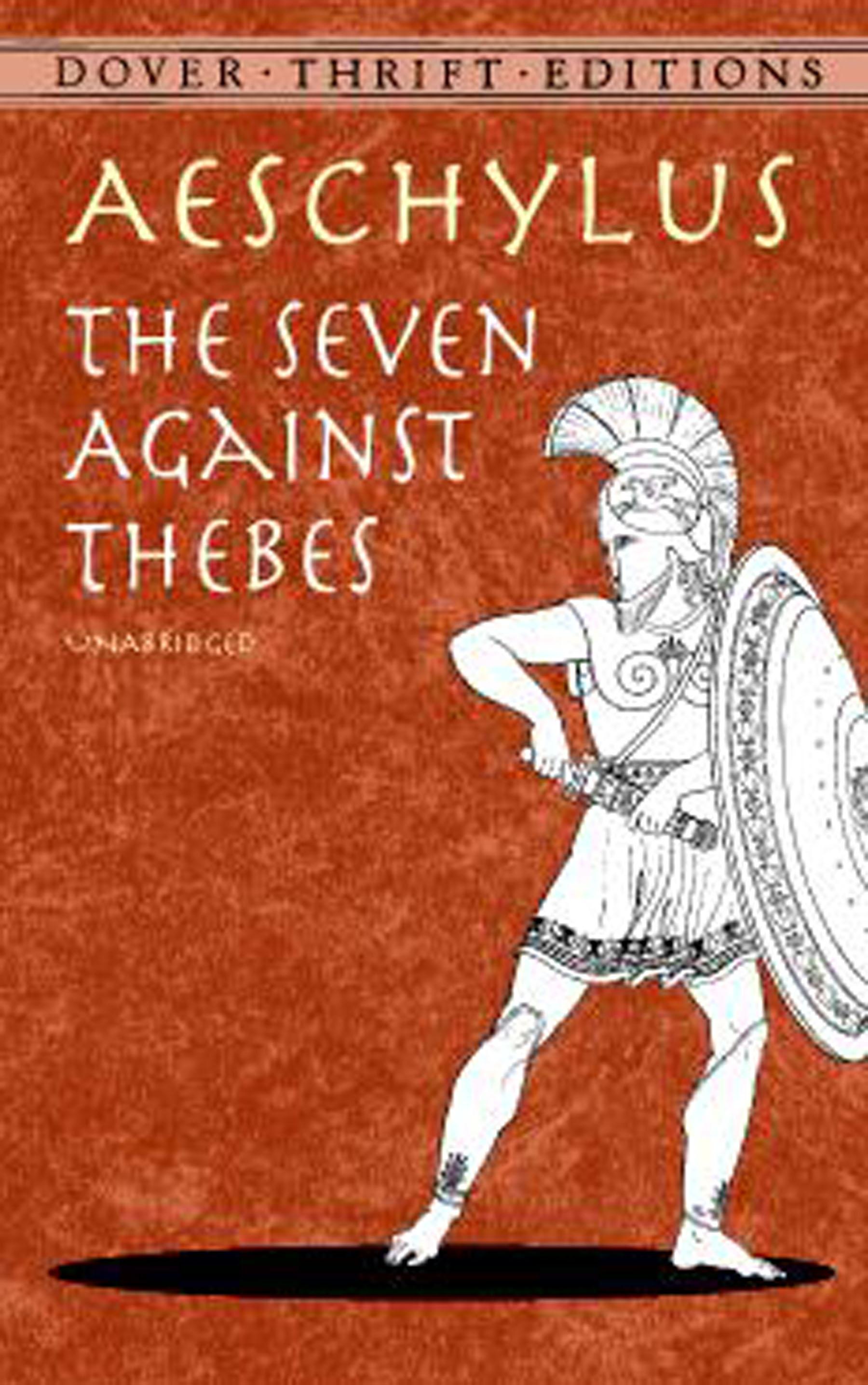
Often called the father of Greek tragedy, Aeschylus (525–456 B.C.) was the earliest and possibly the greatest of the Greek tragic poets. Altogether he may have written as many as 90 plays (including satyr plays as well as tragedies), but only seven have survived.
The Seven Against Thebes (first produced in 467 B.C.) was the final play in a trilogy (the other two are lost) dramatizing the well-known legend of Laius and his son Oedipus. In this culminating play, Oedipus is dead after his banishment from Thebes, and his two sons vie for the crown. The victor, Eteocles, expels his brother, Polynices, who flees to Argos and recruits a force of seven champions to lead an assault on Thebes. The tragic outcome is the fulfillment of the curse of Oedipus — that his sons should divide their inheritance with the sword.
Although Sophocles' treatment of the Oedipus legend is better known, the dialogue and imagery in Aeschylus's play retain an immediacy that resonates with modern readers and audiences. The result is a deeply moving theatrical milestone that is essential reading for students of literature, drama, and the classics.
Paga facilmente con carta, Klarna, Apple Pay o Google Pay. Non sei soddisfatto? Hai sempre 14 giorni per il rimborso. Leggi di più nei nostri termini. Per qualsiasi domanda, scrivici a hello@memmo.org.
Memmo rende lo studio più facile, ovunque tu sia nel mondo. Qui trovi i tuoi libri di testo e strumenti di studio intelligenti, tutto in un unico posto: riassunti, quiz, podcast e flashcard. E poi c'è Ted, il tuo compagno di studio che risponde a ogni tua domanda. Oltre 50.000 studenti studiano già qui: è stato creato per aiutarti a imparare più velocemente e a stressarti meno.