
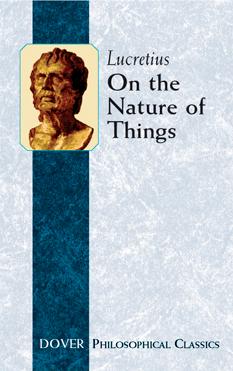
A Roman poet and philosopher of the first century, Lucretius sought to dispel what he considered the chief cause of unhappiness: fear of death and fear of the wrath of the gods. His great didactic poem in six parts, De Rerum Natura (On the Nature of Things), theorizes that natural causes are the forces behind earthly phenomena and dismisses the concept of divine intervention.
Lucretius’ discourse ranges from discussions of the motion of atoms, natural phenomena, and sensation, to assertions regarding free will and the soul’s relationship to the body. He maintains that the soul is a chance combination of atoms that perishes with the body, rather than a distinct, immaterial entity. The philosopher proposes completely natural causes for all earthly phenomena, suggesting that the world operates independently of divine agency and that fear of the supernatural is unfounded. Although he refrains from denying the existence of gods, Lucretius considers them unconcerned with human affairs and destiny.
Derived from the philosophical materialism of the Greeks, Lucretius’ writings remain the primary source for contemporary knowledge of Epicurean thought. A staple of introductory philosophy courses, this volume is also a masterpiece of Latin verse.
Lucretius’ discourse ranges from discussions of the motion of atoms, natural phenomena, and sensation, to assertions regarding free will and the soul’s relationship to the body. He maintains that the soul is a chance combination of atoms that perishes with the body, rather than a distinct, immaterial entity. The philosopher proposes completely natural causes for all earthly phenomena, suggesting that the world operates independently of divine agency and that fear of the supernatural is unfounded. Although he refrains from denying the existence of gods, Lucretius considers them unconcerned with human affairs and destiny.
Derived from the philosophical materialism of the Greeks, Lucretius’ writings remain the primary source for contemporary knowledge of Epicurean thought. A staple of introductory philosophy courses, this volume is also a masterpiece of Latin verse.
Paga facilmente con carta, Klarna, Apple Pay o Google Pay. Non sei soddisfatto? Hai sempre 14 giorni per il rimborso. Leggi di più nei nostri termini. Per qualsiasi domanda, scrivici a hello@memmo.org.
Memmo rende lo studio più facile, ovunque tu sia nel mondo. Qui trovi i tuoi libri di testo e strumenti di studio intelligenti, tutto in un unico posto: riassunti, quiz, podcast e flashcard. E poi c'è Ted, il tuo compagno di studio che risponde a ogni tua domanda. Oltre 50.000 studenti studiano già qui: è stato creato per aiutarti a imparare più velocemente e a stressarti meno.
Potrebbe interessarti anche
Acquista il libro0