
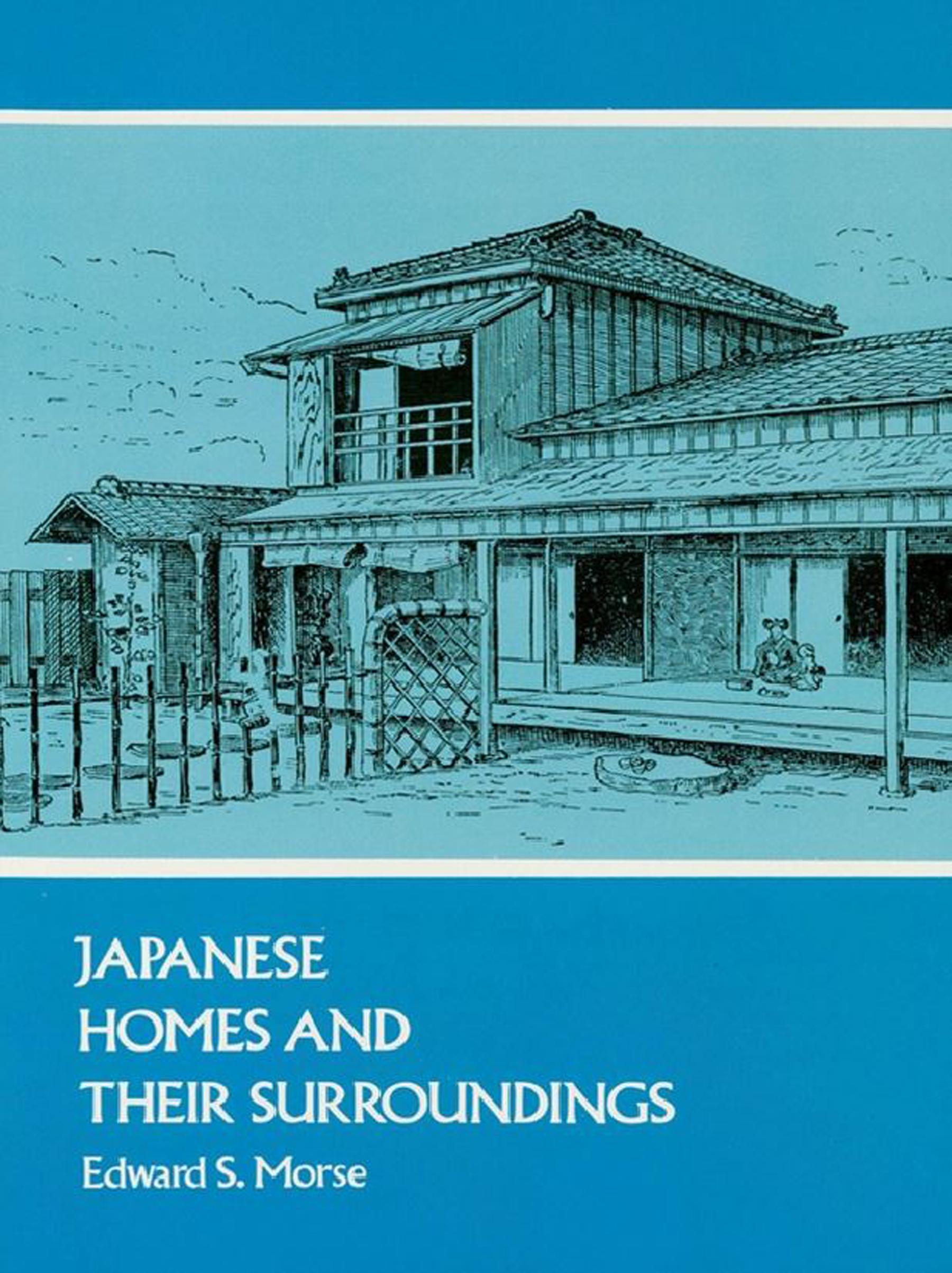
This work deals with every aspect of the traditional Japanese home, from its general plan and major structural features to such ceremonial and traditional appointments as the tatami mats (which actually determine the size of the house), lamps, hibachi (braziers), fusuma and shoji screens, candlesticks, pillows, and tokonoma (places where art objects or flowers are displayed). It covers details of both construction and architectural ornamentation, and it points out the many ways in which the traditional Japanese house achieved the almost ideal blend of art and nature, decoration, and stark simplicity that is its hallmark. It shows in detail such things as how natural irregularities (such as in logs) are used to advantage, how partitions change the shape of the interior, and how the garden with its bridges, lanterns, and natural forms (sometimes artfully wrought) complements the severity of the house itself. More than 300 drawings by the author illustrate the text.
Morse was one of the first to try to see and understand a dwelling in terms of the culture and tradition of the people who live in it. As a result, this work, which for three generations has remained the most informative and exhaustive discussion in English of the Japanese home, is equally honored for its strikingly modern conception of architecture and, more particularly, of the Japanese home as a place where people live.
Since this work was first published, many of the traditional features of the Japanese home have altered under the impact of Western ideas. The work, consequently, should be particularly valuable to contemporary architects, artists, structural engineers, and scholars who want a purer view of the traditional Japanese dwelling. Because of its wealth of suggestion, it will also prove valuable to designers and craftsmen. For laymen, it continues to offer insight into a type of architecture (and a way of life) that is having an increasing impact on Western ideas.
Morse was one of the first to try to see and understand a dwelling in terms of the culture and tradition of the people who live in it. As a result, this work, which for three generations has remained the most informative and exhaustive discussion in English of the Japanese home, is equally honored for its strikingly modern conception of architecture and, more particularly, of the Japanese home as a place where people live.
Since this work was first published, many of the traditional features of the Japanese home have altered under the impact of Western ideas. The work, consequently, should be particularly valuable to contemporary architects, artists, structural engineers, and scholars who want a purer view of the traditional Japanese dwelling. Because of its wealth of suggestion, it will also prove valuable to designers and craftsmen. For laymen, it continues to offer insight into a type of architecture (and a way of life) that is having an increasing impact on Western ideas.
Paga facilmente con carta, Klarna, Apple Pay o Google Pay. Non sei soddisfatto? Hai sempre 14 giorni per il rimborso. Leggi di più nei nostri termini. Per qualsiasi domanda, scrivici a hello@memmo.org.
Memmo rende lo studio più facile, ovunque tu sia nel mondo. Qui trovi i tuoi libri di testo e strumenti di studio intelligenti, tutto in un unico posto: riassunti, quiz, podcast e flashcard. E poi c'è Ted, il tuo compagno di studio che risponde a ogni tua domanda. Oltre 50.000 studenti studiano già qui: è stato creato per aiutarti a imparare più velocemente e a stressarti meno.
Potrebbe interessarti anche
Acquista il libro0