
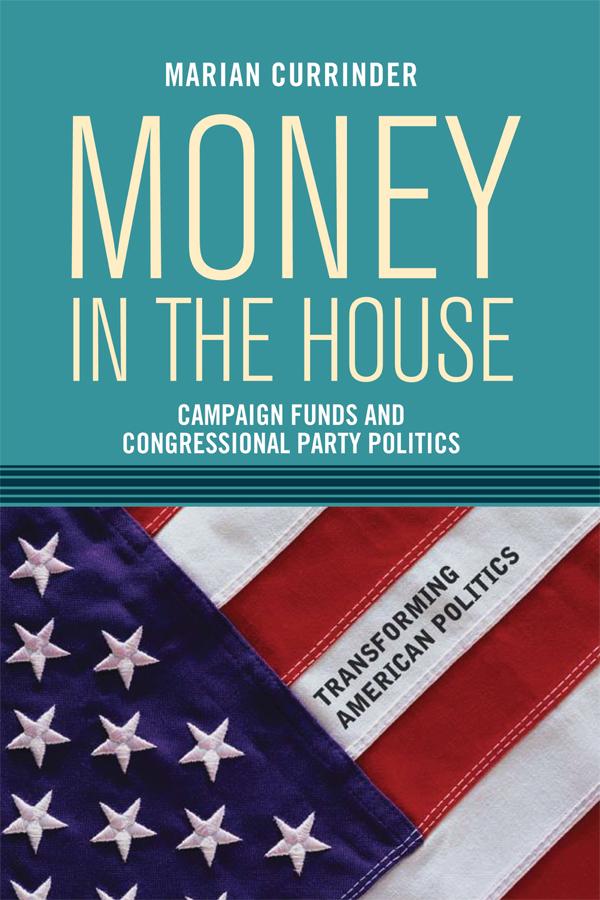
Money in the House provides a compelling look at how the drive to raise campaign money has come to dominate congressional party politics. Author Marian Currinder examines the rise of member-to-member and member-to-party giving as part of a broader process that encourages ambitious House members to compete for power by raising money for the party and its candidates. As the margin between parties in the House has narrowed, the political environment has become fiercely competitive. Because electoral success is largely equated with fundraising success, the party that raises the most money is at a distinct advantage. In addition to relying on outside interests and individuals for campaign contributions, the congressional parties increasingly call on their own members to give for the good of the whole. As a result, lawmakers must devote ever-increasing amounts of time to fundraising. The fundraising expectations for members who wish to advance in the chamber are even higher. By requiring their members to raise and redistribute tremendous amounts of money in order to gain power in the chamber, the parties benefit from their members' ambitious pursuits. Currinder argues that the new 'rule of money' is fundamentally altering the way House members pursue power and the way congressional parties define and reward loyalty.
Paga facilmente con carta, Klarna, Apple Pay o Google Pay. Non sei soddisfatto? Hai sempre 14 giorni per il rimborso. Leggi di più nei nostri termini. Per qualsiasi domanda, scrivici a hello@memmo.org.
Memmo rende lo studio più facile, ovunque tu sia nel mondo. Qui trovi i tuoi libri di testo e strumenti di studio intelligenti, tutto in un unico posto: riassunti, quiz, podcast e flashcard. E poi c'è Ted, il tuo compagno di studio che risponde a ogni tua domanda. Oltre 50.000 studenti studiano già qui: è stato creato per aiutarti a imparare più velocemente e a stressarti meno.