
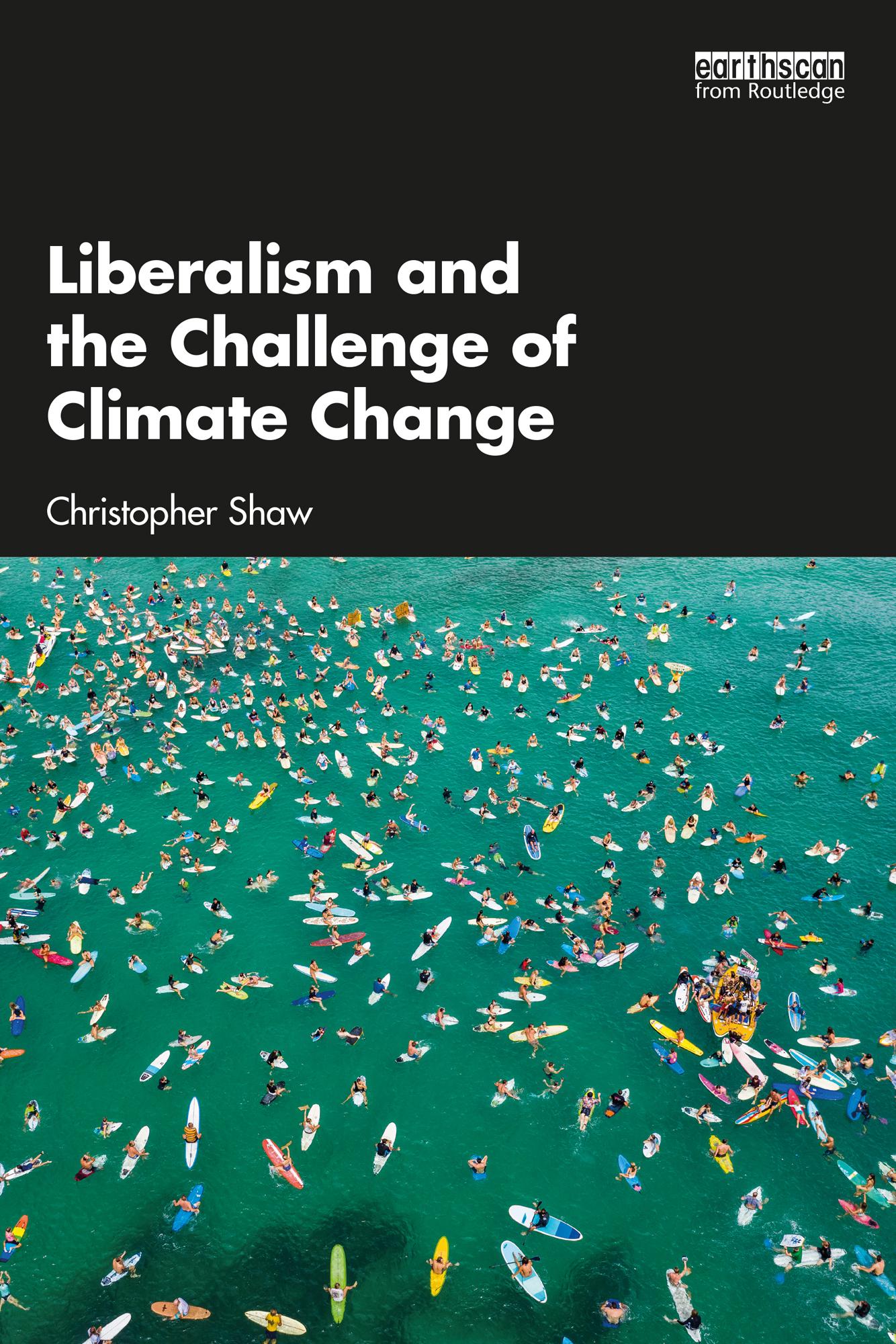
In this book Christopher Shaw analyses how liberalism has shaped our understanding of climate change and how liberalism is legitimated in the face of a crisis for which liberalism has no answers.
The language and symbolism we use to make sense of climate change arose in the post-World War II liberal institutions of the West. This language and symbolism, in neutralising the philosophical and ideological challenge climate change poses to the legitimacy of free market liberalism, has also closed off the possibility of imagining a different kind of future for humanity. The book is structured around a repurposing of the ‘guardrail’ concept, commonly used in climate science narratives to communicate the boundary between safe and dangerous climate change. Five discursive ‘guardrails’ are identified, which define a boundary between safe and dangerous ideas about how to respond to climate change. The theoretical treatment of these issues is complemented with data from interviews with opinion-formers, decision-makers and campaigners, exploring what models of human nature and political possibilities guide their approach to the politics of climate change governance.
This book will be of great interest to students and scholars of climate change, liberal politics, environmental communication and environmental politics and philosophy, in general.
Paga facilmente con carta, Klarna, Apple Pay o Google Pay. Non sei soddisfatto? Hai sempre 14 giorni per il rimborso. Leggi di più nei nostri termini. Per qualsiasi domanda, scrivici a hello@memmo.org.
Memmo rende lo studio più facile, ovunque tu sia nel mondo. Qui trovi i tuoi libri di testo e strumenti di studio intelligenti, tutto in un unico posto: riassunti, quiz, podcast e flashcard. E poi c'è Ted, il tuo compagno di studio che risponde a ogni tua domanda. Oltre 50.000 studenti studiano già qui: è stato creato per aiutarti a imparare più velocemente e a stressarti meno.