
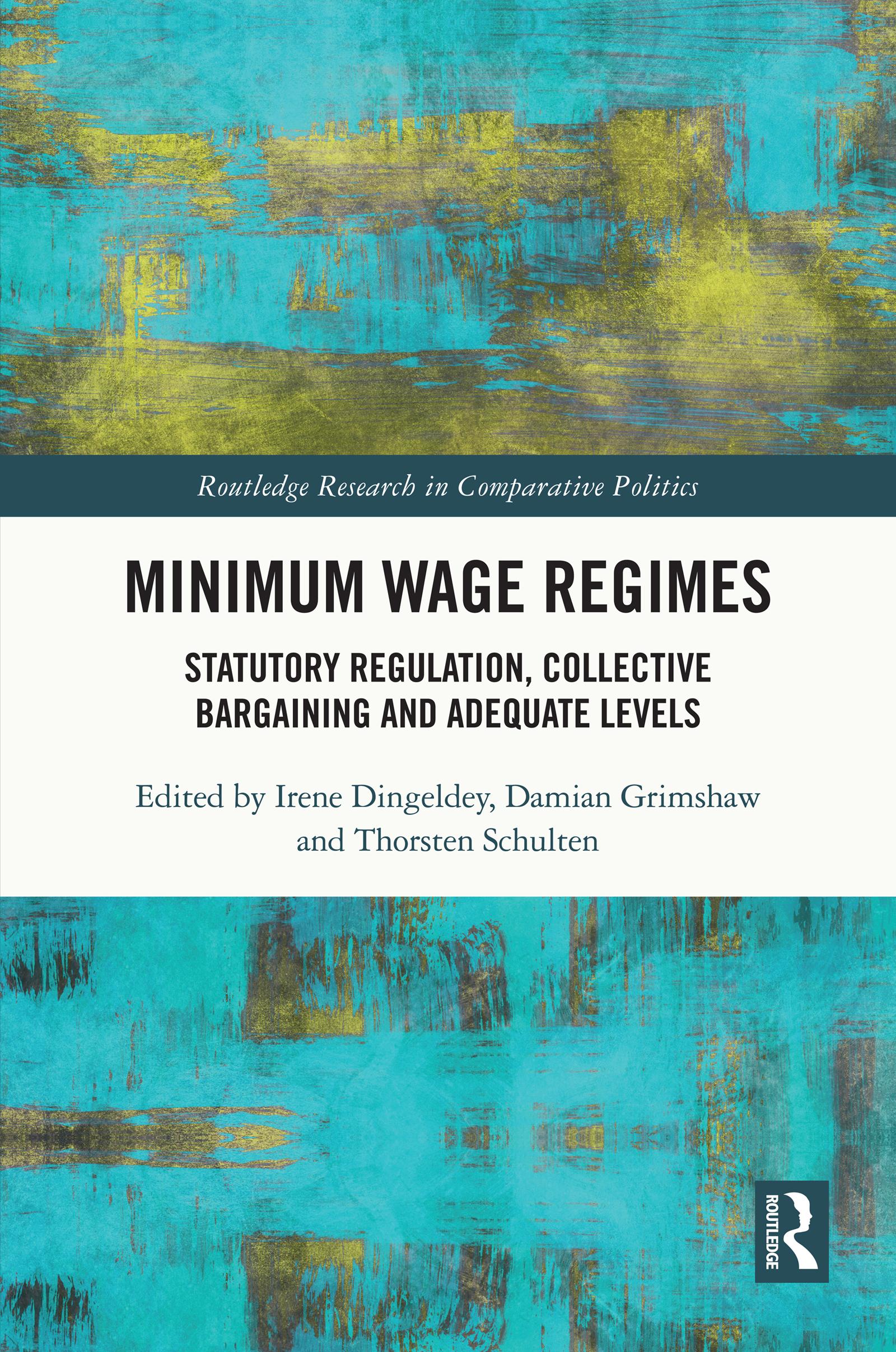
This book goes beyond traditional minimum wage research to investigate the interplay between different country and sectoral institutional settings and actors’ strategies in the field of minimum wage policies.
It asks which strategies and motives, namely free collective bargaining, fair pay and/or minimum income protection, are emphasised by social actors with respect to the regulation and adaptation of (statutory) minimum wages. Taking an actor-centered institutionalist approach, and employing cross-country comparative studies, sector studies and single country accounts of change, the book relates institutional and labour market settings, actors’ strategies and power resources with policy and practice outcomes. Looking at the key pay equity indicators of low wage development and women’s over-representation among the low paid, it illuminates our understandings about the importance of historical junctures, specific constellations of social actors, and sector- and country-specific actor strategies. Finally, it underlines the important role of social dialogue in shaping an effective minimum wage policy.
This book will be of key interest to scholars, students and policy-makers and practitioners in industrial relations, international human resource management, labour studies, labour market policy, inequality studies, trade union studies, European politics and political economy.
Paga facilmente con carta, Klarna, Apple Pay o Google Pay. Non sei soddisfatto? Hai sempre 14 giorni per il rimborso. Leggi di più nei nostri termini. Per qualsiasi domanda, scrivici a hello@memmo.org.
Memmo rende lo studio più facile, ovunque tu sia nel mondo. Qui trovi i tuoi libri di testo e strumenti di studio intelligenti, tutto in un unico posto: riassunti, quiz, podcast e flashcard. E poi c'è Ted, il tuo compagno di studio che risponde a ogni tua domanda. Oltre 50.000 studenti studiano già qui: è stato creato per aiutarti a imparare più velocemente e a stressarti meno.