
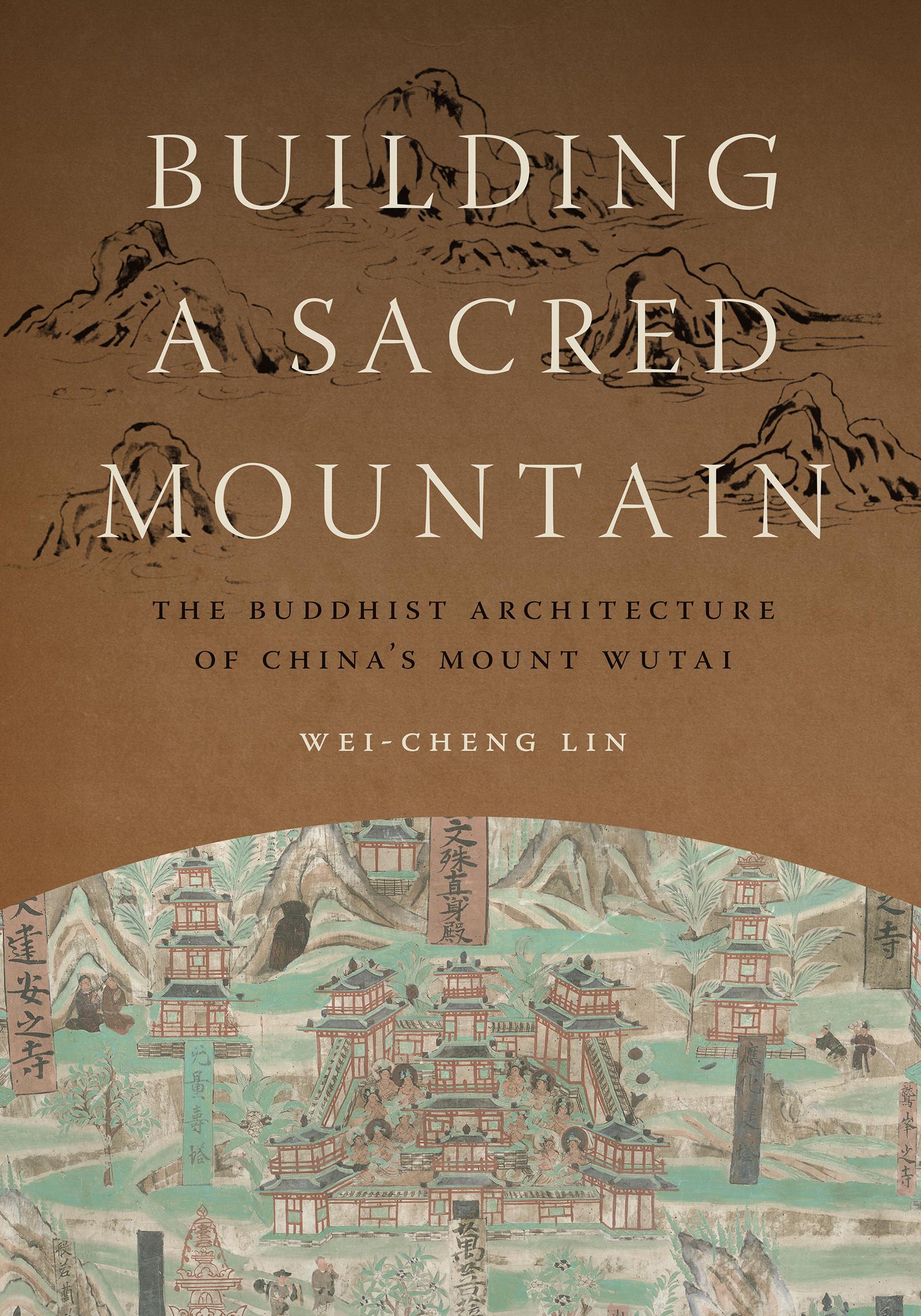
By the tenth century CE, Mount Wutai had become a major pilgrimage site within the emerging culture of a distinctively Chinese Buddhism. Famous as the abode of the bodhisattva Mañjuśrī (known for his habit of riding around the mountain on a lion), the site in northeastern China’s Shanxi Province was transformed from a wild area, long believed by Daoists to be sacred, into an elaborate complex of Buddhist monasteries.
In Building a Sacred Mountain, Wei-Cheng Lin traces the confluence of factors that produced this transformation and argues that monastic architecture, more than texts, icons, relics, or pilgrimages, was the key to Mount Wutai’s emergence as a sacred site. Departing from traditional architectural scholarship, Lin’s interdisciplinary approach goes beyond the analysis of forms and structures to show how the built environment can work in tandem with practices and discourses to provide a space for encountering the divine.
Art History Publication Initiative. For more information, visit http://arthistorypi.org/books/building-a-sacred-mountain
Paga facilmente con carta, Klarna, Apple Pay o Google Pay. Non sei soddisfatto? Hai sempre 14 giorni per il rimborso. Leggi di più nei nostri termini. Per qualsiasi domanda, scrivici a hello@memmo.org.
Memmo rende lo studio più facile, ovunque tu sia nel mondo. Qui trovi i tuoi libri di testo e strumenti di studio intelligenti, tutto in un unico posto: riassunti, quiz, podcast e flashcard. E poi c'è Ted, il tuo compagno di studio che risponde a ogni tua domanda. Oltre 50.000 studenti studiano già qui: è stato creato per aiutarti a imparare più velocemente e a stressarti meno.