
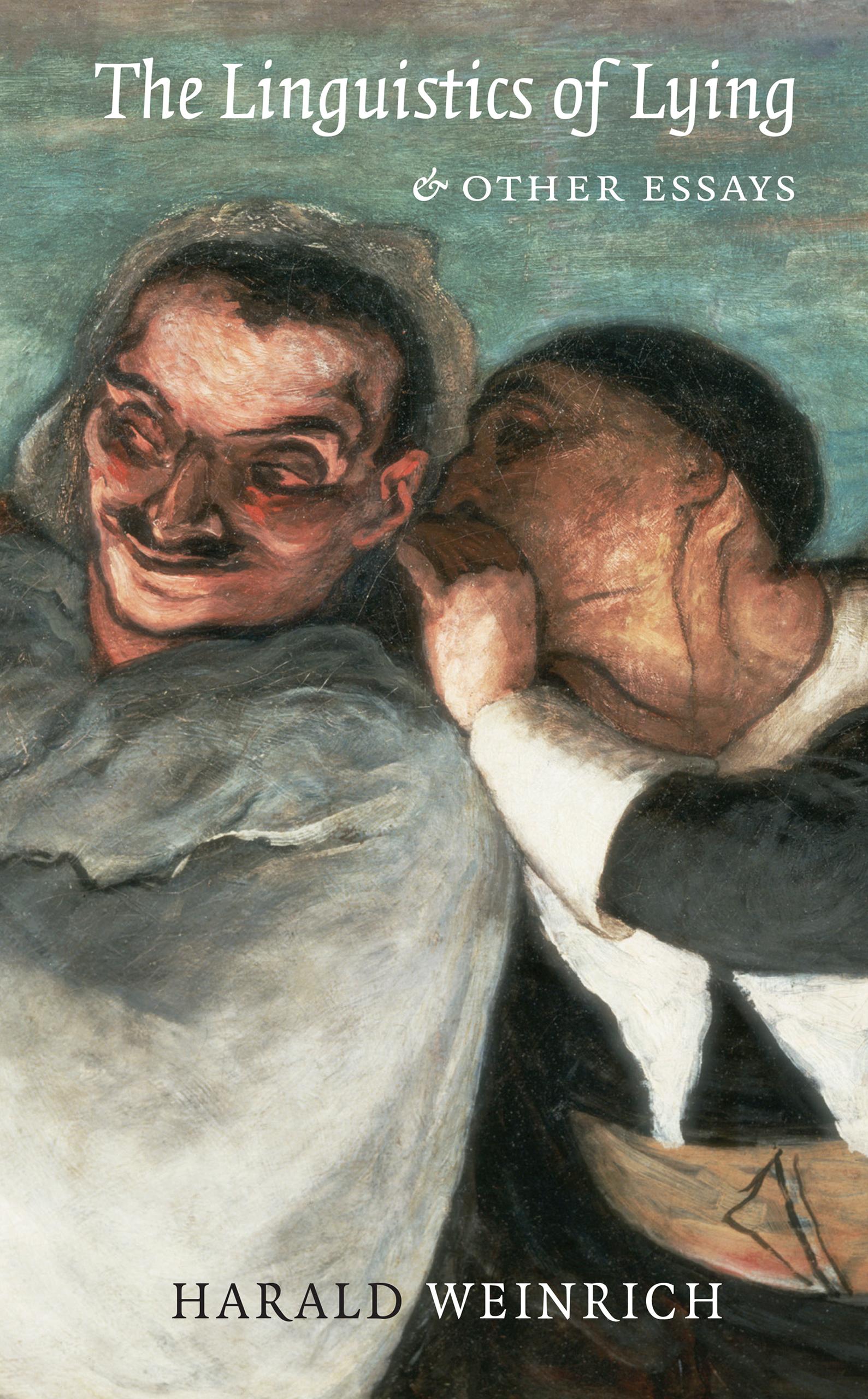
Can language hide thoughts? This question, posed by the German Academy for Language and Literature in 1965 as the topic of its first essay competition, was taken up by the philologist Harald Weinrich, with far-ranging results. The most immediate was his claiming first prize with this volume's title essay, published the following year as Linguistik der Luge. Weinrich's influential essay, now in its sixth printing in Germany, is presented here for the first time in English, with an updated preface by the author and additional essays selected by him.
With wit and clarity, Weinrich brings sophisticated thinking about semantics to bear on the question of how, and how much, language corresponds to thought. He argues that lying is a function not of words but of sentences; it belongs to the semantic aspect of language. His survey of the different ways in which language is untrue forges striking links between linguistic and literary categories on the one hand and ethics and even good manners on the other.
In contrast with scholars of an earlier generation, for whom literary and cultural theory circumscribed the issue of style within a fixed aesthetic framework, Weinrich demonstrates that stylistic analysis is closely linked with analysis in the domains of sociology and anthropology. The essays "Jonah's Sign: On the Very Large and the Very Small in Literature," "Politeness, an Affair of Honor," "Politeness and Sincerity," and "The Style Is the Man Is the Devil" complement "The Linguistics of Lying" in their focus on real and false representations in literature and in life, and notably on the immensely destructive lies, Adolf Hitler's in particular, that marked the politics of the twentieth century.
Paga facilmente con carta, Klarna, Apple Pay o Google Pay. Non sei soddisfatto? Hai sempre 14 giorni per il rimborso. Leggi di più nei nostri termini. Per qualsiasi domanda, scrivici a hello@memmo.org.
Memmo rende lo studio più facile, ovunque tu sia nel mondo. Qui trovi i tuoi libri di testo e strumenti di studio intelligenti, tutto in un unico posto: riassunti, quiz, podcast e flashcard. E poi c'è Ted, il tuo compagno di studio che risponde a ogni tua domanda. Oltre 50.000 studenti studiano già qui: è stato creato per aiutarti a imparare più velocemente e a stressarti meno.