
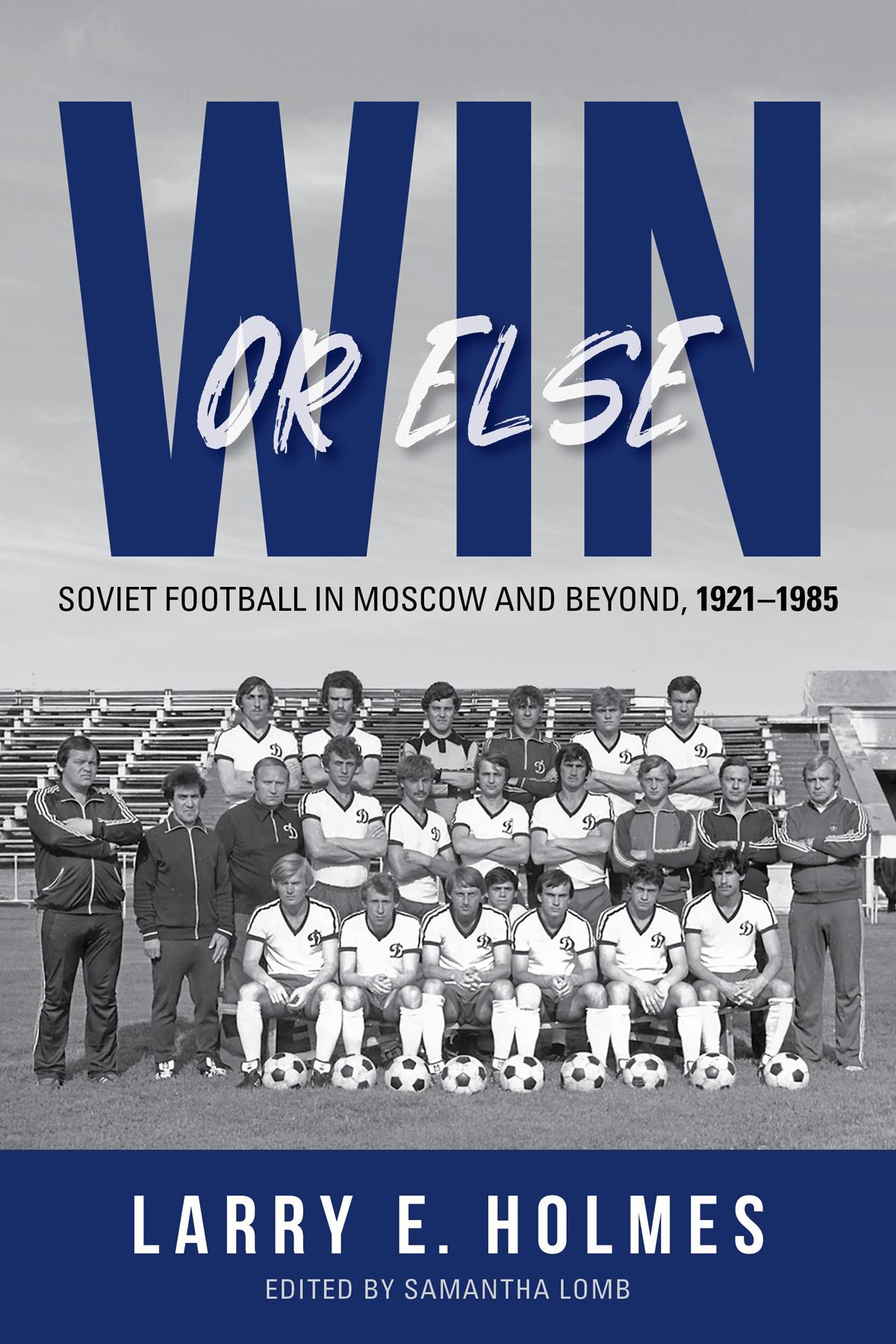
In Win or Else, Larry E. Holmes shows us how Soviet football culture regularly disregarded official ideological and political imperatives and skirted the boundaries between socialism and capitalism.
In the early 1920s, the Soviet press denounced football as a bourgeois sport that was injurious to both mind and body. Within that same decade, however, it blew up, becoming the most popular spectator sport in the USSR and growing into a fiercely competitive business with complex regional and national bureaucracies, a strong international presence, and a conviction that victory on the field was also a victory of Soviet supremacy. Writing as both historian and fan, Holmes focuses his study on the provincial Kirov team Dinamo from 1979 to 1985, when the club played at both its worst and its best. Spurred by a dismal 1979 season, the team's administrators and regional authorities had two options: obey Moscow's edict to reduce expenditures on professional sports or seek out new—and often illicit—funding sources to fill out a team of champions.
Drawing on rich archival materials as well as newspapers and interviews with former players, Win or Else reveals the foundations of Soviet sports culture—and the hazards that teams faced both in victory and in loss.
Paga facilmente con carta, Klarna, Apple Pay o Google Pay. Non sei soddisfatto? Hai sempre 14 giorni per il rimborso. Leggi di più nei nostri termini. Per qualsiasi domanda, scrivici a hello@memmo.org.
Memmo rende lo studio più facile, ovunque tu sia nel mondo. Qui trovi i tuoi libri di testo e strumenti di studio intelligenti, tutto in un unico posto: riassunti, quiz, podcast e flashcard. E poi c'è Ted, il tuo compagno di studio che risponde a ogni tua domanda. Oltre 50.000 studenti studiano già qui: è stato creato per aiutarti a imparare più velocemente e a stressarti meno.