
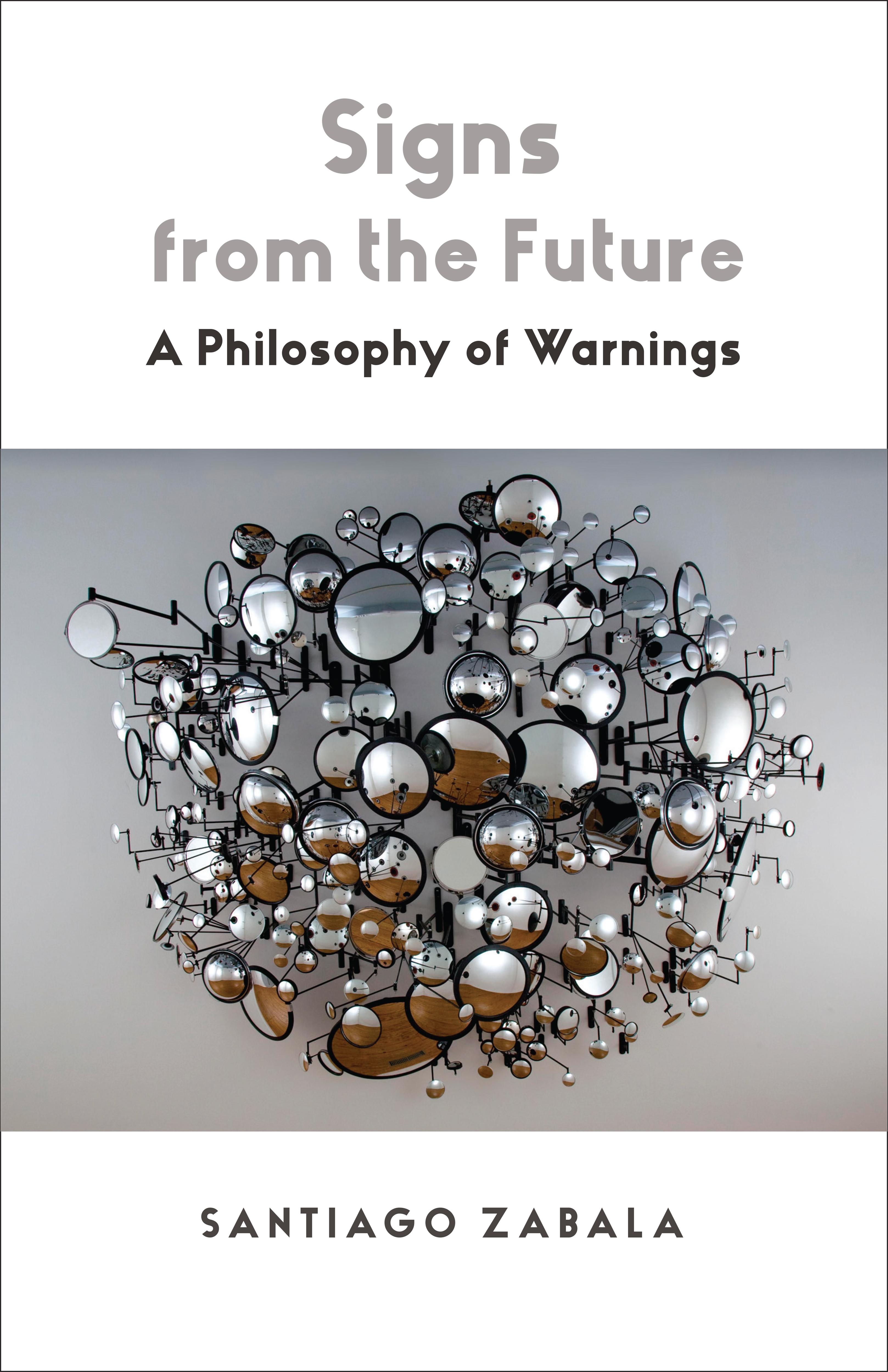
We are constantly being warned, but we seldom heed warnings. Cautioned about authoritarian leaders, climate change, technological dystopias, or other catastrophes, we fail to take action or even take them seriously. Too often warnings are dismissed—much like the artists, scientists, environmentalists, and intellectuals who deliver them. Why don’t we listen?
Santiago Zabala asks us to think of philosophy as a warning, a call to heed ominous “signs from the future.” He argues that warnings—as distinct from predictions—invite us to see the possibility of a radical break from the present. Predictions tell us to submit to the inevitable, but warnings ask us to take part in shaping a different future. A philosophy of warnings offers an alternative horizon of understanding beyond “the real” and “the normal,” and a politics of warnings helps us confront hidden emergencies through collective interpretation, listening, and action.
Signs from the Future places thinkers such as Nietzsche, Heidegger, de Beauvoir, and Arendt into conversation with present-day politics, art, and culture, drawing our attention to unheeded warnings. This timely and engaging book shows why unresolved crises from the past must be interpreted anew today if we are to imagine an equitable future—or a future at all.
Paga facilmente con carta, Klarna, Apple Pay o Google Pay. Non sei soddisfatto? Hai sempre 14 giorni per il rimborso. Leggi di più nei nostri termini. Per qualsiasi domanda, scrivici a hello@memmo.org.
Memmo rende lo studio più facile, ovunque tu sia nel mondo. Qui trovi i tuoi libri di testo e strumenti di studio intelligenti, tutto in un unico posto: riassunti, quiz, podcast e flashcard. E poi c'è Ted, il tuo compagno di studio che risponde a ogni tua domanda. Oltre 50.000 studenti studiano già qui: è stato creato per aiutarti a imparare più velocemente e a stressarti meno.