
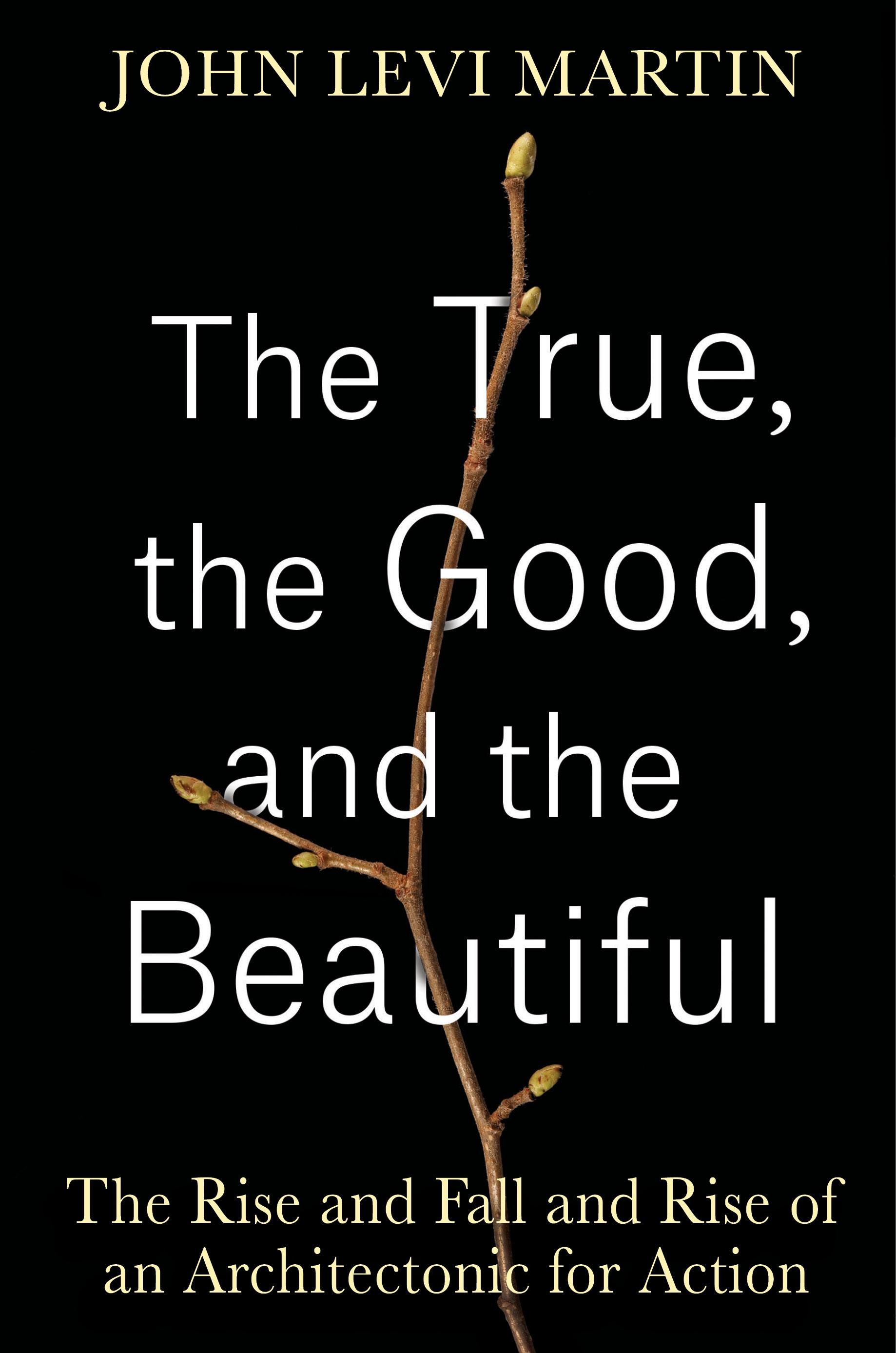
We have many histories of social theory—what different authors attempted to do as they responded to previous theories. But we know precious little about how they did this in structural terms—what scaffolding they adopted and adapted to make their claims. Yet today’s social thoughts largely employ structures passed down from previous generations, structures that were developed to solve problems that are no longer ours.
In The True, the Good, and the Beautiful, John Levi Martin explores these structures, the resulting tensions, and their broader significance for sociological thought. By examining how thinkers mapped interpersonal to intrapersonal structures, he traces the development of the underlying architectonics of theory, focusing on one that was inherited from eighteenth-century philosophy and brought into social science in the nineteenth century. He shows that the structural tensions inherent in these theories paralleled those being worked out in practical terms by constitutional theorists as thinkers attempted to return to their most fundamental understandings of the nature of the human, the social, and the political to recraft their societies. A magisterial new interpretation of the foundations of sociological thought, The True, the Good, and the Beautiful is as ambitious a work of social theory as we have seen in generations.
Paga facilmente con carta, Klarna, Apple Pay o Google Pay. Non sei soddisfatto? Hai sempre 14 giorni per il rimborso. Leggi di più nei nostri termini. Per qualsiasi domanda, scrivici a hello@memmo.org.
Memmo rende lo studio più facile, ovunque tu sia nel mondo. Qui trovi i tuoi libri di testo e strumenti di studio intelligenti, tutto in un unico posto: riassunti, quiz, podcast e flashcard. E poi c'è Ted, il tuo compagno di studio che risponde a ogni tua domanda. Oltre 50.000 studenti studiano già qui: è stato creato per aiutarti a imparare più velocemente e a stressarti meno.