
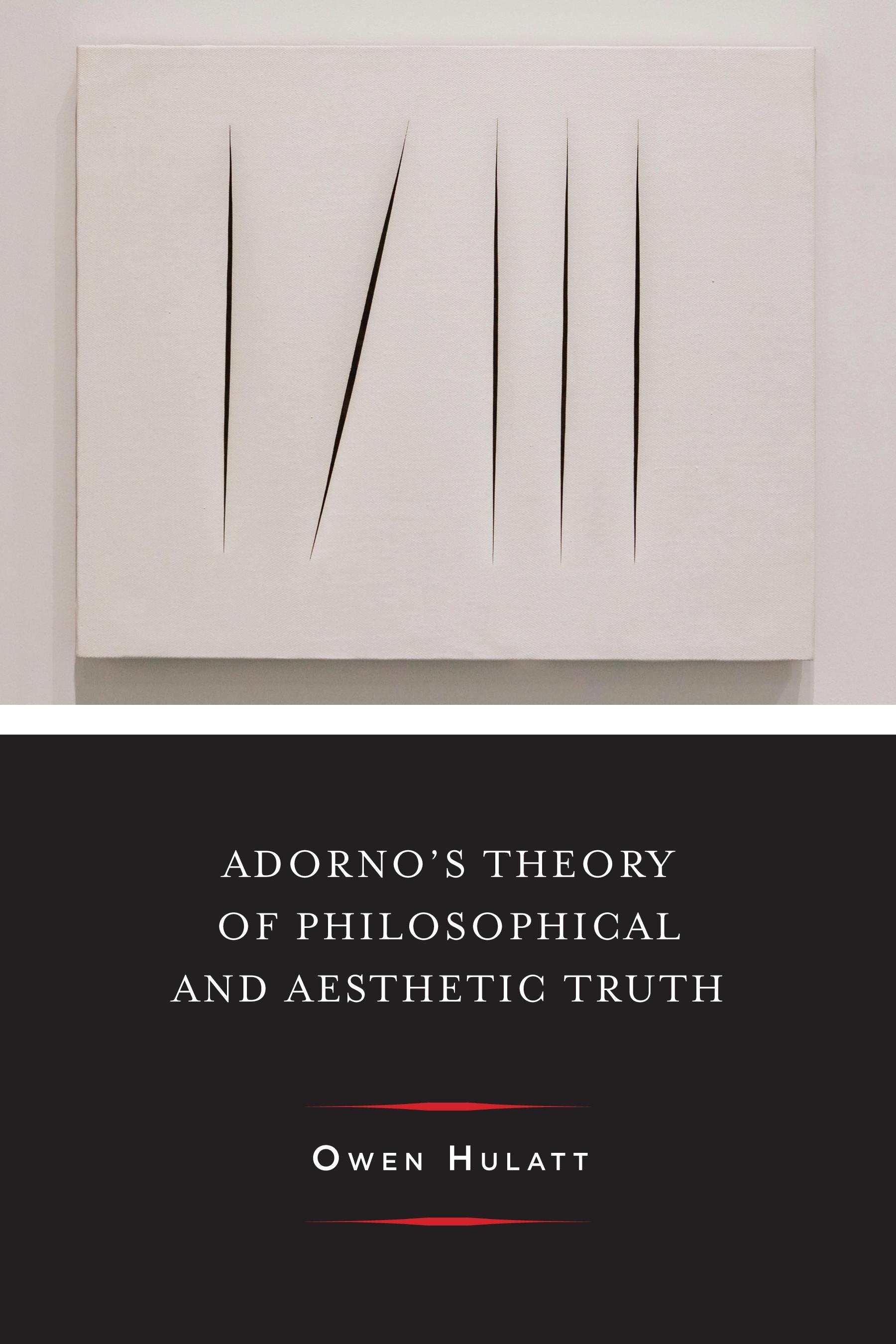
In Adorno's Theory of Philosophical and Aesthetic Truth, Owen Hulatt undertakes an original reading of Theodor W. Adorno's epistemology and its material underpinnings, deepening our understanding of his theories of truth, art, and the nonidentical. Hulatt's novel interpretation casts Adorno's theory of philosophical and aesthetic truth as substantially unified, supporting the thinker's claim that both philosophy and art are capable of being true.
For Adorno, truth is produced when rhetorical "texture" combines with cognitive "performance," leading to the breakdown of concepts that mediate the experience of the consciousness. Both philosophy and art manifest these features, although philosophy enacts these conceptual issues directly, while art does so obliquely. Hulatt builds a robust argument for Adorno's claim that concepts ineluctably misconstrue their objects. He also puts the still influential thinker into conversation with Hegel, Husserl, Frazer, Sohn-Rethel, Benjamin, Strawson, Dahlhaus, Habermas, and Caillois, among many others.
Paga facilmente con carta, Klarna, Apple Pay o Google Pay. Non sei soddisfatto? Hai sempre 14 giorni per il rimborso. Leggi di più nei nostri termini. Per qualsiasi domanda, scrivici a hello@memmo.org.
Memmo rende lo studio più facile, ovunque tu sia nel mondo. Qui trovi i tuoi libri di testo e strumenti di studio intelligenti, tutto in un unico posto: riassunti, quiz, podcast e flashcard. E poi c'è Ted, il tuo compagno di studio che risponde a ogni tua domanda. Oltre 50.000 studenti studiano già qui: è stato creato per aiutarti a imparare più velocemente e a stressarti meno.