
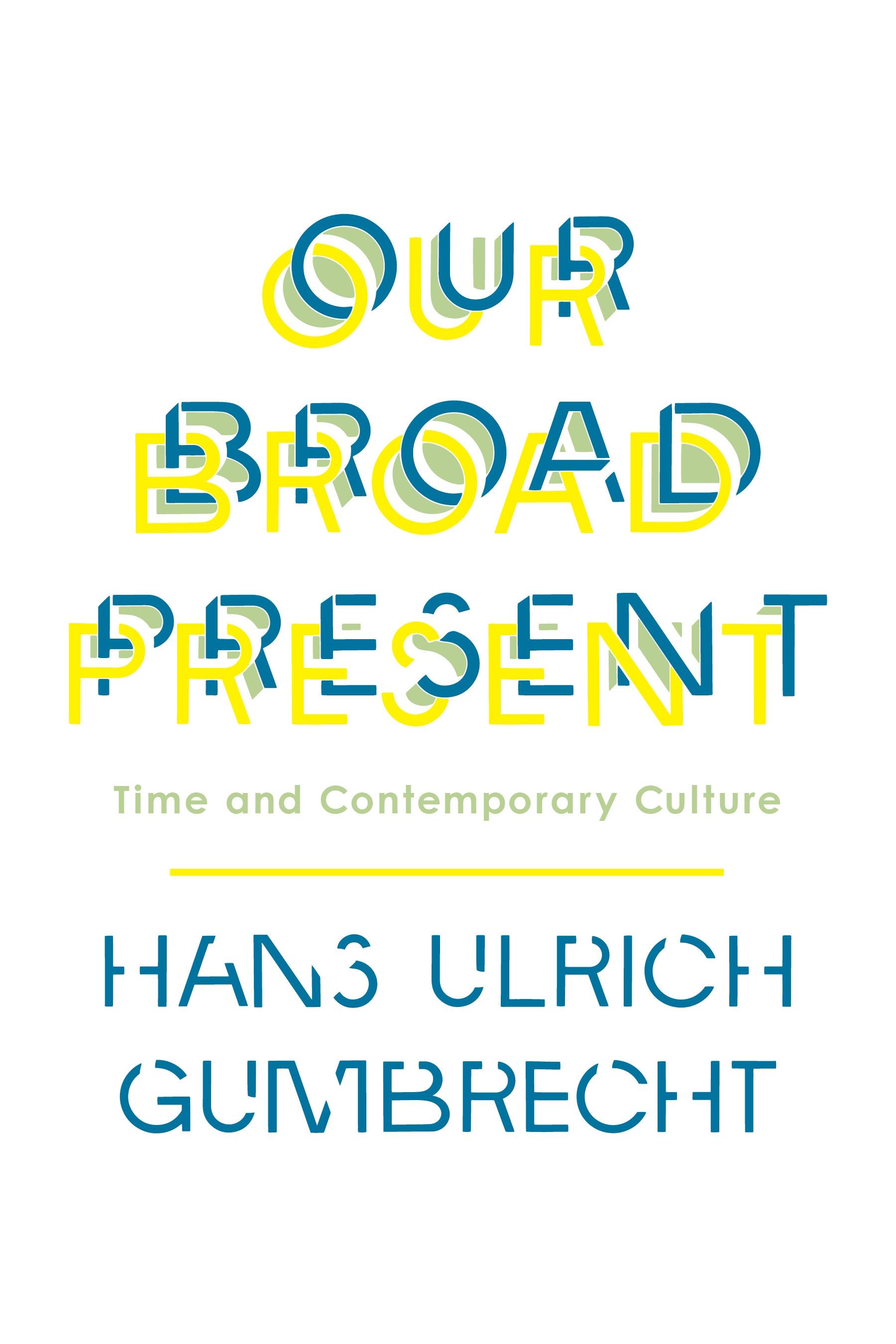
Considering a range of present-day phenomena, from the immediacy effects of literature to the impact of hypercommunication, globalization, and sports, Hans Ulrich Gumbrecht notes an important shift in our relationship to history and the passage of time. Although we continue to use concepts inherited from a "historicist" viewpoint, a notion of time articulated in the eighteenth and nineteenth centuries, the actual construction of time in which we live in today, which shapes our perceptions, experiences, and actions, is no longer historicist. Without fully realizing it, we now inhabit a new, unnamed space in which the "closed future" and "ever-available past" (a past we have not managed to leave behind) converge to produce an "ever-broadening present of simultaneities."
This profound change to a key dimension of our existence has complex consequences for the way in which we think about ourselves and our relation to the material world. At the same time, the ubiquity of digital media has eliminated our tactile sense of physical space, altering our perception of our world. Gumbrecht draws on his mastery of the philosophy of language to enrich his everyday observations, traveling to Disneyland, a small town in Louisiana, and the center of Vienna to produce striking sketches of our broad presence in the world.
Paga facilmente con carta, Klarna, Apple Pay o Google Pay. Non sei soddisfatto? Hai sempre 14 giorni per il rimborso. Leggi di più nei nostri termini. Per qualsiasi domanda, scrivici a hello@memmo.org.
Memmo rende lo studio più facile, ovunque tu sia nel mondo. Qui trovi i tuoi libri di testo e strumenti di studio intelligenti, tutto in un unico posto: riassunti, quiz, podcast e flashcard. E poi c'è Ted, il tuo compagno di studio che risponde a ogni tua domanda. Oltre 50.000 studenti studiano già qui: è stato creato per aiutarti a imparare più velocemente e a stressarti meno.