
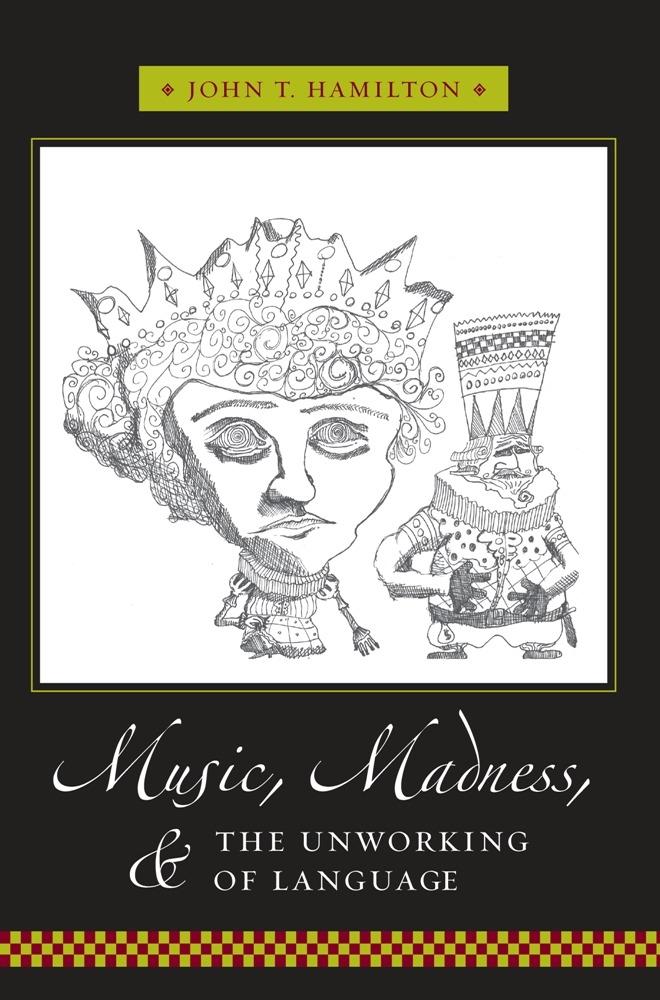
In the romantic tradition, music is consistently associated with madness, either as cause or cure. Writers as diverse as Kleist, Hoffmann, and Nietzsche articulated this theme, which in fact reaches back to classical antiquity and continues to resonate in the modern imagination. What John Hamilton investigates in this study is the way literary, philosophical, and psychological treatments of music and madness challenge the limits of representation and thereby create a crisis of language. Special focus is given to the decidedly autobiographical impulse of the late eighteenth and early nineteenth centuries, where musical experience and mental disturbance disrupt the expression of referential thought, illuminating the irreducible aspects of the self before language can work them back into a discursive system.
The study begins in the 1750s with Diderot's Neveu de Rameau, and situates that text in relation to Rousseau's reflections on the voice and the burgeoning discipline of musical aesthetics. Upon tracing the linkage of music and madness that courses through the work of Herder, Hegel, Wackenroder, and Kleist, Hamilton turns his attention to E. T. A. Hoffmann, whose writings of the first decades of the nineteenth century accumulate and qualify the preceding tradition. Throughout, Hamilton considers the particular representations that link music and madness, investigating the underlying motives, preconceptions, and ideological premises that facilitate the association of these two experiences. The gap between sensation and its verbal representation proved especially problematic for romantic writers concerned with the ineffability of selfhood. The author who chose to represent himself necessarily faced problems of language, which invariably compromised the uniqueness that the author wished to express. Music and madness, therefore, unworked the generalizing functions of language and marked a critical limit to linguistic capabilities. While the various conflicts among music, madness, and language questioned the viability of signification, they also raised the possibility of producing meaning beyond significance.
Paga facilmente con carta, Klarna, Apple Pay o Google Pay. Non sei soddisfatto? Hai sempre 14 giorni per il rimborso. Leggi di più nei nostri termini. Per qualsiasi domanda, scrivici a hello@memmo.org.
Memmo rende lo studio più facile, ovunque tu sia nel mondo. Qui trovi i tuoi libri di testo e strumenti di studio intelligenti, tutto in un unico posto: riassunti, quiz, podcast e flashcard. E poi c'è Ted, il tuo compagno di studio che risponde a ogni tua domanda. Oltre 50.000 studenti studiano già qui: è stato creato per aiutarti a imparare più velocemente e a stressarti meno.