
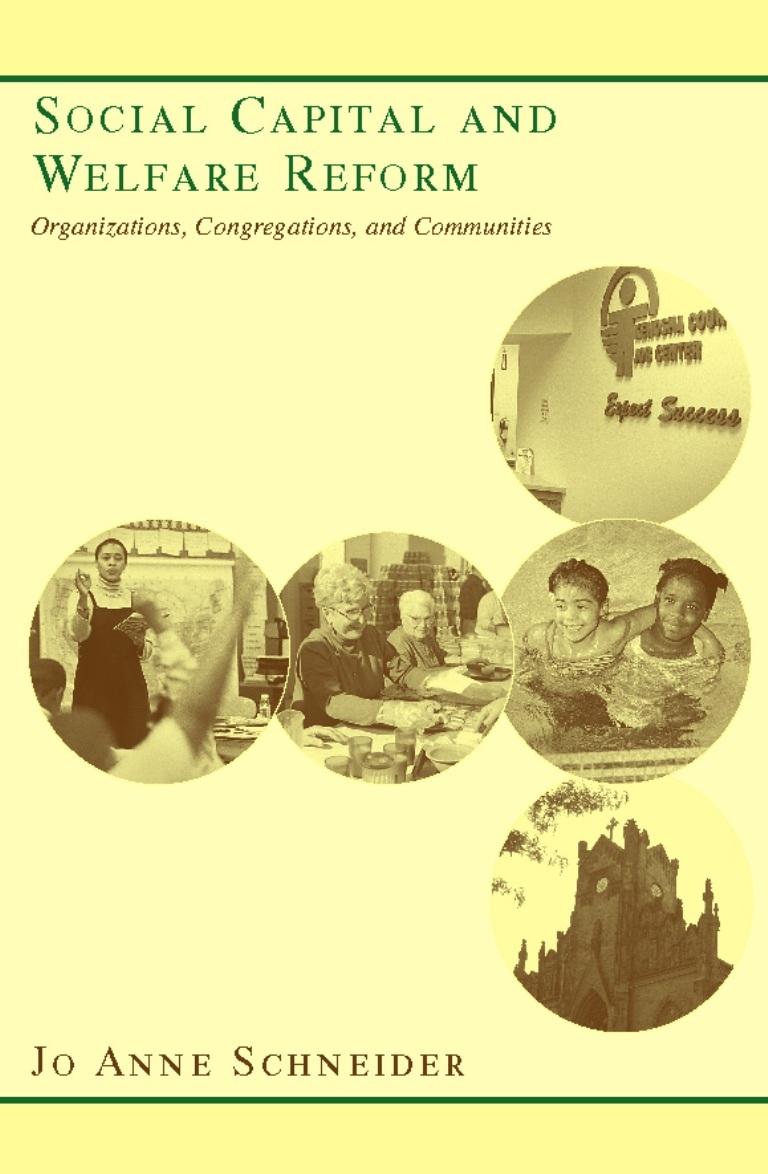
In this groundbreaking study, Jo Anne Schneider considers the reasons behind the limited success of most welfare reform initiatives and offers evidence-based recommendations for enhancing the effectiveness of welfare policy.
Schneider draws on her rich and nuanced ethnographic studies of Philadelphia, Milwaukee, and Kenosha, Wisconsin to clarify the role of social capital for both individuals and institutions. She shows that the social relationships and patterns of trust that enable people to gain access to resources like government services, organization funding, and jobs are crucial in helping families achieve their goals. Schneider examines the complex ways in which social capital functions in conjunction with economic, human, and cultural capital, and explores social capital dynamics among government, nonprofits, and congregations that together provide the welfare support system.
Social Capital and Welfare Reform is compulsory reading for researchers and students in social work, sociology, anthropology, public policy, education, community psychology, social psychiatry, and non-profit and public administration as well as policy makers interested in welfare reform, poverty, and nonprofits.
Paga facilmente con carta, Klarna, Apple Pay o Google Pay. Non sei soddisfatto? Hai sempre 14 giorni per il rimborso. Leggi di più nei nostri termini. Per qualsiasi domanda, scrivici a hello@memmo.org.
Memmo rende lo studio più facile, ovunque tu sia nel mondo. Qui trovi i tuoi libri di testo e strumenti di studio intelligenti, tutto in un unico posto: riassunti, quiz, podcast e flashcard. E poi c'è Ted, il tuo compagno di studio che risponde a ogni tua domanda. Oltre 50.000 studenti studiano già qui: è stato creato per aiutarti a imparare più velocemente e a stressarti meno.