
Before Memmo my notes were scattered across PDFs. Now a workspace pulls everything into one place — I see exactly what's still left to study.
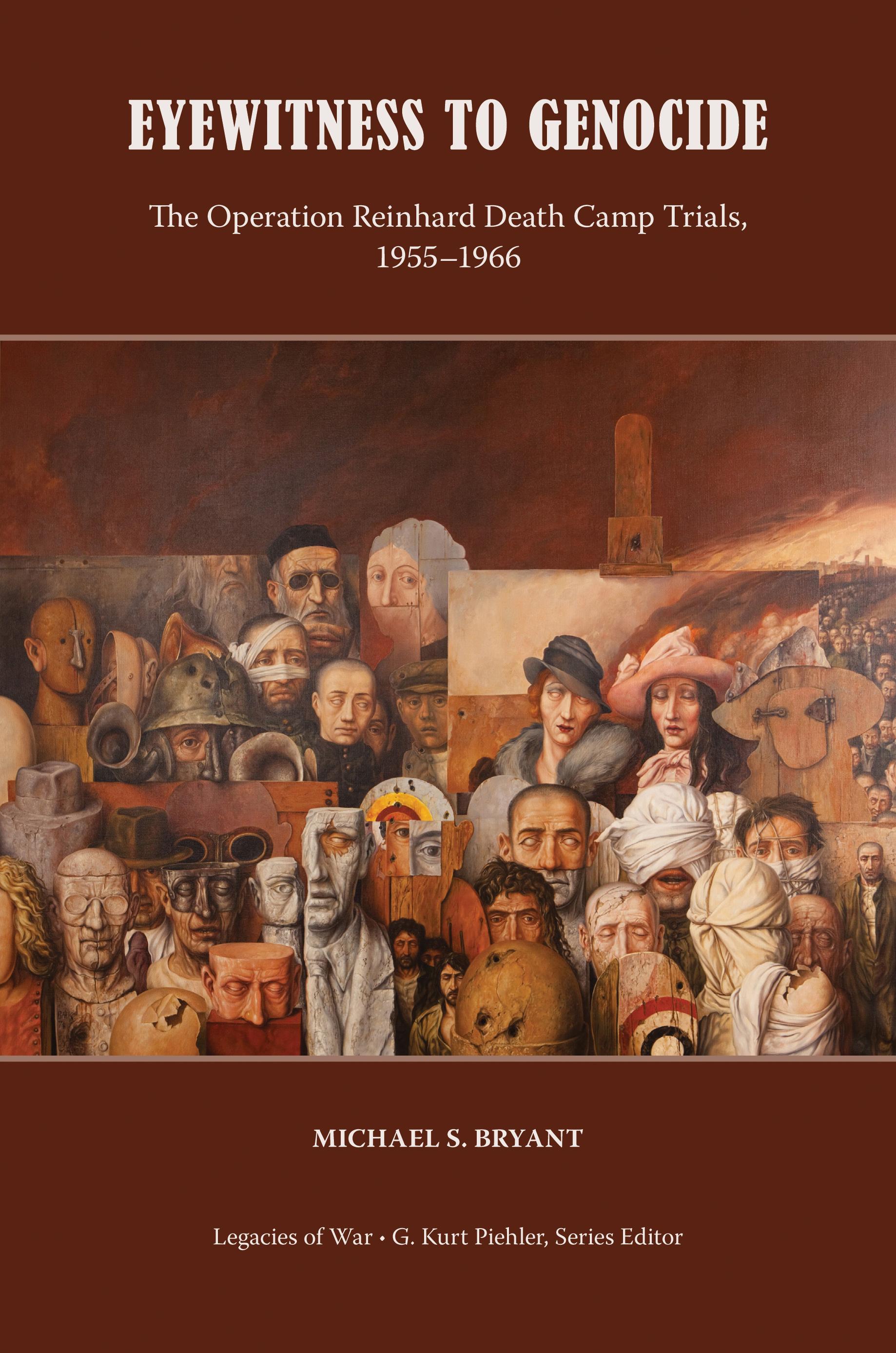
Winner of the Book of the Year Award from the American National Chapter of the Association Internationale de Droit Penal.
One of the deadliest phases of the Holocaust, the Nazi regime’s “Operation Reinhard” produced three major death camps—Belzec, Treblinka, and Sobibor—which claimed the lives of 1.8 million Jews. In the 1960s, a small measure of justice came for those victims when a score of defendants who had been officers and guards at the camps were convicted of war crimes in West German courts. The conviction rates varied, however. While all but one of fourteen Treblinka defendants were convicted, half of the twelve Sobibor defendants escaped punishment, and only one of eight Belzec defendants was convicted. Also, despite the enormity of the crimes, the sentences were light in many cases, amounting to only a few years in prison.
In this meticulous history of the Operation Reinhard trials, Michael S. Bryant examines a disturbing question: Did compromised jurists engineer acquittals or lenient punishments for proven killers? Drawing on rarely studied archival sources, Bryant concludes that the trial judges acted in good faith within the bounds of West German law. The key to successful prosecutions was eyewitness testimony. At Belzec, the near-total efficiency of the Nazi death machine meant that only one survivor could be found to testify. At Treblinka and Sobibor, however, prisoner revolts had resulted in a number of survivors who could give firsthand accounts of specific atrocities and identify participants. The courts, Bryant finds, treated these witnesses with respect and even made allowances for conflicting testimony. And when handing down sentences, the judges acted in accordance with strict legal definitions of perpetration, complicity, and action under duress.
Yet, despite these findings, Bryant also shows that West German legal culture was hardly blameless during the postwar era. Though ready to convict the mostly working-class personnel of the death camps, the Federal Republic followed policies that insulated the judicial elite from accountability for its own role in the Final Solution. While trial records show that the “bias” of West German jurists was neither direct nor personal, the structure of the system ensured that lawyers and judges themselves avoided judgment.
Before Memmo my notes were scattered across PDFs. Now a workspace pulls everything into one place — I see exactly what's still left to study.
Memmo's summaries are gold before exams. I don't have to re-read 800 pages two weeks before — just the important parts.
The AI chat has saved me the night before an exam more than once. I just keep asking until I get it — no waiting on a study group to reply.
The quizzes hit exactly what I need to know. Memmo tracks what I get stuck on — so I only practice what's worth it.
Flashcards with spaced repetition are magic. Memmo knows when I'm about to forget something and brings it back.
The AI podcasts are my favorite. I listen on my way to school and get a recap without sitting at a computer.

Handbok i kvalitativa metoder
281 kr

Hållbar utveckling: en introduktion för ingenjörer och andra problemlösare
334 kr

Brymans Samhällsvetenskapliga metoder
390 kr

Projektledning
491 kr

Den orättvisa hälsan: om socioekonomiska skillnader i hälsa och livslängd
326 kr

Vetenskapsteori för nybörjare
196 kr

Organizational Leadership
429 kr

På väg mot läraryrket
172 kr

Det sociala livet i skolan: Socialpsykologiska perspektiv
253 kr

Betygsättningens didaktik
151 kr

Personality
402 kr

Studying Leadership
404 kr

Managing Innovation
477 kr

Introduktion till samhällsvetenskaplig metod
347 kr

The Psychology of Sex and Gender
698 kr

Evidens och kunskap för socialt arbete
207 kr

Introduction to Leadership
605 kr