
Before Memmo my notes were scattered across PDFs. Now a workspace pulls everything into one place — I see exactly what's still left to study.
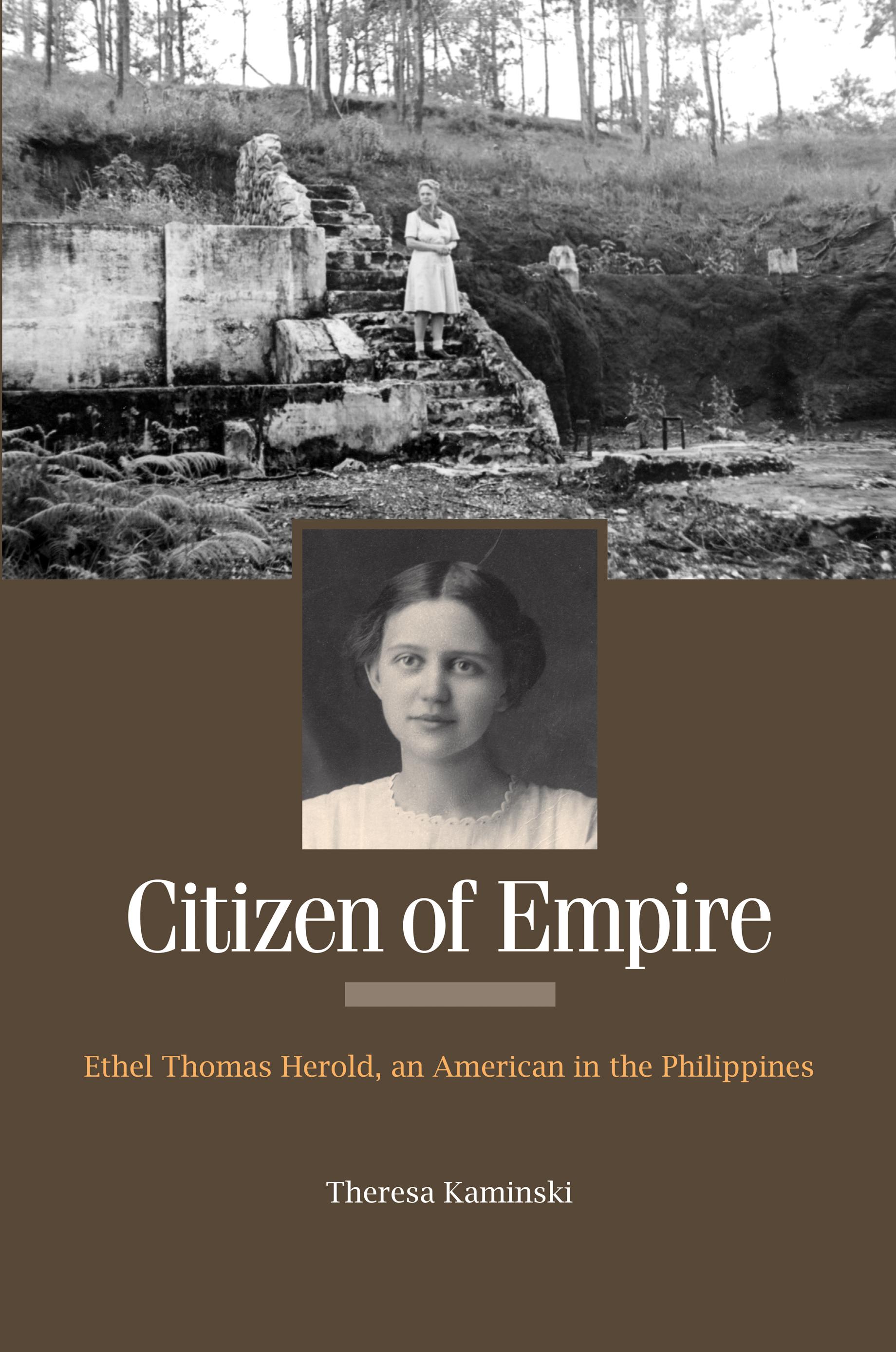
Ethel Thomas Herold (1896–1988) was an ordinary person caught up in extraordinary circumstances—a woman whose sense of patriotic duty took her from small-town Wisconsin to the Philippines in 1922. There, with but a couple of brief interruptions, she would spend the next thirty-seven years, including three in a Japanese internment camp during World War II. In Citizen of Empire, Theresa Kaminski uses Ethel’s experiences of war and imperialism to explore a unique example of how those enormous forces helped shape Americans’ notions of citizenship and patriotism in the first half of the twentieth century.
As Kaminski’s absorbing narrative reveals, Ethel’s views of active patriotism began to form early on when her oldest brother became a schoolteacher in the Philippines in 1901 at the end of the Spanish-American War. After college and marriage, Ethel and her husband Elmer Herold went to the islands to teach in the public schools—a way, in her view, of spreading American ideals abroad. She quit teaching in 1927 to start a family but continued to support U.S. imperialism through her colonial household and club work. Her comfortable expatriate life fell apart, however, when the Japanese attacked the Philippines in 1941: the colonial elite were now powerless prisoners. After the war, wishing to help the people who had supported them during the occupation, Ethel and Elmer Herold stayed in the islands, but after Philippine independence came in 1946, they increasingly found themselves strangers in a place they had long called home. In 1959 the couple returned to Wisconsin, where Ethel remained politically active and saw the solution to America’s Cold War problems in the conservative wing of the Republican Party.
Ethel Thomas Herold was a woman of forceful personality. Marked most notably by her strongly held views on patriotism and citizenship, her transpacific life offers a remarkable instance of how the personal and political came together during the “American century.”
Before Memmo my notes were scattered across PDFs. Now a workspace pulls everything into one place — I see exactly what's still left to study.
Memmo's summaries are gold before exams. I don't have to re-read 800 pages two weeks before — just the important parts.
The AI chat has saved me the night before an exam more than once. I just keep asking until I get it — no waiting on a study group to reply.
The quizzes hit exactly what I need to know. Memmo tracks what I get stuck on — so I only practice what's worth it.
Flashcards with spaced repetition are magic. Memmo knows when I'm about to forget something and brings it back.
The AI podcasts are my favorite. I listen on my way to school and get a recap without sitting at a computer.

Handbok i kvalitativa metoder
281 kr

Hållbar utveckling: en introduktion för ingenjörer och andra problemlösare
334 kr

Brymans Samhällsvetenskapliga metoder
390 kr

Projektledning
491 kr

Den orättvisa hälsan: om socioekonomiska skillnader i hälsa och livslängd
326 kr

Organizational Leadership
429 kr

Vetenskapsteori för nybörjare
196 kr

På väg mot läraryrket
172 kr

Det sociala livet i skolan: Socialpsykologiska perspektiv
253 kr

Betygsättningens didaktik
151 kr

Personality
402 kr

Studying Leadership
404 kr

Managing Innovation
477 kr

Introduktion till samhällsvetenskaplig metod
347 kr

The Psychology of Sex and Gender
698 kr

Evidens och kunskap för socialt arbete
207 kr

Introduction to Leadership
605 kr