
Before Memmo my notes were scattered across PDFs. Now a workspace pulls everything into one place — I see exactly what's still left to study.
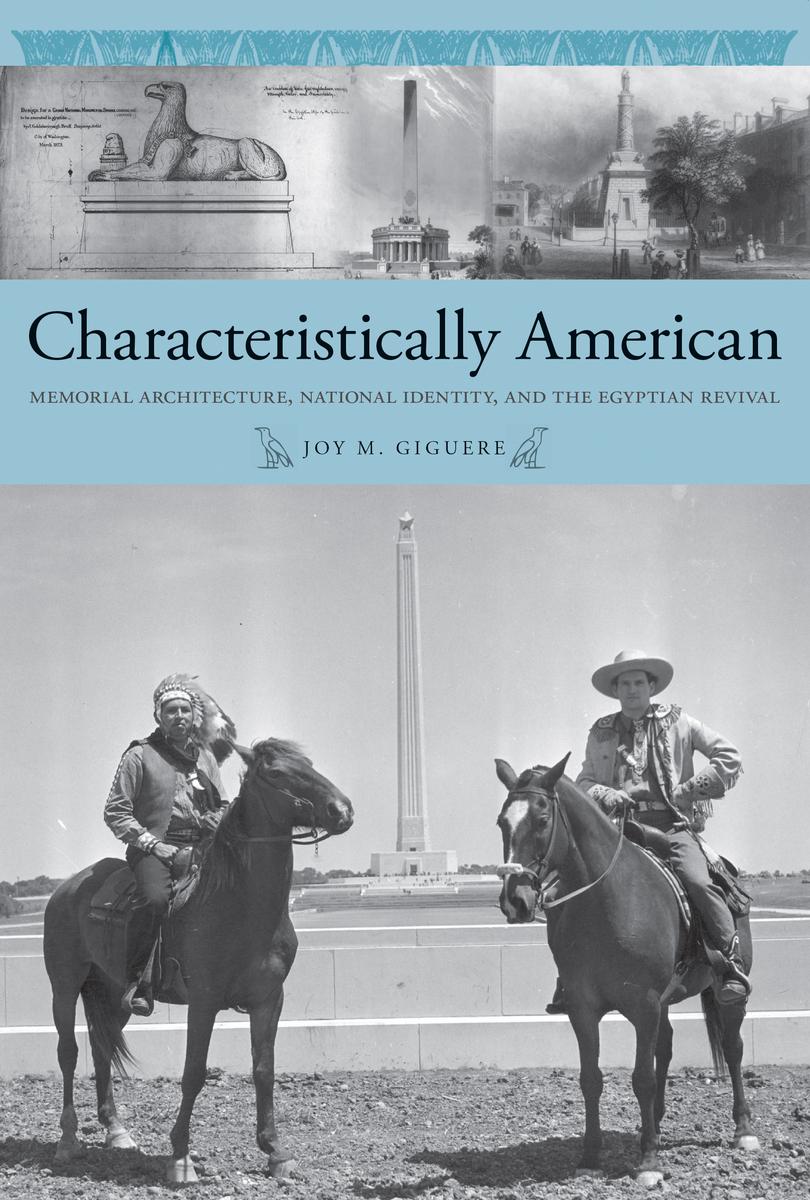
Prior to the nineteenth century, few Americans knew anything more of Egyptian culture than what could be gained from studying the biblical Exodus. Napoleon’s invasion of Egypt at the end of the eighteenth century, however, initiated a cultural breakthrough for Americans as representations of Egyptian culture flooded western museums and publications, sparking a growing interest in all things Egyptian that was coined Egyptomania. As Egyptomania swept over the West, a relatively young America began assimilating Egyptian culture into its own national identity, creating a hybrid national heritage that would vastly affect the memorial landscape of the nineteenth and twentieth centuries.
Far more than a study of Egyptian revivalism, this book examines the Egyptian style of commemoration from the rural cemetery to national obelisks to the Sphinx at Mount Auburn Cemetery. Giguere argues that Americans adopted Egyptian forms of commemoration as readily as other neoclassical styles such as Greek revivalism, noting that the American landscape is littered with monuments that define the Egyptian style’s importance to American national identity. Of particular interest is perhaps America’s greatest commemorative obelisk: the Washington Monument. Standing at 555 feet high and constructed entirely of stone—making it the tallest obelisk in the world—the Washington Monument represents the pinnacle of Egyptian architecture’s influence on America’s desire to memorialize its national heroes by employing monumental forms associated with solidity and timelessness. Construction on the monument began in 1848, but controversy over its design, which at one point included a Greek colonnade surrounding the obelisk, and the American Civil War halted construction until 1877. Interestingly, Americans saw the completion of the Washington Monument after the Civil War as a mending of the nation itself, melding Egyptian commemoration with the reconstruction of America.
As the twentieth century saw the rise of additional commemorative obelisks, the Egyptian Revival became ensconced in American national identity. Egyptian-style architecture has been used as a form of commemoration in memorials for World War I and II, the civil rights movement, and even as recently as the 9/11 remembrances. Giguere places the Egyptian style in a historical context that demonstrates how Americans actively sought to forge a national identity reminiscent of Egyptian culture that has endured to the present day.
Before Memmo my notes were scattered across PDFs. Now a workspace pulls everything into one place — I see exactly what's still left to study.
Memmo's summaries are gold before exams. I don't have to re-read 800 pages two weeks before — just the important parts.
The AI chat has saved me the night before an exam more than once. I just keep asking until I get it — no waiting on a study group to reply.
The quizzes hit exactly what I need to know. Memmo tracks what I get stuck on — so I only practice what's worth it.
Flashcards with spaced repetition are magic. Memmo knows when I'm about to forget something and brings it back.
The AI podcasts are my favorite. I listen on my way to school and get a recap without sitting at a computer.

Handbok i kvalitativa metoder
281 kr

Hållbar utveckling: en introduktion för ingenjörer och andra problemlösare
334 kr

Brymans Samhällsvetenskapliga metoder
390 kr

Projektledning
491 kr

Den orättvisa hälsan: om socioekonomiska skillnader i hälsa och livslängd
326 kr

Organizational Leadership
429 kr

Vetenskapsteori för nybörjare
196 kr

På väg mot läraryrket
172 kr

Det sociala livet i skolan: Socialpsykologiska perspektiv
253 kr

Betygsättningens didaktik
151 kr

Personality
402 kr

Studying Leadership
404 kr

Managing Innovation
477 kr

Introduktion till samhällsvetenskaplig metod
347 kr

The Psychology of Sex and Gender
698 kr

Evidens och kunskap för socialt arbete
207 kr

Introduction to Leadership
605 kr