
Before Memmo my notes were scattered across PDFs. Now a workspace pulls everything into one place — I see exactly what's still left to study.
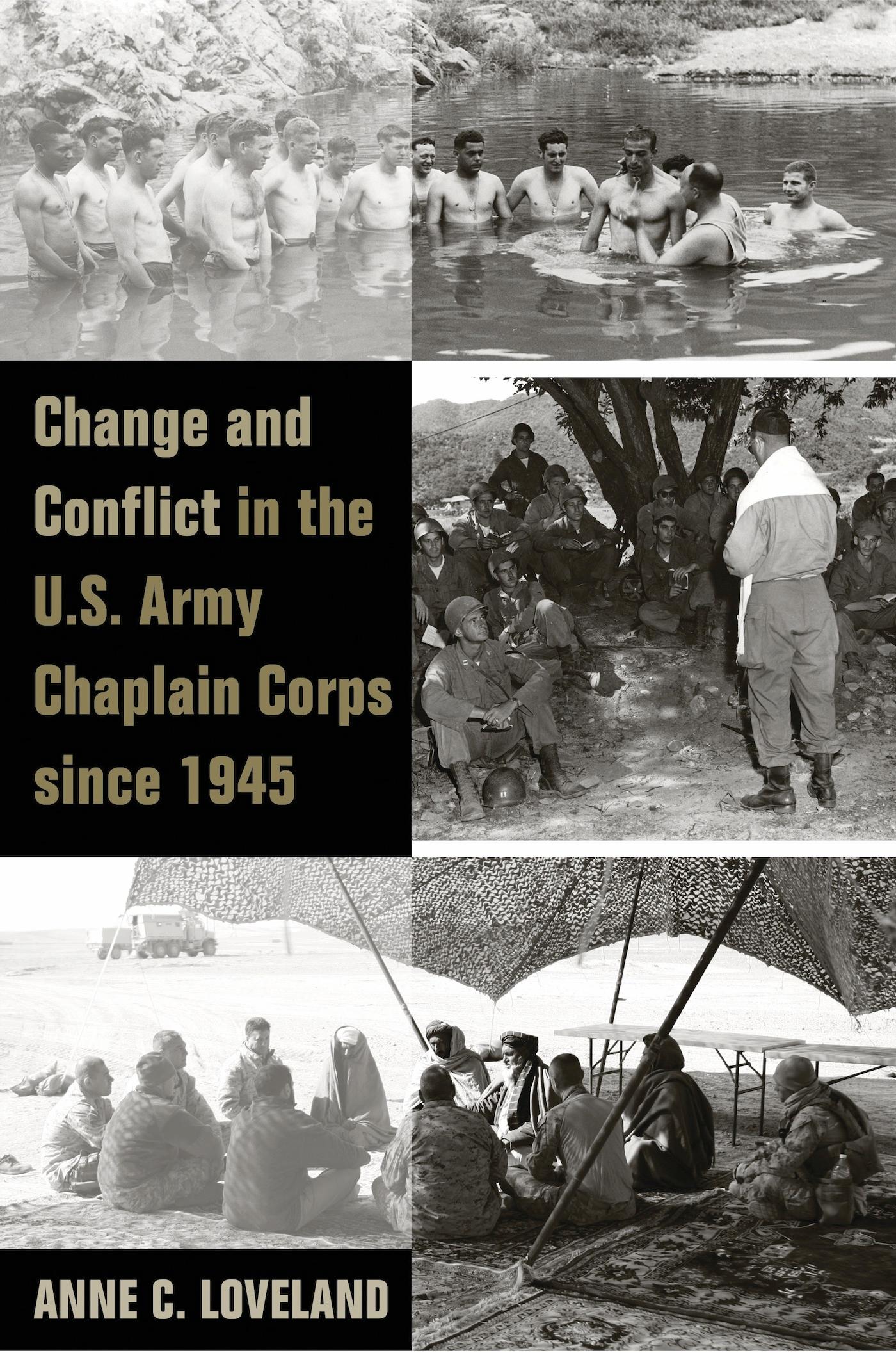
Army chaplains have long played an integral part in America’s armed forces. In addition to conducting chapel activities on military installations and providing moral and spiritual support on the battlefield, they conduct memorial services for fallen soldiers, minister to survivors, offer counsel on everything from troubled marriages to military bureaucracy, and serve as families’ points of contact for wounded or deceased soldiers—all while risking the dangers of combat alongside their troops.
In this thoughtful study, Anne C. Loveland examines the role of the army chaplain since World War II, revealing how the corps has evolved in the wake of cultural and religious upheaval in American society and momentous changes in U.S. strategic relations, warfare, and weaponry.
From 1945 to the present, Loveland shows, army chaplains faced several crises that reshaped their roles over time. She chronicles the chaplains’ initiation of the Character Guidance program as a remedy for the soaring rate of venereal disease among soldiers in occupied Europe and Japan after World War II, as well as chaplains’ response to the challenge of increasing secularism and religious pluralism during the “culture wars” of the Vietnam Era. “Religious accommodation,” evangelism and proselytizing, public prayer, and “spiritual fitness” provoked heated controversy among chaplains as well as civilians in the ensuing decades. Then, early in the twenty-first century, chaplains themselves experienced two crisis situations: one the result of the Vietnam-era antichaplain critique, the other a consequence of increasing religious pluralism, secularization, and sectarianism within the Chaplain Corps, as well as in the army and the civilian religious community.
By focusing on army chaplains’ evolving, sometimes conflict-ridden relations with military leaders and soldiers on the one hand and the civilian religious community on the other, Loveland reveals how religious trends over the past six decades have impacted the corps and, in turn, helped shape American military culture.
Before Memmo my notes were scattered across PDFs. Now a workspace pulls everything into one place — I see exactly what's still left to study.
Memmo's summaries are gold before exams. I don't have to re-read 800 pages two weeks before — just the important parts.
The AI chat has saved me the night before an exam more than once. I just keep asking until I get it — no waiting on a study group to reply.
The quizzes hit exactly what I need to know. Memmo tracks what I get stuck on — so I only practice what's worth it.
Flashcards with spaced repetition are magic. Memmo knows when I'm about to forget something and brings it back.
The AI podcasts are my favorite. I listen on my way to school and get a recap without sitting at a computer.

Handbok i kvalitativa metoder
281 kr

Hållbar utveckling: en introduktion för ingenjörer och andra problemlösare
334 kr

Brymans Samhällsvetenskapliga metoder
390 kr

Projektledning
491 kr

Den orättvisa hälsan: om socioekonomiska skillnader i hälsa och livslängd
326 kr

Vetenskapsteori för nybörjare
196 kr

Organizational Leadership
429 kr

På väg mot läraryrket
172 kr

Det sociala livet i skolan: Socialpsykologiska perspektiv
253 kr

Betygsättningens didaktik
151 kr

Personality
402 kr

Studying Leadership
404 kr

Managing Innovation
477 kr

Introduktion till samhällsvetenskaplig metod
347 kr

The Psychology of Sex and Gender
698 kr

Evidens och kunskap för socialt arbete
207 kr

Introduction to Leadership
605 kr