
Before Memmo my notes were scattered across PDFs. Now a workspace pulls everything into one place — I see exactly what's still left to study.
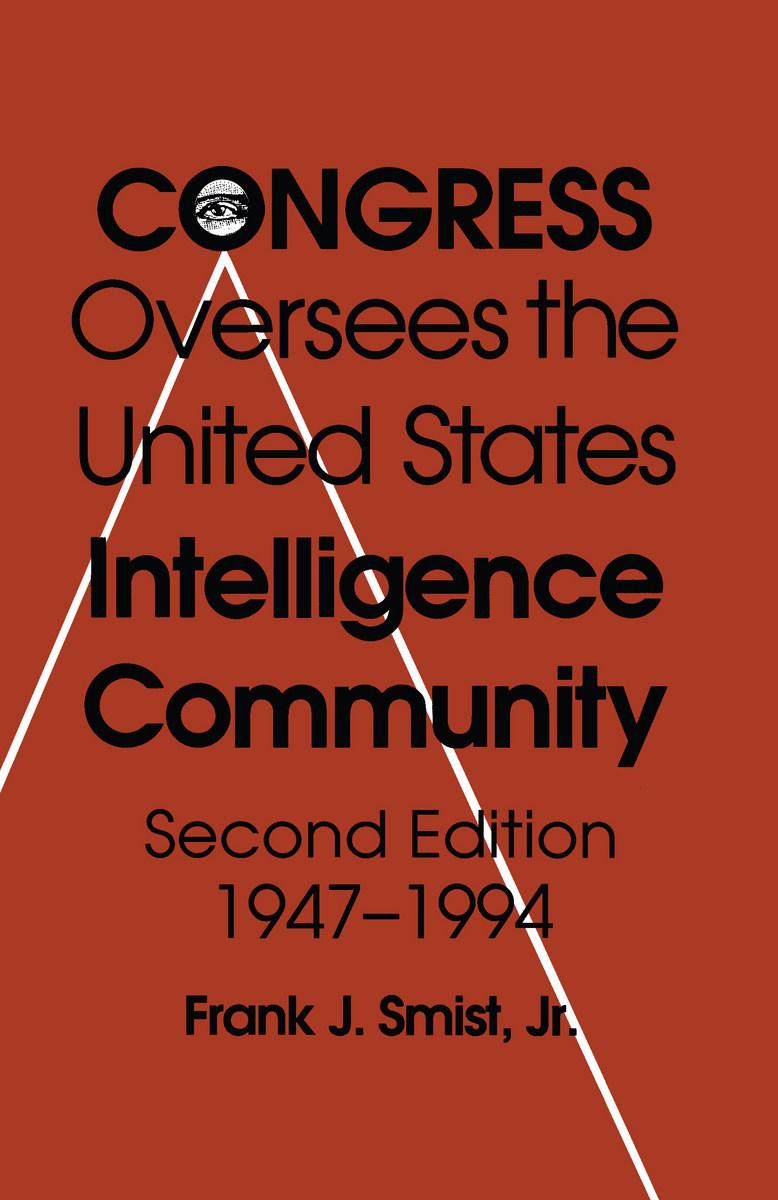
Foreseeing conflict between the legislative and executive branches over the proper functions of government, the Founders of the United States built into the U. S. Constitution the checks and balances that Edwin S. Corwin called “an invitation to struggle.” Smist argues that congressional intelligence-oversight committees—such as Senator Church’s 1975-76 committee—can, by taking up this struggle, not only handle sensitive information responsibly but help shape rational foreign policy. When Congress is shut out of the intelligence process–as in President Carter’s abortive Iran rescue mission and Reagan’s Iran-Contra affair–the results can be catastrophic.
Smist’s detailed analysis of congressional oversight of U.S. intelligence from Pearl Harbor through Iran-Contra is based largely on his interviews with participants, including senators, representatives, and executive-branch officials. The analysis is informed by Smist’s dialectical model of “institutional” (conservative, supportive) versus “investigative” (radical, questioning) oversight, which allows him to uncover the frequently obscured historical value of previous Senate and House investigative committees. For example, the Pike committee, 1975-76, even though its final report was suppressed by the House, was able to elicit then Secretary of State Kissinger’s admission of presidential control over covert actions, thus shattering the doctrine of “plausible deniability.”
Because these committees continue to wrestle with the principles underlying government, their unfolding drama is meaningful for the student of constitutional history. This book provides new conceptual tools for the study of intelligence oversight and gives the direct testimony of key participants, making it important not only as political science but as history.
Before Memmo my notes were scattered across PDFs. Now a workspace pulls everything into one place — I see exactly what's still left to study.
Memmo's summaries are gold before exams. I don't have to re-read 800 pages two weeks before — just the important parts.
The AI chat has saved me the night before an exam more than once. I just keep asking until I get it — no waiting on a study group to reply.
The quizzes hit exactly what I need to know. Memmo tracks what I get stuck on — so I only practice what's worth it.
Flashcards with spaced repetition are magic. Memmo knows when I'm about to forget something and brings it back.
The AI podcasts are my favorite. I listen on my way to school and get a recap without sitting at a computer.

Handbok i kvalitativa metoder
281 kr

Hållbar utveckling: en introduktion för ingenjörer och andra problemlösare
334 kr

Brymans Samhällsvetenskapliga metoder
390 kr

Projektledning
491 kr

Den orättvisa hälsan: om socioekonomiska skillnader i hälsa och livslängd
326 kr

Vetenskapsteori för nybörjare
196 kr

Organizational Leadership
429 kr

På väg mot läraryrket
172 kr

Det sociala livet i skolan: Socialpsykologiska perspektiv
253 kr

Betygsättningens didaktik
151 kr

Personality
402 kr

Studying Leadership
404 kr

Managing Innovation
477 kr

Introduktion till samhällsvetenskaplig metod
347 kr

The Psychology of Sex and Gender
698 kr

Evidens och kunskap för socialt arbete
207 kr

Introduction to Leadership
605 kr