
Before Memmo my notes were scattered across PDFs. Now a workspace pulls everything into one place — I see exactly what's still left to study.
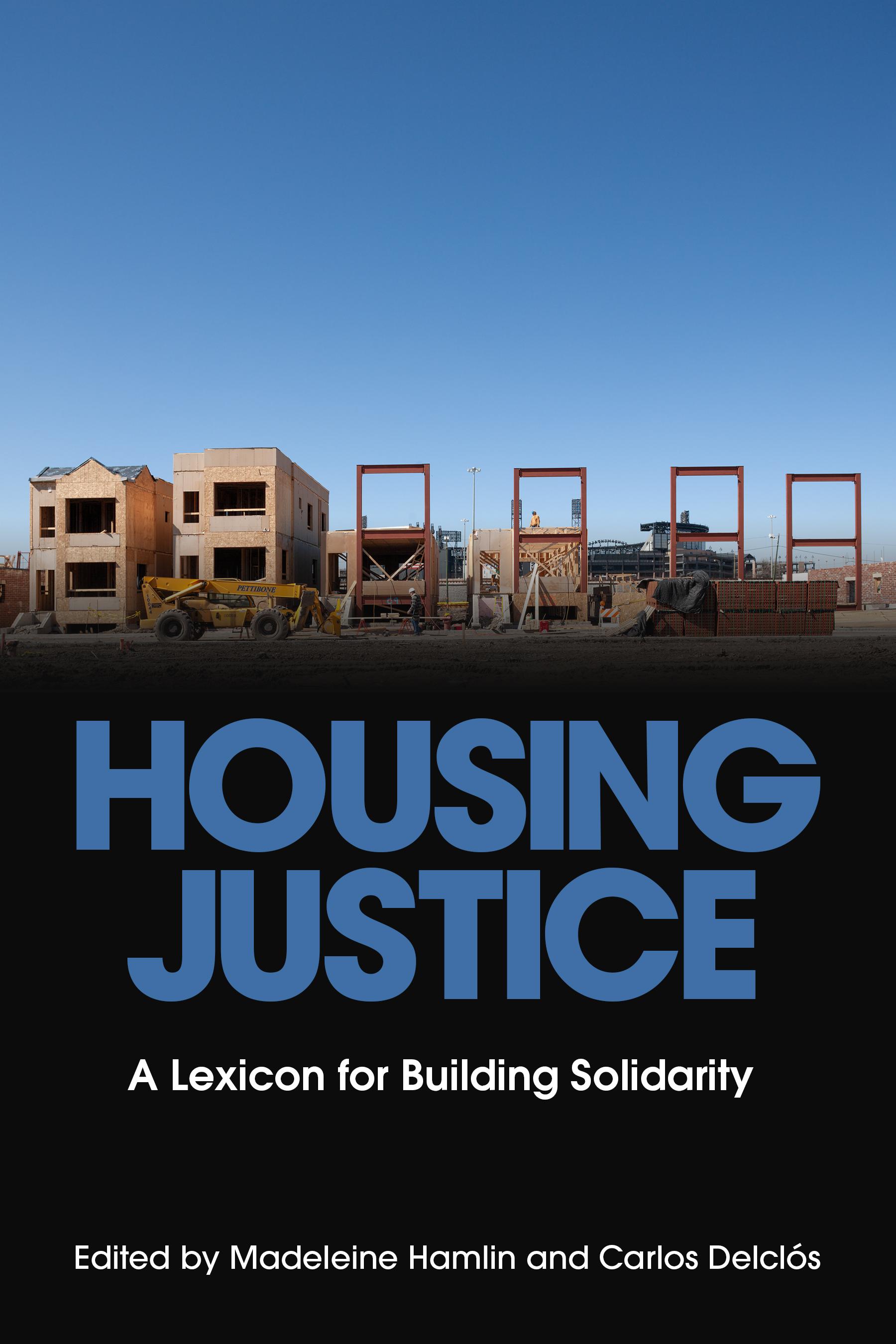
Housing Justice: A Lexicon for Building Solidarity provides accessible, future-facing language for housing scholars, practitioners, and activists.
At a time when the housing question is being reshaped by financialization, dispossession, displacement, and resistance across global contexts, this volume offers a critical vocabulary grounded in contemporary scholarship and struggle. Emerging from the eighth Antipode Institute for the Geographies of Justice, and shaped by a translocal editorial collective, the book draws together contributions from scholars and organizers working across multiple geographies and traditions of housing activism. Rather than offering closed definitions, each entry synthesizes current debates while tracing the political genealogies, conceptual tensions, and geographic specificities that shape how terms are used—and contested—across contexts, movements, and disciplines. Contributors draw from case studies and organizing experiences around the world, foregrounding the complex entanglements of housing with racial capitalism, settler colonialism, migration control, and state violence.
The result is not a static reference work, but a living archive of concepts that circulate within and between academic inquiry and political practice. From foundational terms like “eviction,” “property,” and “social housing” to emergent ones such as “carceral shelter,” “digital/material,” and “déracinement,” Housing Justice: A Lexicon for Building Solidarity illuminates how language mediates the spatial, institutional, and affective dimensions of housing injustice.
This book is both a resource and a provocation: it supports critical reflection, interdisciplinary dialogue, and coalition-building, while inviting readers to think with and beyond existing frameworks. For anyone engaged in the theorization or practice of housing justice, it offers a shared starting point for imagining—and organizing—alternative housing futures.
Before Memmo my notes were scattered across PDFs. Now a workspace pulls everything into one place — I see exactly what's still left to study.
Memmo's summaries are gold before exams. I don't have to re-read 800 pages two weeks before — just the important parts.
The AI chat has saved me the night before an exam more than once. I just keep asking until I get it — no waiting on a study group to reply.
The quizzes hit exactly what I need to know. Memmo tracks what I get stuck on — so I only practice what's worth it.
Flashcards with spaced repetition are magic. Memmo knows when I'm about to forget something and brings it back.
The AI podcasts are my favorite. I listen on my way to school and get a recap without sitting at a computer.

Handbok i kvalitativa metoder
281 kr

Hållbar utveckling: en introduktion för ingenjörer och andra problemlösare
334 kr

Brymans Samhällsvetenskapliga metoder
390 kr

Projektledning
491 kr

Den orättvisa hälsan: om socioekonomiska skillnader i hälsa och livslängd
326 kr

Organizational Leadership
429 kr

Vetenskapsteori för nybörjare
196 kr

På väg mot läraryrket
172 kr

Det sociala livet i skolan: Socialpsykologiska perspektiv
253 kr

Betygsättningens didaktik
151 kr

Personality
402 kr

Studying Leadership
404 kr

Managing Innovation
477 kr

Introduktion till samhällsvetenskaplig metod
347 kr

The Psychology of Sex and Gender
698 kr

Evidens och kunskap för socialt arbete
207 kr

Introduction to Leadership
605 kr