
Before Memmo my notes were scattered across PDFs. Now a workspace pulls everything into one place — I see exactly what's still left to study.
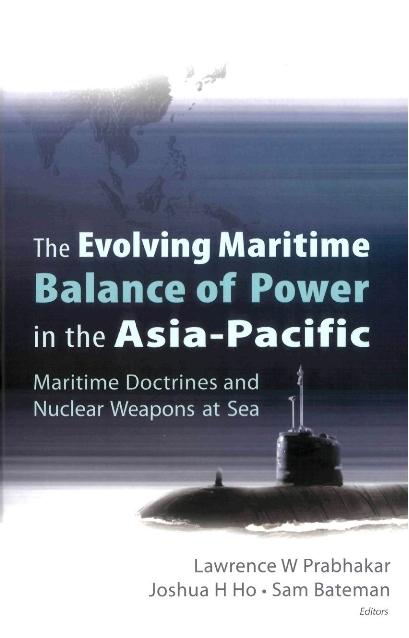
“The world's maritime future is likely to be determined in large measure in the Asia-Pacific, particularly by the developing relationship between the four major maritime powers of the area, China, India, Japan and the US. This relationship, in turn, will be decided by the way in which they react to each other's naval policies and programmes and to how they respond, individually and collectively, to strategic developments in the area. In this important book, some of the world's leading maritime analysts begin the task of exploring a topic crucial for the world's future.”
“East Asia and the Pacific Rim are likely to be to the Twenty-First Century what Europe and the Atlantic Rim were to the Twentieth: the main locus of economic growth and thus the center of considerable potential conflict. This book looks in depth at how the four largest actors in the area, the United States, China, Japan, and India, are developing their naval power to act in this essentially maritime theater of future operations.”
“This volume is timely and meaningful. It deals with the relations between the incumbent powers of the US and Japan and the new regional powers of China and India with the aim of establishing if a cooperative or competitive regime is developing, The concluding remarks regarding the balanced accrual of both hard and soft power for enhancing stability is enlightening. However, I question the view that China has ‘hegemonic ambitions’ and Japan has ‘less ambitious objectives’.”
“In a region which encompasses vitally important waterways and where economies are booming, maritime concerns would necessarily be at the forefront of strategic thinking. The editors and authors by their erudite analysis have succeeded in broadening one's perspective of the maritime dilemmas and insecurities that the littoral states face. The multifarious bilateral and regional issues have also been addressed in a most comprehensive manner.”
“The Evolving Maritime Balance of Power in the Asia-Pacific is a well-written and insightful book. It provides a valuable introduction to the present maritime balance of power in the Asia-Pacific by outlining the maritime doctrines/strategies and arms capability of the current four major powers in the region. A must-read for the student of international relations.”
“Lawrence W Prabhakar and his coeditors Joshua Ho and Sam Bateman have done a commendable analysis. The analyses of the editors and the contributing authors have been rigorous and critical. The blend of the themes to the contributions to the volume is indeed a splendid effort. This book is highly recommended to the maritime security community of professionals, policy research analysts and the academia.”
“The attractiveness of the volume lies in the effective marrying of International Relations theory and foreign policy and the highlighting of the crucial role that nuclear weapons play in the evolving regional power dynamics. The chapters are well-written and they offer a wealth of insights on naval power, Asia-Pacific balance of power, and evolving international and regional order in the 21st century. A must read for all those interested in the dynamics of Asian balance of power in all its broader manifestations and connotations.”
“It brings a fresh approach combining both theoretical and operational aspects. In addition, the new threats of non-state players, international terrorism and evolving notions of sea control are examined to good effect. A most useful addition to the literature on the subject!”
Before Memmo my notes were scattered across PDFs. Now a workspace pulls everything into one place — I see exactly what's still left to study.
Memmo's summaries are gold before exams. I don't have to re-read 800 pages two weeks before — just the important parts.
The AI chat has saved me the night before an exam more than once. I just keep asking until I get it — no waiting on a study group to reply.
The quizzes hit exactly what I need to know. Memmo tracks what I get stuck on — so I only practice what's worth it.
Flashcards with spaced repetition are magic. Memmo knows when I'm about to forget something and brings it back.
The AI podcasts are my favorite. I listen on my way to school and get a recap without sitting at a computer.

Handbok i kvalitativa metoder
281 kr

Hållbar utveckling: en introduktion för ingenjörer och andra problemlösare
334 kr

Brymans Samhällsvetenskapliga metoder
390 kr

Projektledning
491 kr

Den orättvisa hälsan: om socioekonomiska skillnader i hälsa och livslängd
326 kr

Vetenskapsteori för nybörjare
196 kr

Organizational Leadership
429 kr

På väg mot läraryrket
172 kr

Det sociala livet i skolan: Socialpsykologiska perspektiv
253 kr

Betygsättningens didaktik
151 kr

Personality
402 kr

Studying Leadership
404 kr

Managing Innovation
477 kr

Introduktion till samhällsvetenskaplig metod
347 kr

The Psychology of Sex and Gender
698 kr

Evidens och kunskap för socialt arbete
207 kr

Introduction to Leadership
605 kr